Monumental Virgin Mary Statue Inaugurated in Poland Amidst Secularisation Trends
Local officials hope the monument will drive economic growth in a struggling region, but critics question the allocation of resources as trust in the Catholic Church continues to decline.
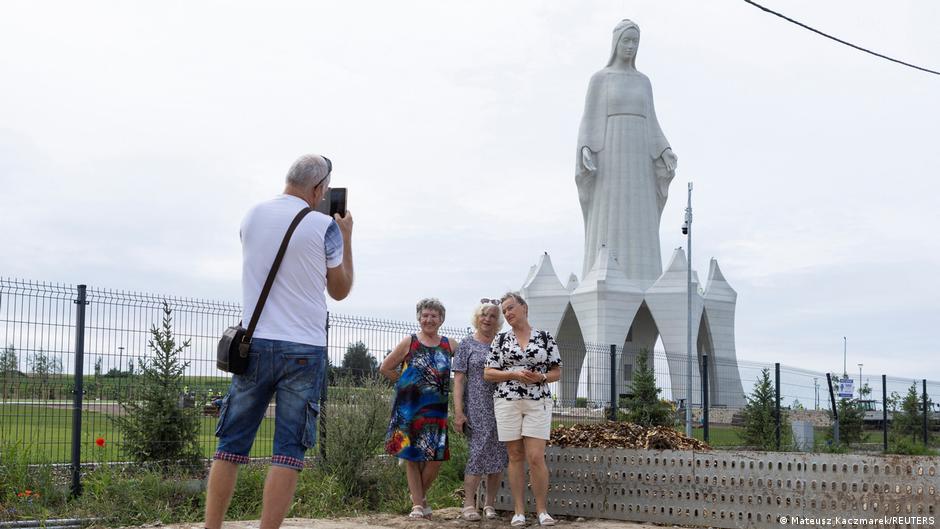
Europe’s largest statue of the Virgin Mary was inaugurated on 15 August in the Polish village of Konotopie, a settlement of 120 residents located approximately 160 kilometres northwest of Warsaw. The 55-metre structure, which stands 15 metres taller than Rio de Janeiro’s Christ the Redeemer, was funded by wealthy businessman Roman Karkosik and has sparked debate regarding the intersection of religious expression, regional development, and public expenditure.
The monument comprises a 40.6-metre-high figure of the Virgin Mary situated on a 15-metre-high pedestal shaped like a crown, which functions as a viewing platform. Karkosik, a 75-year-old former scrap metal dealer and plastic bottle manufacturer, described the project as a gesture of gratitude for his recovery from a serious illness. His fortune is estimated at €442 million, ranking him 44th on Poland’s richest people list, though the specific cost of the statue remains undisclosed with media speculation suggesting it may reach €23 million.
Local authorities have positioned the statue as a strategic economic asset for one of Poland’s weaker regions, which lacks major industrial employers. Krzysztof Kowalewski of the nearby town of Kikol stated that the monument is intended to attract investors and tourists. Mayor Renata Golebiewska reported that revenues at local restaurants and bars have already broken local records following the influx of visitors, who have flocked to the site for months despite the area remaining fenced off.
The project has drawn sharp criticism from detractors who view it as a misallocation of funds. One critic described the structure to the weekly magazine Newsweek as a complete waste, arguing that the capital should have been directed toward useful public projects. Conversely, sculptor Adam Jakub Matejkowski, who designed the statue with the facial features of his wife and daughter, expressed satisfaction with the final result, noting his intention was to create a figure with a human character that appears to embrace viewers.
The inauguration coincides with a period of declining confidence in the Catholic Church in Poland, a institution that historically played a central role in national identity and resistance to foreign powers. A September 2025 survey by the Polish polling institute IBRIS found that trust in the Church had fallen to 35 per cent, down from 58 per cent in 2016. Furthermore, the number of priests ordained in Poland fell below 200 for the first time since 2000 in 2026, with church attendance continuing to drop, particularly among younger demographics.