Military court opens trial for soldiers accused of acid attack on activist Yunus
Four personnel from the Strategic Intelligence Agency face premeditated assault charges; rights groups warn military jurisdiction undermines fair trial standards amid democratic backsliding
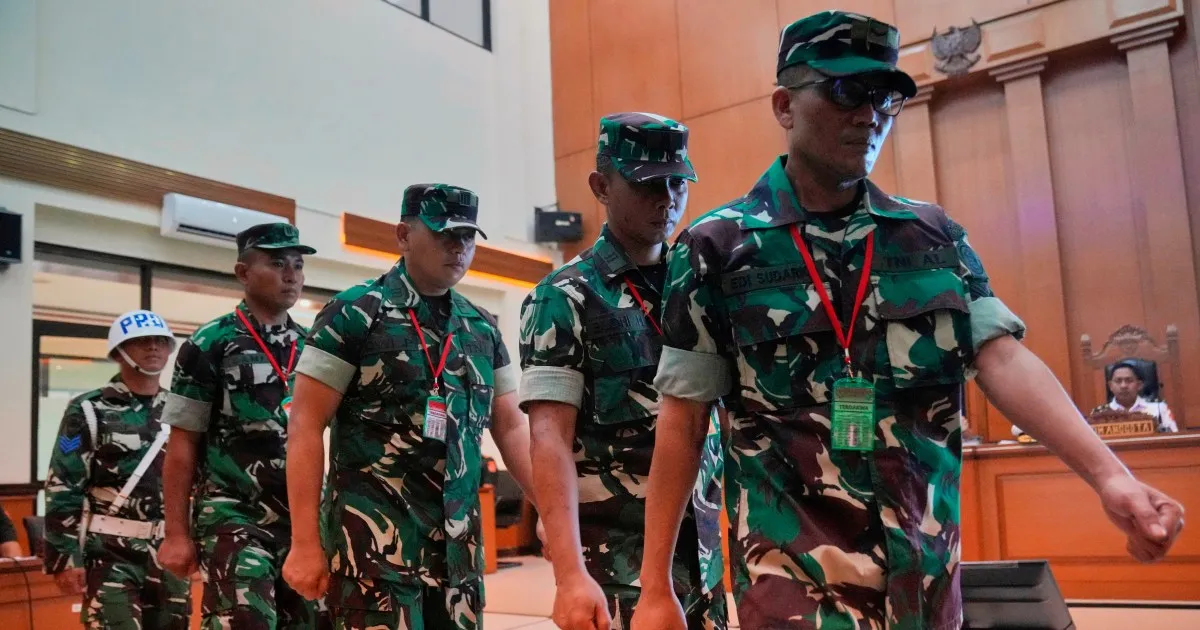
A military court in Jakarta has commenced the trial of four Indonesian soldiers accused of a premeditated acid attack on activist Andrie Yunus. The proceedings began on Wednesday, 30 April 2026, marking the first judicial step in a case that has drawn significant international attention regarding the role of the armed forces in civilian governance.
The defendants, all linked to the military's Strategic Intelligence Agency, are charged with premeditated assault following an incident on 12 March 2025. Prosecutors allege the soldiers acted out of personal anger over Yunus's activism rather than under official orders. Yunus, a 27-year-old campaigner, suffered severe burns and lost sight in one eye during the attack, which occurred while he was riding a motorbike in the capital.
The case has sparked condemnation from the United Nations and various rights groups, who argue that trying the suspects in a military court undermines fair trial standards. Amnesty International has specifically raised concerns about the impartiality and independence of military courts in Indonesia, noting that the use of such jurisdiction may weaken accountability mechanisms for crimes against civilians.
Concurrent with the trial, the chief of the Strategic Intelligence Agency has stepped down, though no public reason has been given for the resignation. This development occurs against a backdrop of new legislation passed under President Prabowo Subianto, which allows active-duty military personnel to hold civilian government positions, effectively reversing post-1998 reforms that sought to limit the military's political role.
Activists and analysts describe the attack as symptomatic of a broader pattern of repression and democratic decline in Indonesia. Over the past 18 months, Amnesty International has documented numerous offline and online attacks against individuals criticising the militarisation of the country. In March 2025, the investigative outlet Tempo also received packages containing severed pig heads and rat carcasses, widely viewed as an intimidation tactic against journalists.
Observers note that the trial raises critical questions about whether criticism of the military is becoming increasingly dangerous. The case encapsulates deeper shifts in the nation's political landscape, where the boundaries between political power and the armed forces are becoming increasingly blurred under the current administration.