Merz and AfD leader clash after far-right election surge in Germany
The AfD’s victory in Saxony-Anhalt has intensified pressure over coalition-building and Germany’s refusal to work with the far right.
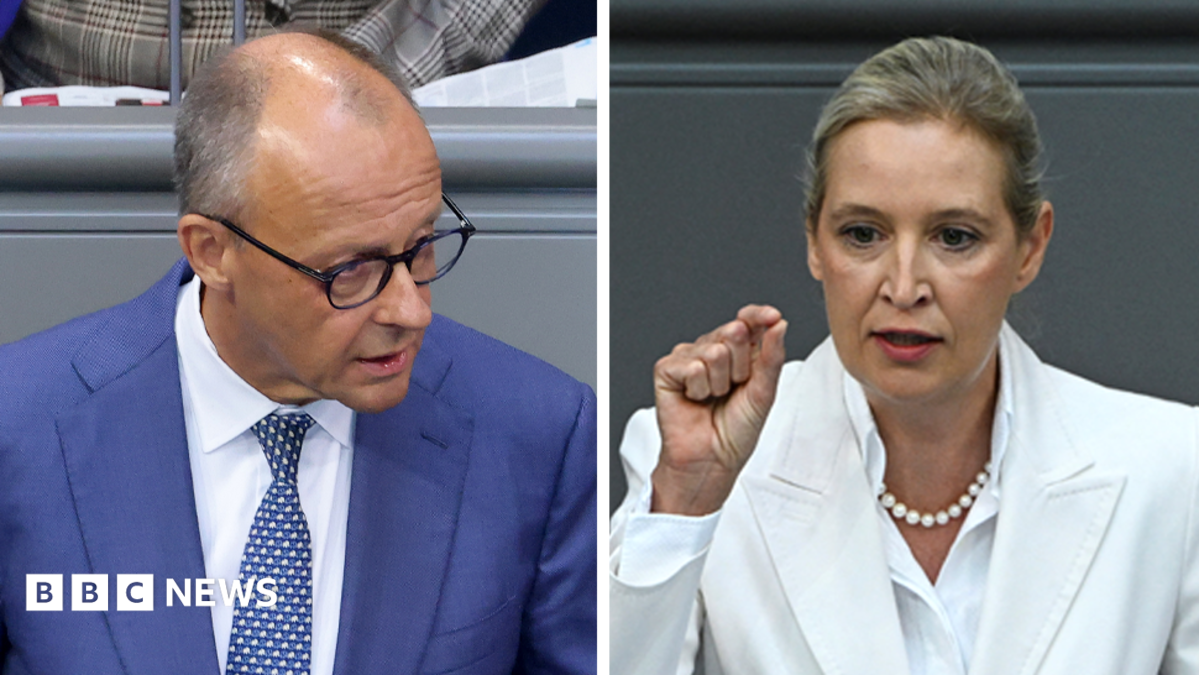
German Chancellor Friedrich Merz has clashed with AfD leader Alice Weidel in the Bundestag after the far-right party won almost 44 per cent of the vote in Saxony-Anhalt.
Merz accused the AfD of being a “destructive force” and said its “remigration” policy could affect millions. He argued that the policy would threaten skilled workers with migration backgrounds, while distinguishing between people contributing to Germany’s economy and those without permanent residency.
Weidel said Merz’s coalition with the centre-left had failed and accused his government of driving Germany towards bankruptcy. She also attributed knife violence and attacks on trains and stations to mass migration, claims Merz rejected.
The debate was repeatedly disrupted by heckling from AfD MPs. Bundestag President Julia Klöckner warned that members could be expelled from the chamber as the disorder intensified.
The AfD fell three seats short of an outright majority in Saxony-Anhalt, leaving its ability to form a state government unresolved. The party has indicated it may seek support from another party, while an AfD state figure suggested cooperation with Merz’s conservatives could be possible if they abandoned the mainstream parties’ “firewall” against the far right.
No far-right party has governed any of Germany’s 16 states since the Second World War. The AfD branch in Saxony-Anhalt has been classified as “right-wing extremist” by German domestic intelligence, according to the BBC.