Mecca pact signals shift in regional security architecture amid expansion talks
The Mecca Joint Deterrence Agreement introduces a collective security clause, but Cairo’s participation remains uncertain due to conflicting treaty obligations and threat perceptions.
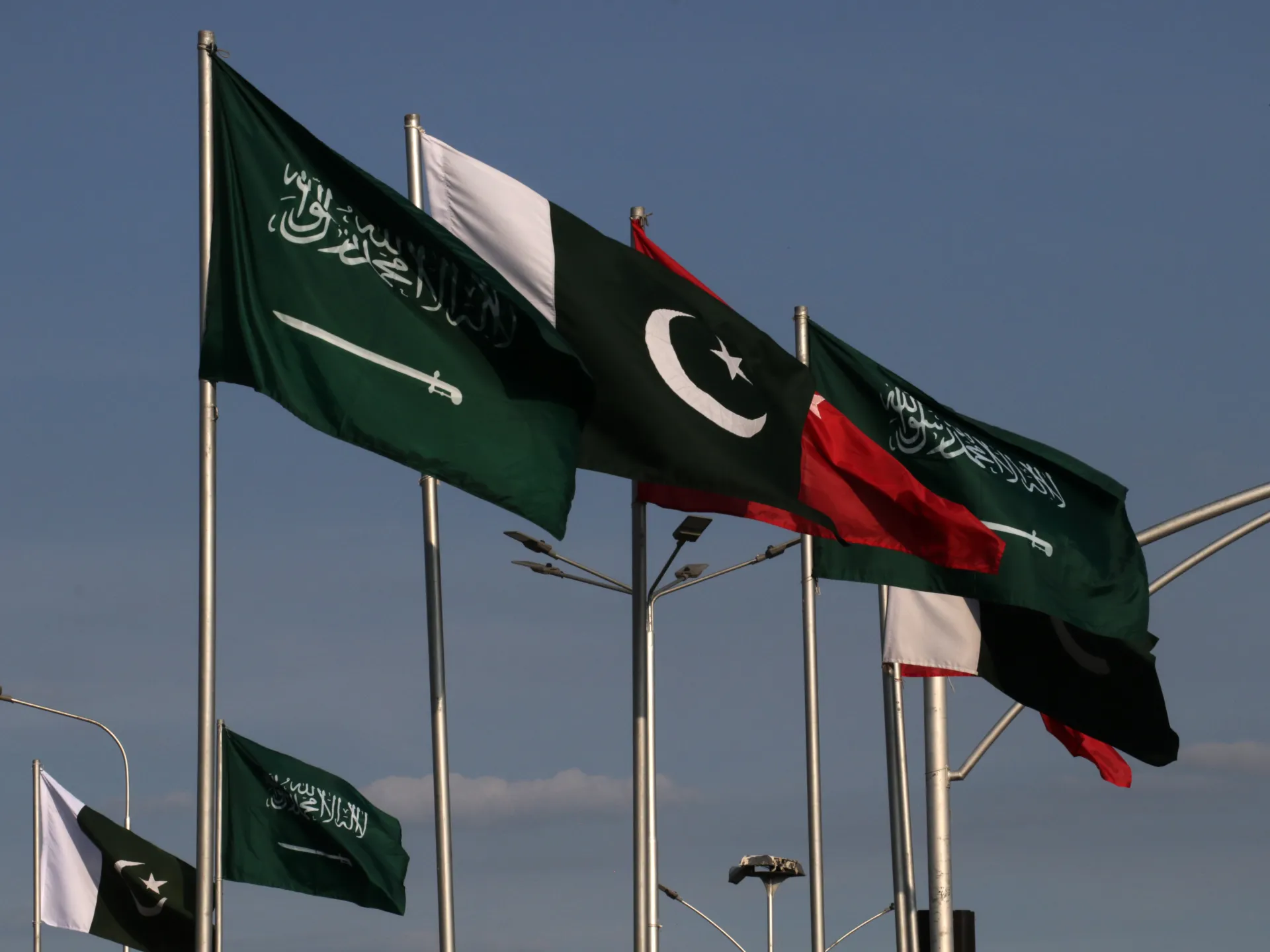
Turkiye, Saudi Arabia and Pakistan have formalised the Mecca Joint Deterrence Agreement, a mutual defence pact incorporating a collective security clause akin to NATO’s Article 5, wherein an attack on one member is considered an attack on all. Turkish Foreign Minister Hakan Fidan has positioned Egypt as a “natural partner” for the alliance and indicated openness to expanding membership to include Qatar, Kuwait, Azerbaijan, Syria and Jordan. However, regional analysts caution that Egypt’s participation remains uncertain due to potential friction with its existing peace treaties, its reliance on United States aid, and divergent strategic interests regarding Israel and Libya.
The agreement builds upon a prior defence understanding between Saudi Arabia and Pakistan and operates alongside Egypt’s existing R4 consultative framework with the same three nations. While the pact’s central feature is a NATO-like stipulation that an attack on any one of the three states would be treated as an attack on all, the details of implementation have yet to be fully defined. Turkish and Saudi officials have stressed that the pact is not meant to supplant any other strategic alliances or relationships, with Turkiye noting that the agreement does not target any country, including Iran.
Egypt is the only country whose potential membership has been publicly raised by an official from one of the pact’s signatory countries. Fidan described Egypt as a “natural partner” and said he expects Cairo to formally join once “technical issues” are ironed out. “I believe that at the next stage, Egypt will also be among us in the alliance,” Fidan said, adding that the two nations already act towards one another as if they were alliance members. Ali Bakir, professor of international relations at Qatar University, said Egypt’s inclusion would significantly increase the pact’s political weight and operational effectiveness if it materialises.
Despite these overtures, analysts suggest Cairo may be wary of the potential military obligations that could come with a binding defence treaty with states whose interests do not always align with its own. Karim Elgendy, associate fellow at Chatham House’s Middle East and North Africa Programme, told Al Jazeera that Egypt may join only if the language protects its aid relationship with Washington and does not undermine existing alliances. He noted that if the pact hardens into an obligation that could pull Egyptian forces into someone else’s war, the answer from Cairo is likely to be negative.
Ahmed Aboudouh, also an associate fellow at Chatham House, noted that while Egypt shares the trilateral pact’s security concerns, it does not share its underpinning threat perception. Aboudouh said Cairo’s preference is to be part of overlapping regional security arrangements that are narrow in scope and issue-related, rather than being entangled in defence commitments with elevated risks. For Bakir, Cairo’s decision will come down to how it weighs the benefits of membership against the diplomatic complications of managing relations with countries whose interests contrast with the alliance.
Several officials have suggested other Gulf countries could eventually join the alliance. Former Qatari Prime Minister Sheikh Hamad bin Jassim Al Thani expressed hope that all members of the Gulf Cooperation Council would take the initiative to join the pact. Among the Gulf states, Elgendy identified Qatar and Kuwait as the names to watch first, citing their exposure during recent regional conflicts. Bakir similarly identified Qatar as the “most natural” Gulf state to opt in, while also noting that Azerbaijan, Syria and Jordan could join relatively quickly.
Elgendy expressed scepticism about the pact transforming into a broader bloc, describing it instead as a coalition of the willing that will grow on a case-by-case basis. He said the expansion will be shaped by each capital’s own risk calculus, with nations seeking extra insurance after feeling exposed during the United States-Israel war on Iran and by Israel’s strike on Doha in September. As the alliance seeks to grow, the interplay between collective deterrence and individual national sovereignty remains a central point of contention.