Mecca pact formalises collective defence among Saudi Arabia, Turkey and Pakistan
The Mecca Joint Deterrence Agreement stipulates that an armed attack on any signatory will be treated as an attack on all, marking a significant shift in regional security architecture.
Saudi Arabia, Turkey and Pakistan have formalised a mutual defence agreement that establishes a collective security framework, stipulating that an armed attack on any one of the three nations will be treated as an attack on all. The pact, known as the Mecca Joint Deterrence Agreement, was signed in the Saudi holy city of Mecca on Friday by Saudi Crown Prince Mohammed bin Salman, Turkish President Recep Tayyip Erdogan and Pakistani Prime Minister Shehbaz Sharif.
The agreement represents a strategic move by Saudi Arabia to diversify its security partnerships following repeated attacks on its critical infrastructure. These incidents have occurred against the backdrop of heightened regional tensions linked to the war in Iran, prompting Riyadh to seek broader institutional guarantees for its national security.
The timing of the signing coincides with a recent escalation in hostilities, including Houthi attacks on Saudi territory. On Thursday, a Houthi strike on the city of Najran injured 11 people, including a four-year-old child. The Yemeni government has previously condemned such strikes, including an attack on Marib, as violations of humanitarian law, highlighting the complex diplomatic landscape surrounding the conflict.
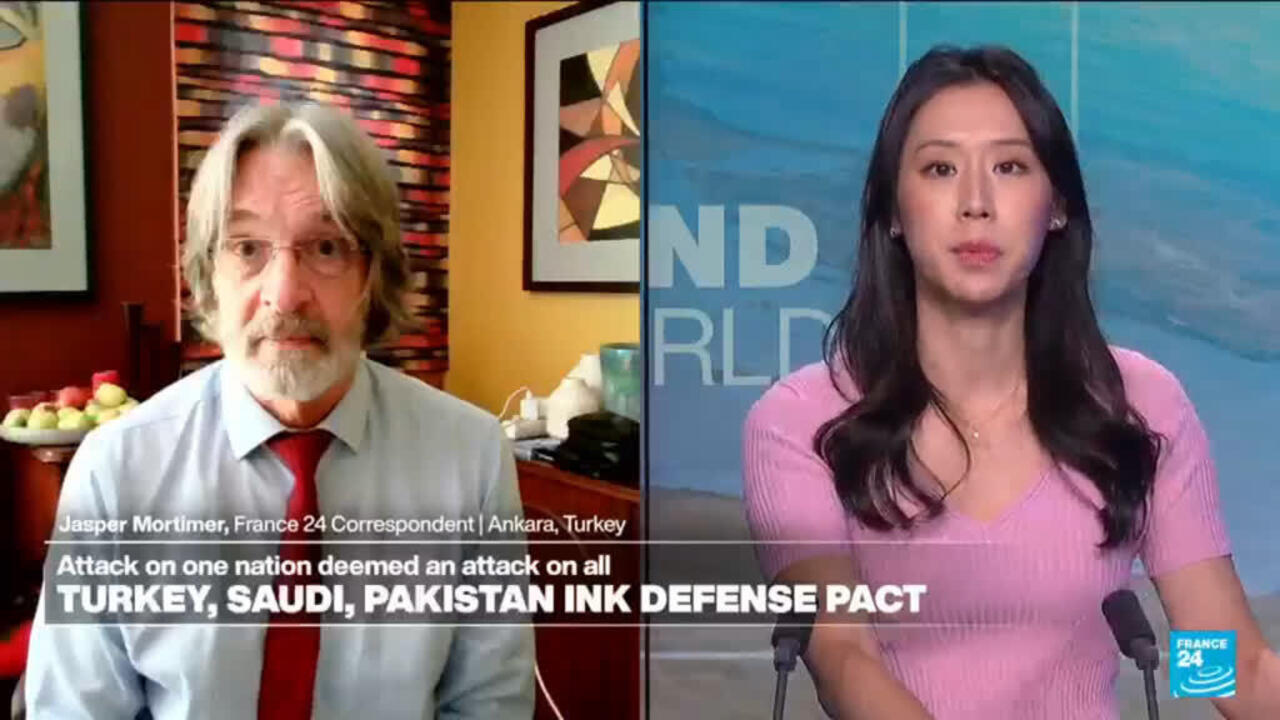
France 24 correspondent Jasper Mortimer, reporting from Turkey, noted the significance of the accord in the context of shifting regional alliances. The pact aims to create a unified deterrent against external threats, although the source material does not detail the specific operational mechanisms or timelines for implementing the collective defence provisions.
The agreement underscores the growing interdependence of security policies among the three signatories. By binding their defence commitments, the leaders have sought to address the immediate vulnerabilities exposed by recent infrastructure strikes and the broader instability triggered by US-Israeli involvement in Iran.
As the region navigates these heightened tensions, the Mecca Joint Deterrence Agreement stands as a formalised response to the perceived threats against Saudi sovereignty. The pact’s implementation will likely require further diplomatic coordination, as the three nations work to align their strategic interests in a volatile security environment.
The signing marks a definitive step in the consolidation of a new security bloc in the Middle East and South Asia. With the collective defence clause now in place, the three nations have signalled a united front in the face of ongoing regional conflicts, aiming to stabilise their respective positions through mutual assurance.