Masafer Yatta schools face demolition as new academic year begins
With 84 Palestinian schools facing legal threats, the return to classes in the southern West Bank is overshadowed by administrative controls and the prospect of further structural loss.
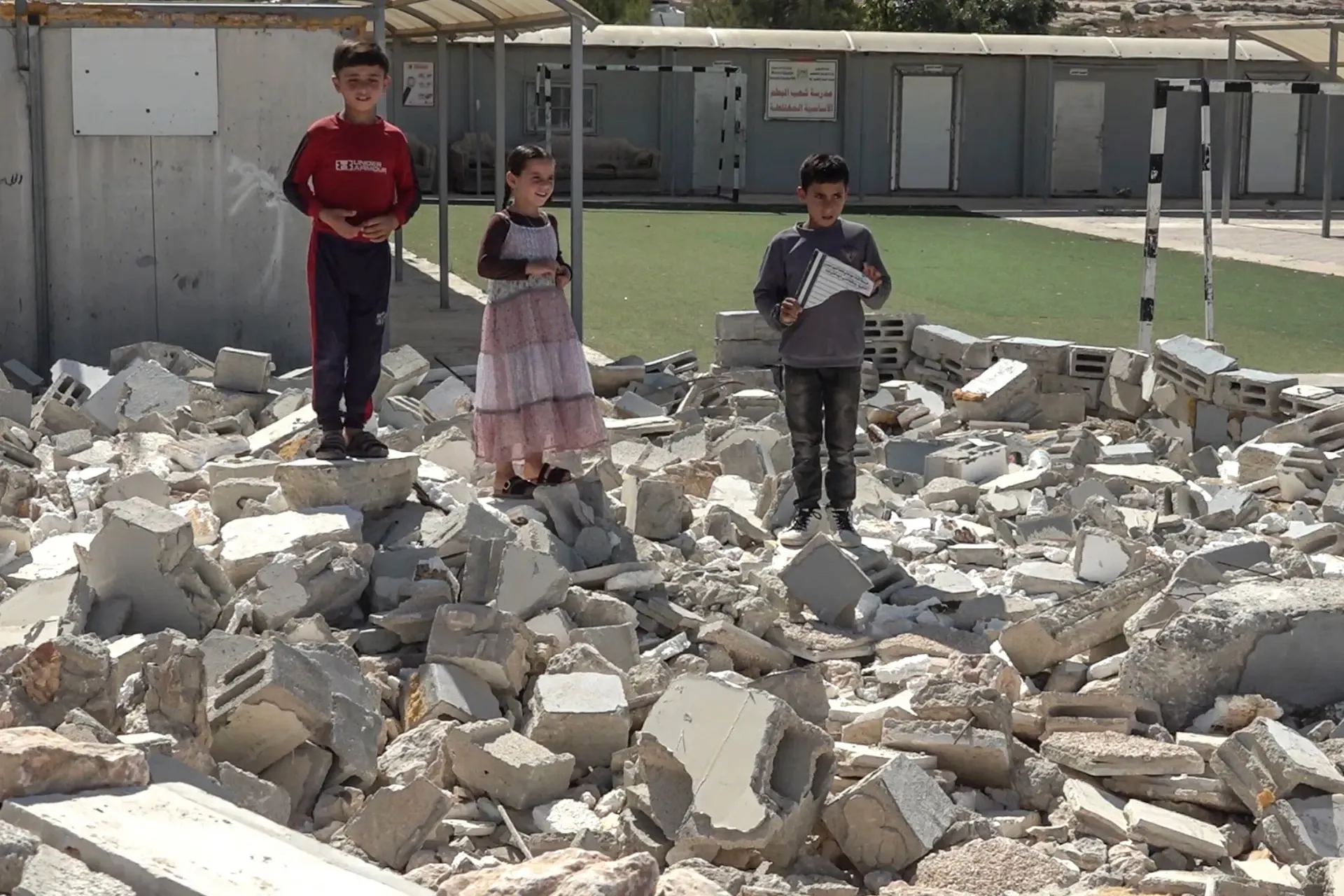
Palestinian students in the Masafer Yatta area of the southern occupied West Bank have returned to school for the new academic year under the immediate threat of further Israeli demolitions. The return to classes at Shaab al-Butum school is complicated by the recent destruction of two administrative rooms and a storage room, which Israeli forces demolished on 4 August. The remaining structure of the facility now faces a court hearing scheduled for 15 September, leaving the future of the local educational infrastructure uncertain.
The demolitions were justified by Israeli authorities on the grounds that the structures were built without permits. According to the United Nations, such permits are nearly impossible for Palestinians to obtain in Area C of the occupied West Bank, a region under full Israeli administrative and military control. This governance structure creates a persistent legal vulnerability for infrastructure constructed in the area, as noted by local officials who describe the current situation as a renewed test for the community.
Nidal Younis, head of the Masafer Yatta local council, stated that all seven schools in the wider area are currently threatened with demolition. He described the environment as one of "unprecedented escalation" by occupation authorities, noting that the policy of demolishing schools is tightening alongside settler violence. Younis emphasised that the uncertainty extends beyond individual buildings, affecting the ability of students and staff to maintain a consistent educational routine.
The broader pattern of insecurity is highlighted by figures from the Colonization and Wall Resistance Commission. Amir Dawoud, a senior official with the commission, reported that 84 Palestinian schools serving nearly 13,000 students are currently facing demolition or stop-work orders. Dawoud indicated that the most immediate legal threats are concentrated in the southern Hebron area, particularly in Masafer Yatta, and at al-Walaja school near Bethlehem.
Activist and teacher Tariq Hathaleen noted that the occupation authorities do not usually notify residents or school administration in advance when demolition equipment arrives. This lack of procedural notice contributes to a deepened sense of insecurity among residents. Hathaleen pointed to an incident in the previous academic year where settlers stormed Ras Ein al-Auja school in the Jordan Valley, assaulting staff and students, as evidence that schools are no longer immune from attack.
The Palestinian Ministry of Education built the targeted schools to serve marginalised areas, describing them as vital community hubs rather than just educational buildings. Dawoud argued that the impact of these orders begins long before any physical destruction occurs, creating disruption for students, teachers, and families. He characterised the situation as a systematic pattern that targets the ability of Palestinian communities to survive, rather than merely affecting individual school structures.