Mao’s legacy remains embedded in China’s political system five decades after his death
Mao Zedong remains central to China’s official ideology and political symbolism, even as experts distinguish Xi Jinping’s institutional rule from the revolutionary leader’s mass mobilisation.
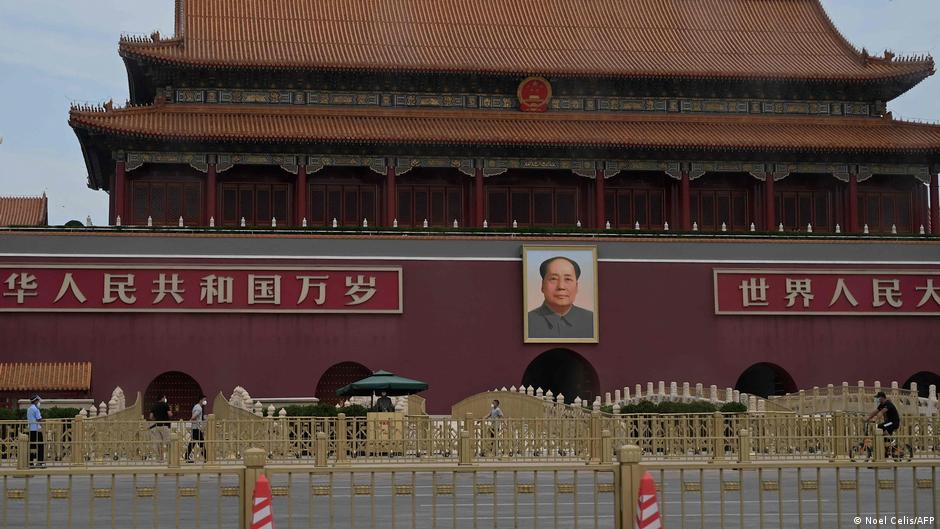
Five decades after Mao Zedong’s death, his political legacy remains woven into China’s official system, despite the country’s transformation from an isolated communist state into a globally integrated economy with a substantial private sector.
Mao’s name remains in the Chinese Communist Party constitution, his political thought remains part of official ideology and his portrait still hangs in Tiananmen Square. His rule is associated both with revolution, nation-building and national independence, and with extensive social trauma caused by political campaigns and persecutions.
Experts cited by Deutsche Welle identify continuing emphasis under Xi Jinping on party supremacy, centralised authority, ideological unity and political “struggle”. Comparisons have also followed Xi’s strengthening of personal authority and the incorporation of his political thought into party and state constitutions.
The experts caution, however, against treating Xi’s China as a return to the Mao era. China’s current state-capitalist economy, global integration and strong private sector differ sharply from Mao’s revolutionary economic model. Mao could bypass party institutions and mobilise society against the party-state, while Xi’s authority is exercised through tighter institutional and top-down control.
Mao’s image also remains a vehicle for expressing dissatisfaction with contemporary conditions, including inequality, corruption, restricted public criticism and limited social mobility. Analysts say this nostalgia often reflects an imagined egalitarian past rather than the actual Mao era, which was marked by rigid hierarchies and unequal access to resources.
That leaves Mao as a contested political symbol: a source of legitimacy for the Chinese Communist Party, but also a language through which some people criticise abuses of power and the limits of public expression under current rule.