Malmö voters weigh migration, living costs and crime in tight Swedish election
With the centre-left opposition only a few points ahead in national polling, Malmö voters are divided over integration, healthcare, jobs, household finances and public safety.
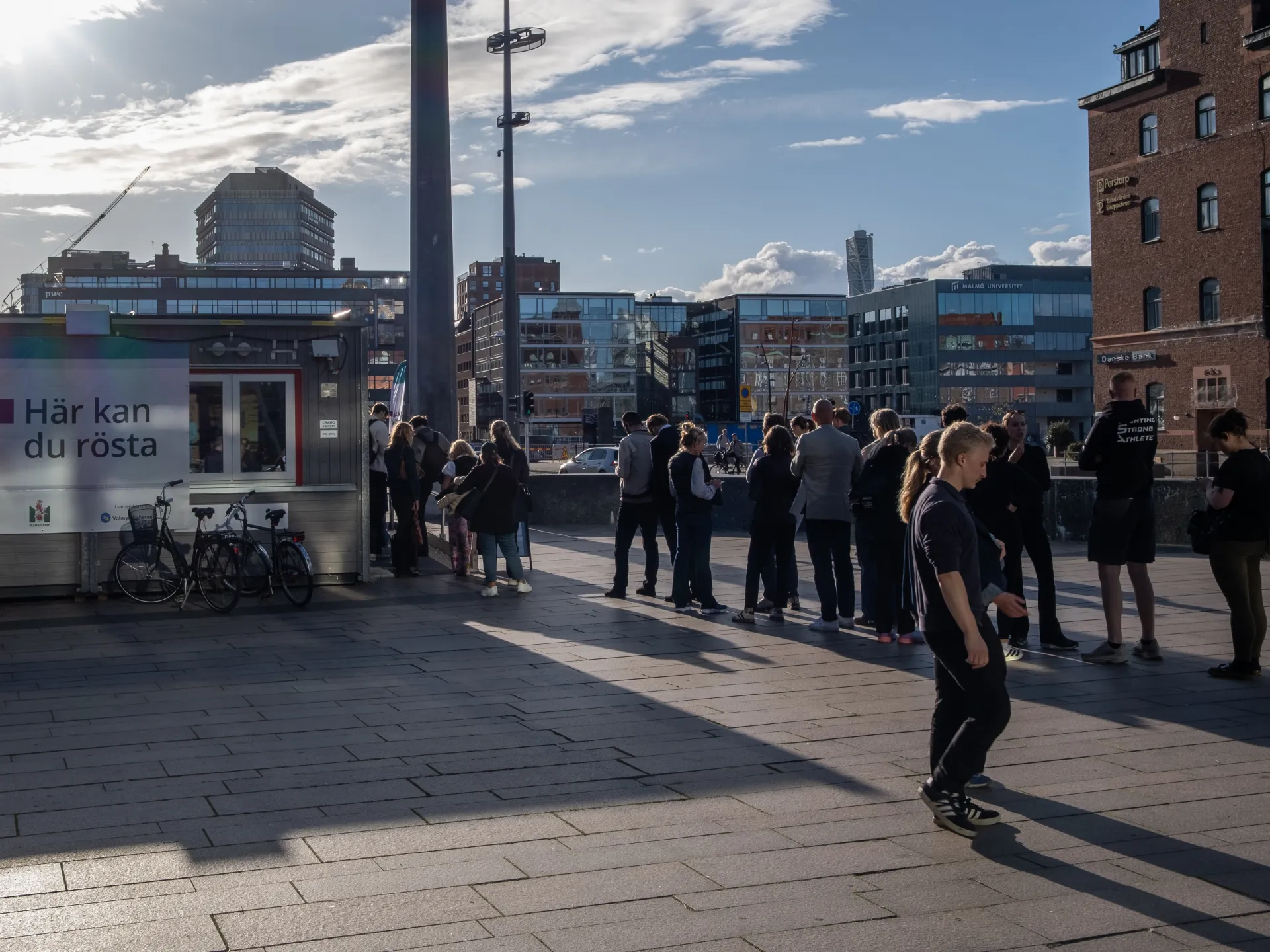
Malmö is at the centre of Sweden’s closely contested election, with migration and integration dominating debate in a city where more than one-third of its 368,000 residents were born outside Sweden. National polling places the centre-left opposition, led by the Social Democrats, a few percentage points ahead of the right-wing bloc, although the gap has narrowed over the past month.
The city has become a focus of far-right criticism, with right-wing parties presenting Malmö as evidence of failed integration. The city’s Million Programme estates, built largely between 1965 and 1974, are associated with later residential segregation and socioeconomic disadvantage. Rosengård, where footballer Zlatan Ibrahimović grew up, remains classified by police as a particularly vulnerable area.
Voters interviewed by Al Jazeera described a broader set of concerns. Healthcare, unemployment, the cost of living and household finances sit alongside migration and crime. Malmö’s unemployment rate is around 11 percent, among the highest of any Swedish municipality, while young residents have rejected claims that the city’s politics can be reduced to crime and immigration.
The Sweden Democrats are polling as Sweden’s second-largest party and could enter government if the right-wing bloc wins. Prime Minister Ulf Kristersson has promised the party cabinet posts, including responsibility for migration.
Recent policy changes have sharpened the debate. The government paused some family-separation cases involving teenagers in March and moved towards reforms in June. It also raised the salary threshold for work permits to 90 percent of Sweden’s median wage, a change that can ultimately affect whether people face deportation.
Crime remains another dividing line. Sweden has experienced high levels of deadly gun violence, although lethal violence reportedly fell in 2025 to its lowest level since 2012. Criminal networks have recruited children to transport weapons, sell drugs and carry out violence, while parties differ over the balance between punishment, deterrence, prevention and rehabilitation.
Some young voters appear more engaged than at the previous election, but the country’s bloc-based political system has left others uncertain. With the result unresolved, Malmö’s campaign reflects a national contest over whether Sweden’s next government will prioritise tougher migration and crime policies or address the socioeconomic conditions behind the city’s divisions.