Mali’s security strategy under strain as Tuareg and JNIM forces coordinate deadly ambush
Analysts say the alliance between the Azawad Liberation Front and Jama’at Nusrat al-Islam wal-Muslimin is driven by shared opposition to the military government rather than ideological alignment, complicating regional security efforts.
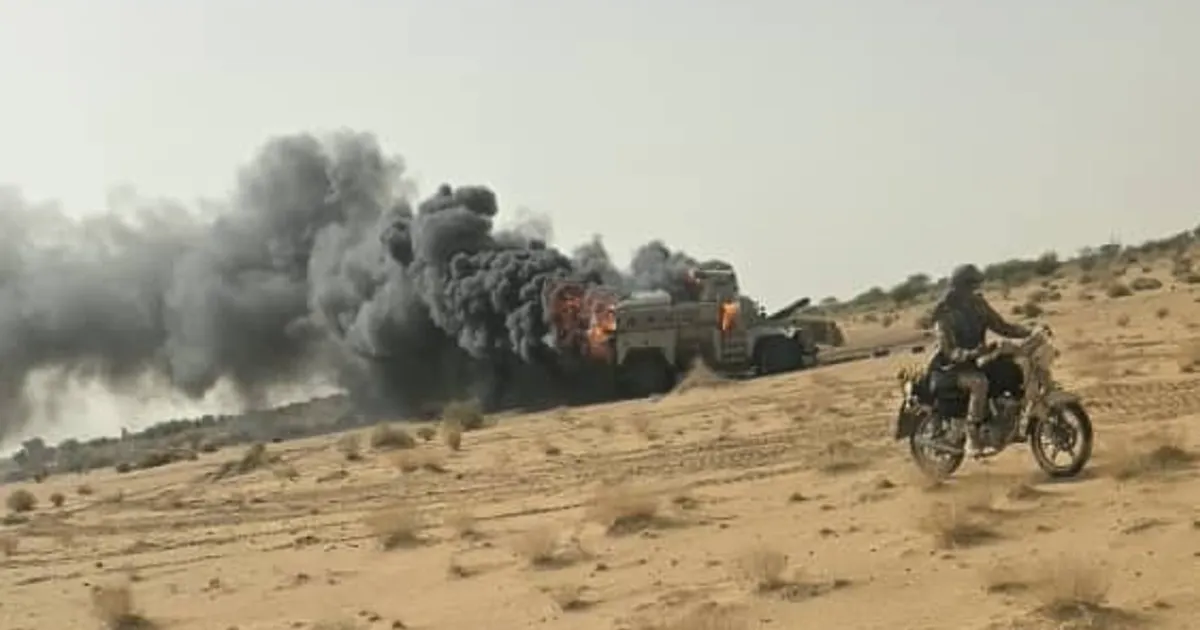
At least 50 Malian soldiers and members of Russia’s Africa Corps were killed in a coordinated ambush near the northern town of Anefis on July 18, 2026. The attack, jointly claimed by the Azawad Liberation Front (FLA) and Jama’at Nusrat al-Islam wal-Muslimin (JNIM), marks a significant escalation in tactical cooperation between Tuareg separatists and an al-Qaeda affiliate. The incident has drawn scrutiny to the Malian military government’s security strategy, which relies heavily on kinetic operations and Russian support following the withdrawal of United Nations peacekeepers and Western partners.
The Malian military confirmed the assault on a joint convoy of the Malian Armed Forces (FAMa) and the Africa Corps, stating that counter-operations had been launched. The Africa Corps subsequently released footage it claimed showed drone strikes against the fighters involved. This engagement follows a series of coordinated attacks across northern Mali since April, including the re-taking of Kidal by Tuareg and allied fighters, which suggests that armed groups are increasingly capable of sustaining pressure on strategically important military positions.
Analysts attribute the growing cooperation between the FLA and JNIM to a shared battlefield enemy rather than ideological alignment. Héni Nsaibia, a senior West Africa analyst at the Armed Conflict Location & Event Data (ACLED) monitor, noted that the groups are acting as force multipliers for one another. He explained that despite divergent long-term political aims, the groups share kinship ties and regard themselves as defending ancestral territory against invading forces, allowing them to pool resources and mutualise efforts against the Malian armed forces and their Russian partners.
The shift in alliance dynamics coincides with Mali’s decision to abandon the 2015 Algiers Peace Agreement and deepen military cooperation with Moscow. Since replacing the Wagner Group as Moscow’s principal military presence in Mali, the Africa Corps has provided combat support and expanded surveillance capabilities. However, experts argue that while Russian backing has strengthened the army’s ability to respond to attacks, it has not addressed the underlying political and governance issues fueling the conflict. Nimi Princewill, a regional analyst specialising in West Africa and the Sahel, stated that the Kremlin’s military support has not changed the overall picture, with the conflict remaining deeply rooted in geographical and ideological dimensions.
The limitations of Bamako’s security strategy raise broader questions about regional stability, particularly for the Alliance of Sahel States (AES). The evolving battlefield presents a challenge for the AES, whose members face persistent armed violence despite expanding military cooperation. A Niger-based security expert told Al Jazeera that the war is spreading south, noting that armed groups do not recognise the AES any more than they recognised the Economic Community of West African States (ECOWAS). If the FLA-JNIM partnership proves durable, it could encourage similar tactical cooperation elsewhere in the Sahel, further complicating efforts to contain armed groups whose operations span national borders.