Mali's mining sector sustains economic output despite security crisis and leadership losses
With gold accounting for nearly 80 per cent of exports, the industry remains a critical pillar of the economy even as armed groups target military positions
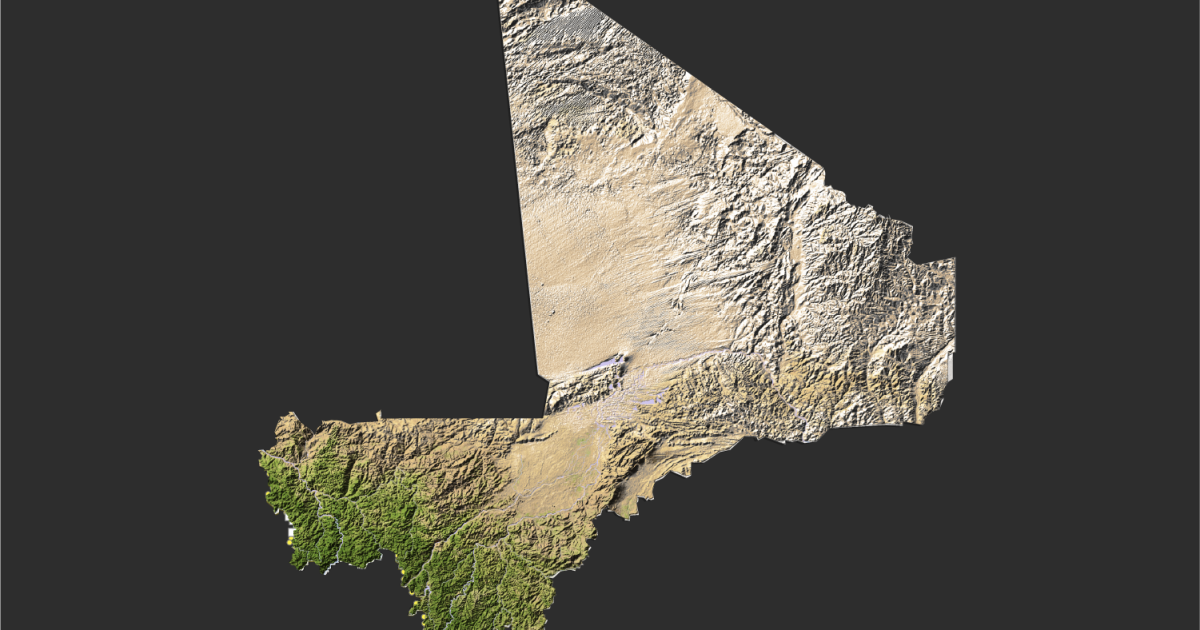
Mali continues to position itself as a major player in the global mineral market, holding Africa's third-largest gold reserves despite a severe security crisis that has persisted since 2012. The nation possesses an estimated 800 tonnes of proven gold reserves, with geological assessments suggesting potential could reach up to 2,000 tonnes. This wealth is concentrated in the southern regions of Sikasso, Koulikoro, and Kayes, along the Birimian volcanic belt, yet the industry operates under the shadow of ongoing instability.
The economic reliance on this sector is profound, with the mining industry employing more than two million people and generating approximately $4.3 billion in exports in 2024. According to data from the United States Department of Commerce and the International Monetary Fund, gold accounts for nearly 80 per cent of the country's total exports. However, the military transition government, which has been in power since a coup in August 2020, recently introduced a new mining code in 2023 to increase national revenue by allowing the state to hold up to a 35 per cent stake in mining operations.
A significant discrepancy exists between official government statistics and actual industry output. While the state records annual gold production at roughly 57 tonnes, estimates from the World Gold Council suggest production reached about 100 tonnes in 2024. This gap is largely attributed to widespread artisanal mining and unrecorded smuggling activities that remain difficult for authorities to track amidst the prevailing security challenges.
Recent violence has underscored the fragility of the security environment required to sustain such economic activity. In April 2026, al-Qaeda-linked armed groups joined forces with Tuareg separatists to launch simultaneous attacks across the country. These assaults targeted military positions and resulted in the death of Defence Minister Sadio Camara, prompting armed groups to declare a siege on the capital, Bamako. Despite these events, the mining sector has remained a critical economic pillar.
Foreign investment remains central to the industry's structure, with the sector historically dominated by Canadian and Australian firms while Chinese involvement rises. Canadian mining company Barrick Gold is a primary operator, producing gold at its Loulo-Gounkoto complex since 2005, alongside other major sites including Fekola, Syama, and Sadiola Hill. The Goulamina project, Mali's largest lithium deposit, is majority-owned by China's Ganfeng Lithium with a significant stake held by Australia's Leo Lithium.
Beyond gold, the nation holds vast deposits of lithium, uranium, phosphates, iron ore, manganese, and diamonds. While the Goulamina project contains tens of millions of tonnes of lithium-bearing ore, much of the country's mineral wealth remains underexplored and untapped, particularly in the northern regions where instability has slowed development. Uranium exploration has focused on the Kidal and Falea regions, and diamond deposits have been identified along parts of the Niger River basin.