Lithuania uncovers migrant tunnels as Belarus hybrid threat deepens
Lithuanian officials have identified 12 underground tunnels used by migrants to bypass border defences, describing the infrastructure as evidence of a calculated hybrid attack orchestrated by Minsk to undermine European unity.
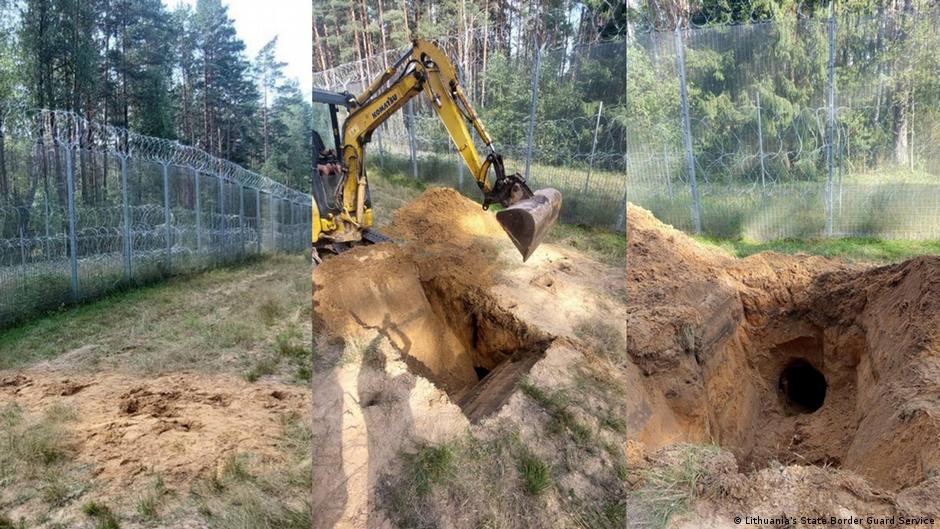
Lithuanian border guards have discovered 12 underground tunnels near the Belarusian frontier since the beginning of the year, with structures extending up to 25 metres on the Lithuanian side. Authorities have arrested approximately 40 migrants exiting these passages and initiated pre-trial investigations against around 20 suspects for illegal digging and potential people smuggling. The discovery has intensified concerns that the infrastructure is part of a broader strategy to destabilise the Baltic state and disrupt cohesion within the European Union.
General Rustamas Liubajevas, commander of Lithuania’s State Border Guard Service, stated that a ground seismic system detects vibrations from digging, allowing guards to apprehend migrants as they exit. Liubajevas expressed surprise at the effort required to construct such tunnels, noting that migrants are arrested almost immediately and that only small groups manage to pass through. He argued that the logistical support required, including materials to strengthen tunnel walls, suggests involvement beyond independent migrant networks.
The tunnels are seen as an attempt to bypass the 550-kilometre fence covering part of the 700-kilometre Lithuanian-Belarusian border. Lithuania is currently testing Polish scanning equipment to identify empty spaces underground, with plans to purchase and deploy the technology if it proves effective. The prosecutor’s office confirmed that media visits to the sites are restricted due to the ongoing investigation.
Experts and officials characterise the tunnels as a component of a "hybrid attack" orchestrated by Belarus. Margarita Seselgyte from Vilnius University described the infrastructure as a move to cause anxiety and exploit vulnerabilities now that the border fence has been reinforced. She linked the actions to Minsk’s alliance with Moscow, suggesting the goal is to silence Lithuania’s vocal stance on defence against Russia and weaken support for Ukraine.
Linas Kojala, CEO of the Geopolitics and Security Studies Center, described the tunnels as another phase of weaponised migration that has persisted since 2021, when tens of thousands of migrants crossed into Lithuania, Poland, and Latvia. The European Union has previously described these events as state-sponsored instrumentalisation of migrants. While irregular entry attempts totalled 1,652 in 2025, Kojala noted that numbers will not drop to zero unless Belarus addresses the issue on its side, a move he deemed unlikely.
Robert Gonzci, an analyst at the Migration Research Institute in Budapest, noted that weaponised migration is a low-cost method for exerting pressure on democratic states, which face dilemmas between border security and humanitarian obligations. He added that Belarus and Russia have used such tactics to divert Western attention from Russia’s strategic agenda and create instability along NATO’s eastern flank. Belarusian President Alexander Lukashenko has denied facilitating migration flows to neighbouring states.