Leipzig authorities arrest driver in mass casualty car-ramming attack
Emergency services deployed significant resources to a central shopping district incident that left at least two dead and 20 affected, adding to a disturbing pattern of violence across Germany
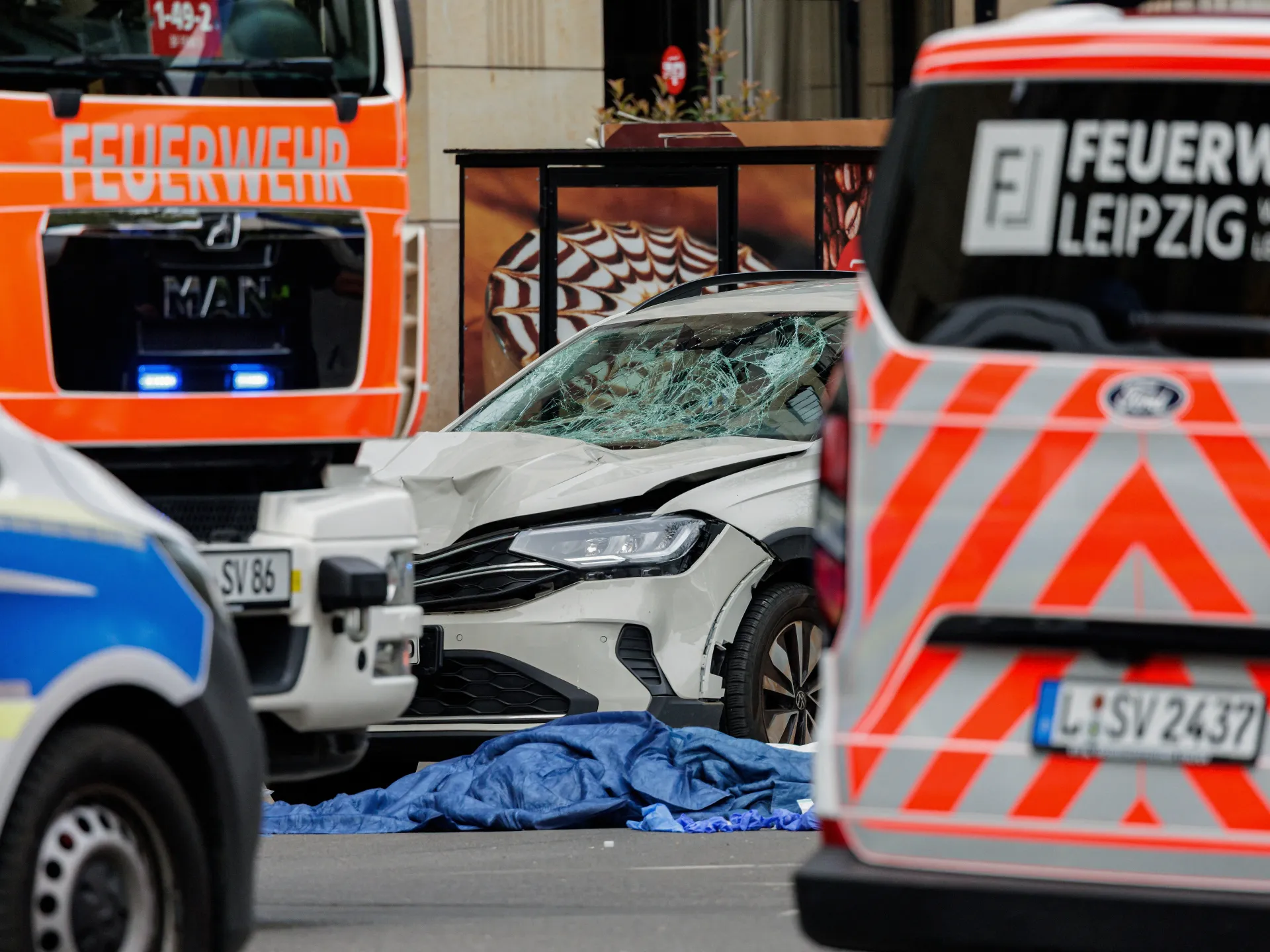
Police in Leipzig have arrested the driver of a damaged Volkswagen SUV following a mass casualty incident in the city's central shopping district. The vehicle was reported speeding through a pedestrian zone on Grimmaische Strasse, resulting in at least two fatalities and affecting at least 20 other individuals. Authorities have declared the situation secure and confirmed the driver is no longer considered a threat, though the specific identity and background of the perpetrator have not been disclosed.
Despite securing the suspect, officials have offered no insight into the driver's intentions. Mayor Burkhard Jung addressed the media at the scene, stating explicitly that police do not know the motivation behind the attack or anything about the culprit. This lack of immediate intelligence contrasts with the confirmed physical evidence of a coordinated assault, which witnesses described as a vehicle carrying a person on top ploughing through a crowded area.
The emergency response to the incident on Grimmaische Strasse required a substantial deployment of resources. Approximately 40 firefighters and 40 paramedics were dispatched to the location, supported by two helicopters to manage the logistics of the mass casualty event. Witnesses reported seeing several bodies covered with sheets and noted at least one stabbing victim alongside the casualties caused by the vehicle, indicating a potentially complex sequence of events.
This attack in Leipzig, a major eastern German city with a population of roughly 630,000, occurs against a backdrop of escalating violence across the nation. Germany has recently experienced a series of car-ramming and stabbing incidents with varying reported motives, ranging from religious or political extremism to mental health issues. The current event in Saxony follows similar tragedies in Mannheim, Munich, Magdeburg, and Solingen over the past year.
While the immediate danger has been neutralised, the absence of information regarding the attacker's nationality or specific grievances leaves security officials without immediate leads. The incident underscores the ongoing challenges in preventing targeted violence in public spaces, particularly in high-traffic commercial zones where pedestrian safety is a primary concern for local governance.