Legacy data systems stalling agentic AI return on investment, MIT Technology Review report finds
While organisations rush to implement agentic AI, only 45 per cent of enterprise data is currently accessible to these systems, with legacy infrastructure preventing speed and trust in decision-making for most companies.
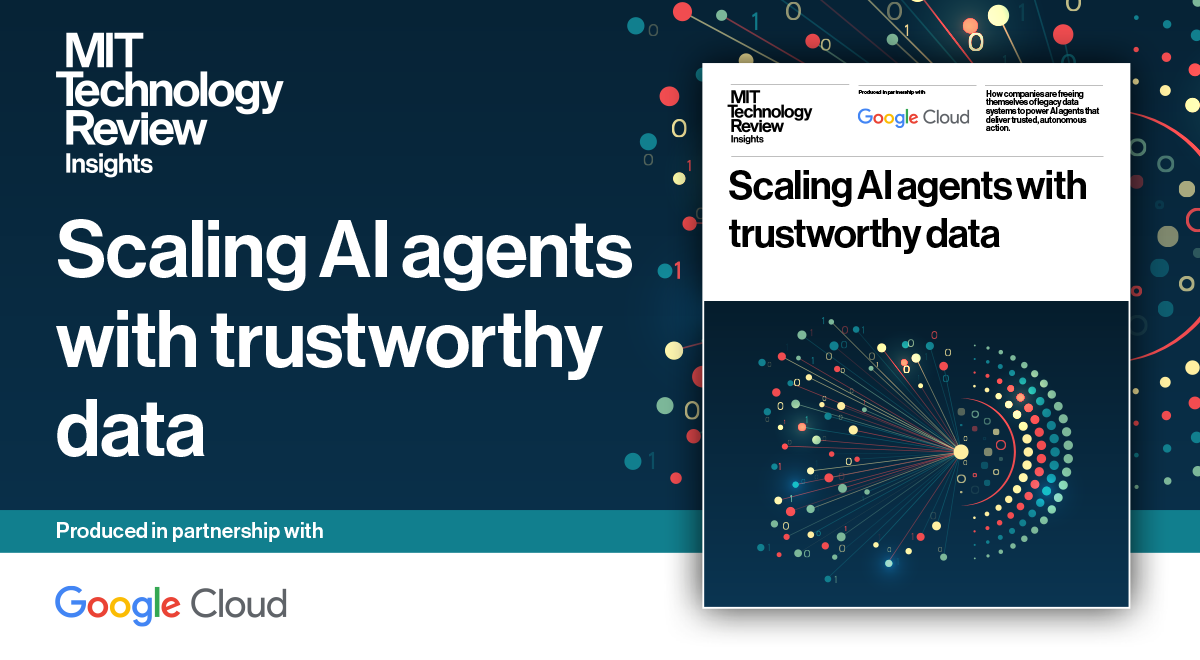
A new report from MIT Technology Review Insights identifies inadequate infrastructure and legacy data systems as the primary obstacles preventing organisations from achieving return on investment from agentic AI. The study, based on a survey of 300 data and technology executives, highlights a significant disconnect between the rapid adoption of AI agents and the underlying data readiness required to support them.
Agentic AI represents a shift from systems that merely answer questions to those that take autonomous action. This transition places considerable new demands on enterprise data systems, requiring frictionless access to structured and unstructured data across operational functions such as supply chain, point-of-sale, and human resources. To make decisions in real time, agents need this data to be readily available with appropriate business context.
The survey reveals that most organisations are struggling to meet these demands. Across all surveyed entities, AI currently has access to an average of only 45 per cent of company data. This figure drops to 30 per cent or less in organisations categorised as data laggards, which cite legacy systems as major constraints. Two-thirds of these laggards report that outdated infrastructure limits the scaling of AI agents, while 68 per cent say these systems prevent agents from making decisions at speed.
In contrast, a small group of data leaders, who provide AI access to over 70 per cent of their enterprise data, are experiencing fewer scaling constraints. Only 8 per cent of these leaders report similar limitations from legacy systems. This data readiness correlates strongly with trust; while only around half of all surveyed organisations trust the accuracy of their AI agents’ decisions, 100 per cent of data leaders report full trust in their systems.
The pressure to modernise is intensifying, with 100 per cent of respondents planning to use agentic AI within two years and 69 per cent expecting to deploy it widely. The report urges organisations to prioritise improving access to data and enhancing governance with business context. These steps are critical to meeting the demands of agentic AI, which Gartner predicts will augment or automate 50 per cent of business decisions by 2027.
This content was produced by Insights, the custom content arm of MIT Technology Review, and was not written by the publication’s editorial staff. It was researched, designed, and written by human writers, editors, analysts, and illustrators, with AI tools limited to secondary production processes.