Kyiv strikes Russian supply lines to Crimea with AI drones
Experts say the attacks indicate a shift in tactical capability, though full control of the 160-kilometre route remains distant.
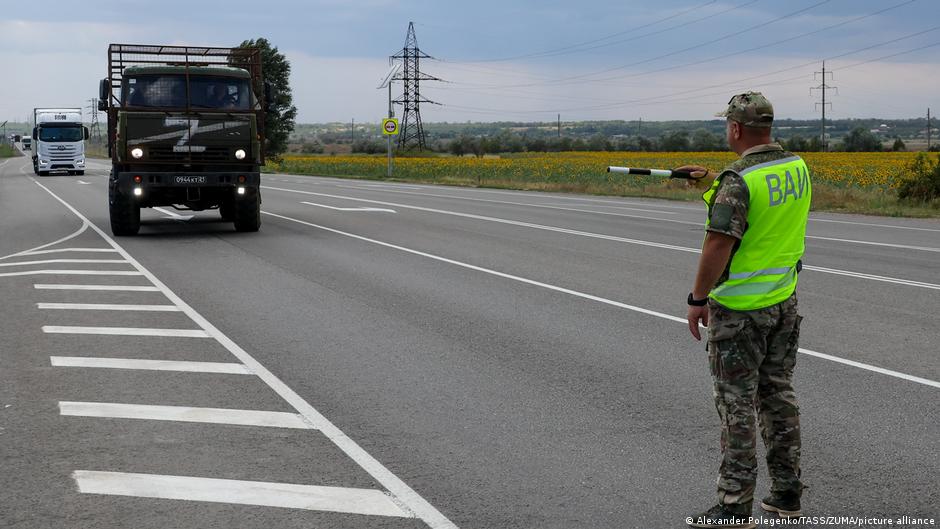
Ukrainian military officials have confirmed that newly developed medium-range weapons and artificial intelligence-equipped drones are now targeting Russian logistics routes connecting occupied Ukrainian territories to the Crimean peninsula. The strikes, concentrated around Mariupol, have reportedly damaged Russian vehicles and increased vulnerability for troops in the south, marking a significant development in the conflict that has raged since 2022.
According to Ukrainian military reports, sections of the land corridor, which stretches approximately 160 kilometres, are now under Ukrainian fire control. To substantiate these claims, the Ukrainian military has published online videos purportedly showing burned-out Russian military vehicles along the road leading through occupied southern mainland Ukraine to Crimea. Ihor Lutsenko, a Ukrainian soldier and co-founder of the Air Intelligence Support Center, stated on Facebook that the land corridor is now a "fleeting gain" for Moscow. He added that Crimea is becoming an "overseas territory" for Russia due to the persistent presence of Ukrainian drones circling the area.
The operational shift is attributed to technological breakthroughs, specifically the deployment of drones from the Ukrainian manufacturer Wild Hornets, which are equipped with built-in AI systems. However, military expert and historian Mykhailo Zhyrokhov noted that robot-assisted warfare remains heavily reliant on human personnel. He highlighted a critical shortage of trained specialists in units dealing with medium-range operations, suggesting that this human factor represents one of the greatest limitations in achieving full potential for these advanced technologies.
While the strikes indicate a shift in tactical capability, experts caution that full control of the supply routes is still distant. Mykola Bielieskov, an adviser at the Ukrainian National Institute for Strategic Studies, told Deutsche Welle that if Kyiv had full control, Russian troops in the south would react differently. Nevertheless, he acknowledged that vulnerability among Russian troops is increasing, noting that they are less active despite heavy attacks and a large area of operations.
Analysts suggest that Russia may soon respond by preparing additional mobile fire groups and comprehensive protection strategies, including nets to defend against drones. Zhyrokhov argued that such defensive measures would impose an additional resource burden on Russian forces. He recommended that Ukraine expand drone attacks, equip them with heavier warheads, and target infrastructure such as gas stations and repair shops to systematically disrupt Russian logistics while the element of surprise remains.