Kyiv claims Azov strikes amid Romanian drone incident and stalled peace talks
Ukrainian forces report striking five cargo ships in the Sea of Azov while confirming a naval drone explosion in Romanian waters, complicating diplomatic efforts for direct negotiations between Kyiv and Moscow.
Ukraine has claimed responsibility for striking five cargo ships in the Sea of Azov and coastal waters of Russian-occupied territories, alleging the vessels were engaged in the illicit transfer of military cargo and the theft of Ukrainian grain. Robert Brovdi, commander of Ukraine’s drone forces, stated that the targeted vessels, which included cargo ships and tankers in Mariupol and Berdyansk, had their names painted over and radars disabled to facilitate these operations. The strikes occurred as Russian President Vladimir Putin prepared to address an economic forum in St Petersburg, underscoring the heightened operational tempo in the region.
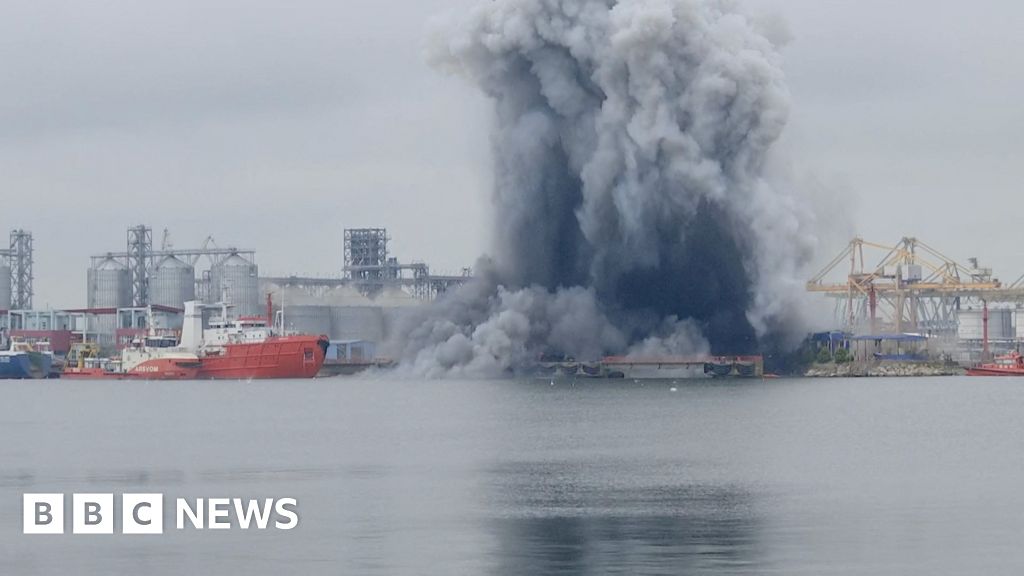
Separately, the conflict’s spillover effects were evident in Romania, where a Ukrainian naval drone exploded near the port of Constanta. Kyiv confirmed the incident, attributing the deviation to Russian electronic interference, while local authorities reported significant damage to a ship and warehouses but no casualties. This event follows a cluster of security incidents in the region, including a Russian drone strike on an apartment block in Galati that injured two people and the discovery of a stray mine near Vama Veche. Romanian officials noted the Constanta blast was part of a group of five drones, with one exploding in Ukrainian territory and three remaining unaccounted for.
The diplomatic landscape remains fractured despite renewed calls for dialogue. Ukrainian President Volodymyr Zelensky has urged direct face-to-face negotiations with Putin to end the war, a proposal supported by the United States, the European Union, and France. US President Donald Trump expressed support for the meeting, urging both sides to make compromises. However, the Kremlin has met the proposal with scepticism, with Putin casting doubt on Zelensky’s legitimacy as a representative due to the expiration of his presidential term in May 2024, a period during which elections have been suspended under martial law.
Putin maintained that any agreement would require Ukraine to withdraw from four occupied regions—Donetsk, Luhansk, Kherson, and Zaporizhzhia—and abandon its aspirations to join NATO. Kyiv has firmly rejected these territorial demands, arguing that ceding land would embolden further aggression. Previous peace talks in Geneva, Abu Dhabi, and Istanbul have failed, and ceasefire negotiations have stalled in recent months. While the Kremlin confirmed receipt of Zelensky’s open letter, it ruled out a full ceasefire as a precondition for negotiations.
Amidst the diplomatic stalemate, violence continues on the ground. Local officials reported that at least 13 people were killed and more than 70 injured in Ukraine over the past 24 hours due to Russian strikes. These attacks included a drone strike on a dairy factory outside Kyiv that claimed four lives, as well as incidents in the Kherson, Kharkiv, Sumy, Zaporizhzhia, Chernihiv, and Dnipro regions. The ongoing hostilities and maritime incidents highlight the persistent instability across the Black Sea region as both sides prepare for further escalation.