Kumamoto faces compounded disaster risks as extreme heat and typhoon warnings clash with earthquake recovery
Residents in Kumamoto Prefecture are urged to maintain heatstroke prevention measures and brace for violent winds as Typhoon 13 approaches, complicating ongoing recovery efforts following the magnitude 7 Reiyō 8 Kumamoto Earthquake.
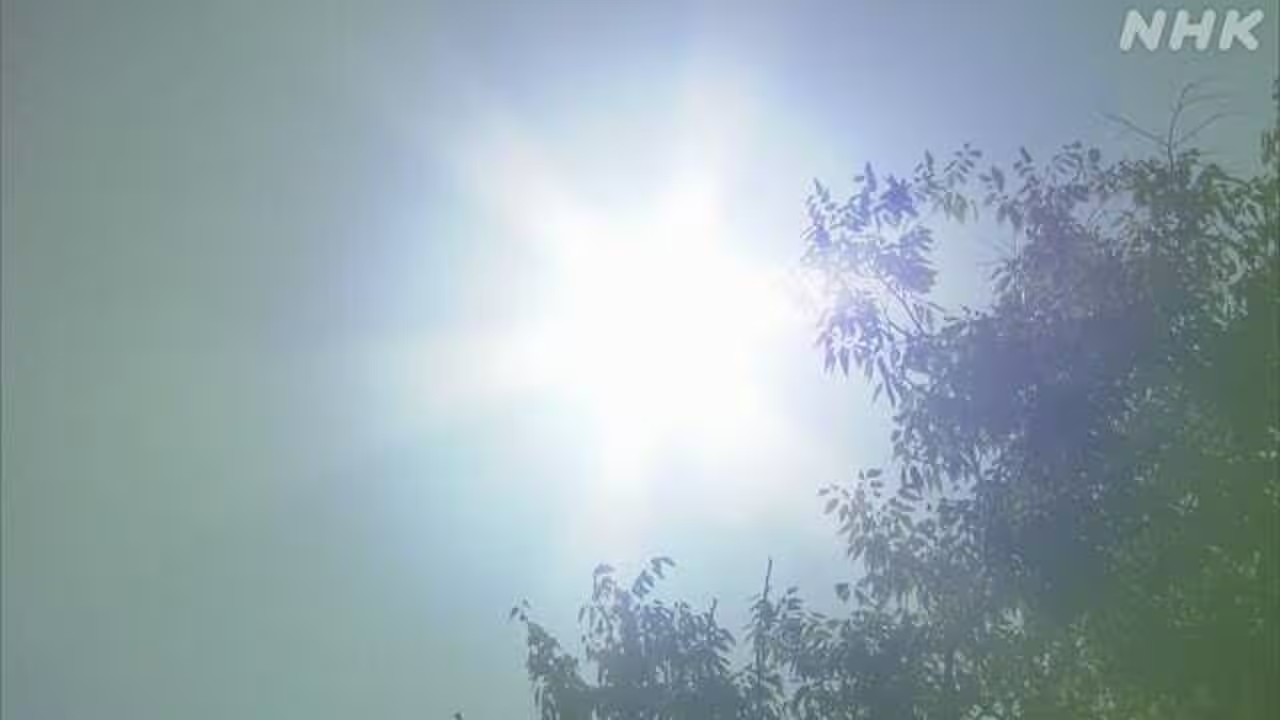
Kumamoto Prefecture is confronting a complex disaster scenario on 8 August 2026, as extreme weather conditions threaten an area still grappling with the aftermath of the Reiyō 8 Kumamoto Earthquake. The Japan Meteorological Agency (JMA) has issued warnings for strengthening winds due to the influence of Typhoon 13, while simultaneously advising residents to take rigorous measures against heatstroke as fierce temperatures persist.
The earthquake, which recorded a maximum seismic intensity of 7, caused significant damage across the prefecture. As of 7 August, authorities reported 38 deaths, including suspected disaster-related fatalities, with 6,630 people residing in shelters. The convergence of high temperatures and typhoon conditions poses additional challenges for displaced populations and recovery operations, particularly as nights remain warm with temperatures not dropping significantly, thereby increasing the risk of heat-related illness.
In response to the weather advisory, officials have emphasised the need for frequent hydration and other heatstroke prevention strategies. The JMA has identified Typhoon 13 as a large and very strong system, prompting warnings for violent winds and other associated hazards. Residents are advised to remain vigilant as the storm system influences local weather patterns, potentially disrupting ongoing relief efforts.
Despite the challenging environmental conditions, recovery infrastructure is gradually stabilising. The Kyushu Shinkansen resumed services between Shin-Minamata and Kagoshima-Chuo on 7 August, operating six round trips daily. This partial restoration of transport links is a critical step in facilitating the movement of aid and personnel, although the full extent of network restoration remains unconfirmed.
Disaster volunteer activities are also beginning to intensify, with efforts expanding into areas such as Hikawa Town. However, the dual threat of extreme heat and strong winds requires a coordinated approach to public safety. Authorities continue to monitor the situation closely, urging all residents to adhere to official guidance to mitigate risks associated with both the meteorological events and the seismic aftermath.