Kinshasa confirms embassy shift to Jerusalem, defying diplomatic consensus
The Democratic Republic of the Congo has issued a joint statement with Israel confirming the relocation of its diplomatic mission from Tel Aviv to Jerusalem, a move that aligns Kinshasa with a small minority of nations while challenging the prevailing international stance on the city’s status.
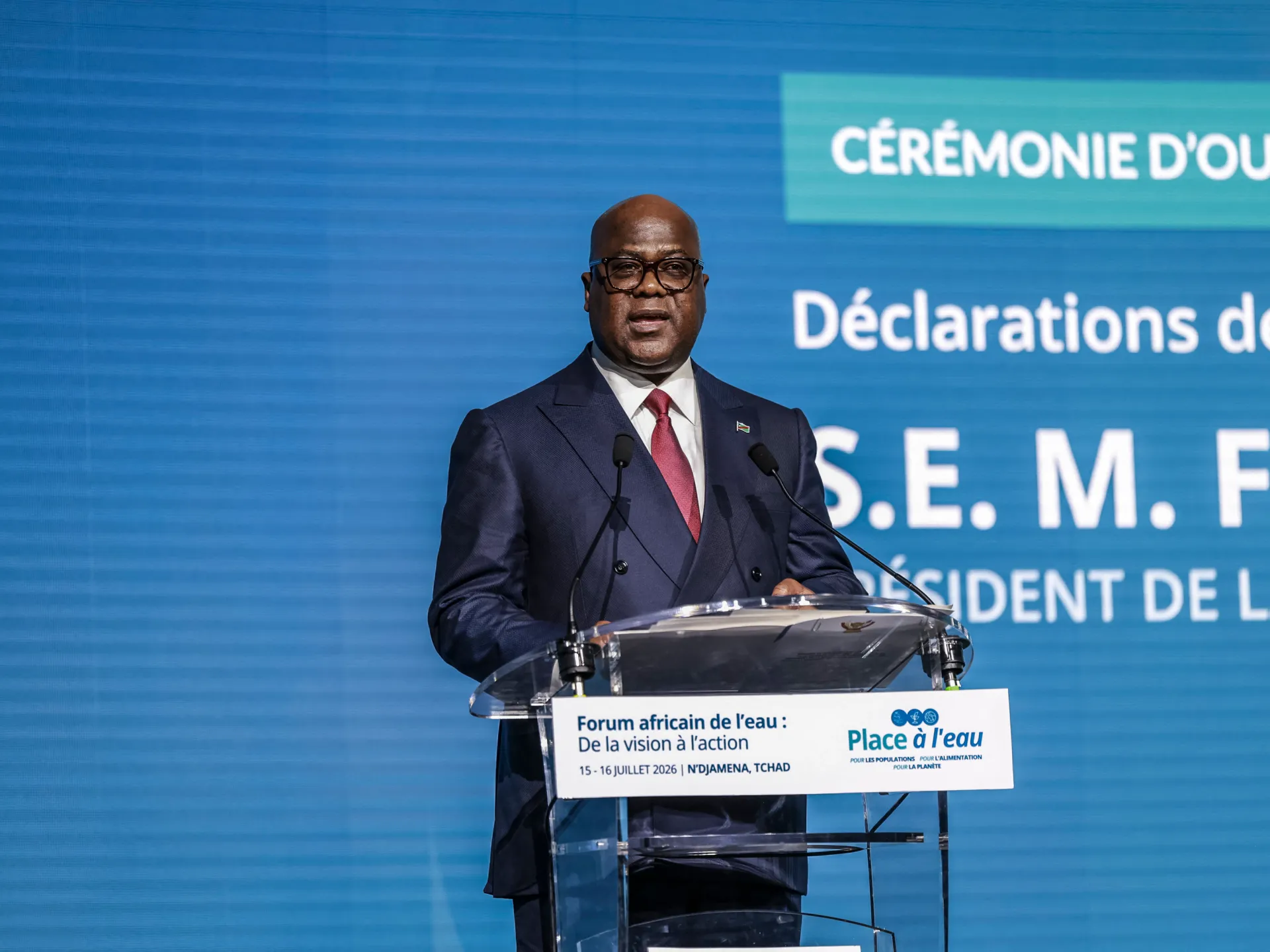
The Democratic Republic of the Congo (DRC) has formally reiterated its decision to relocate its embassy in Israel from Tel Aviv to Jerusalem. Following a recent visit to Israel by President Felix-Antoine Tshisekedi, both nations issued a joint statement on Thursday confirming that they would take concrete steps towards the relocation. The announcement marks a significant institutional shift in the bilateral relationship, moving beyond the initial diplomatic engagement established in previous years.
The policy decision traces back to September 2023, when President Tshisekedi met with Israeli Prime Minister Benjamin Netanyahu at the United Nations General Assembly in New York. At that time, the two leaders agreed in principle to the move. Prior to this, in 2020, the DRC had announced plans to appoint an ambassador to Israel after a two-decade hiatus and to establish an economic section in Jerusalem, while retaining the main embassy in Tel Aviv. The current statement signals the finalisation of that transition.
The diplomatic relationship has expanded significantly in recent months, with Israeli President Isaac Herzog visiting the DRC capital, Kinshasa, in November. President Tshisekedi has previously cited his Christian faith as a driver for his support of Israel and has sought broader alignment with the United States, which has increasingly pressured Rwanda over armed rebel advances in the DRC. This embassy move further cements that strategic alignment.
The DRC’s decision places it in a distinct minority among nations. The United States moved its embassy to Jerusalem in 2018 during President Donald Trump’s first term, with Fiji, Guatemala, Honduras, Papua New Guinea, and Paraguay following suit. Kosovo and Somaliland, which are not UN member states, also maintain missions they consider embassies in the city. The announcement also follows a similar pledge by Colombia’s new president, Abelardo de la Espriella, who recently announced plans to move his country’s embassy to Jerusalem.
In contrast, the majority of countries with diplomatic relations with Israel maintain their embassies in the Tel Aviv area. These nations argue that Jerusalem’s final status should be determined through negotiations between Israelis and Palestinians. Israel considers the entire city its capital and has actively encouraged foreign governments to establish embassies there, while Palestinians seek occupied East Jerusalem as the capital of a future state.
The UN Security Council has generally rejected measures seeking to alter the status of Jerusalem and has called on countries not to establish diplomatic missions there. By proceeding with the relocation, the DRC is effectively diverging from this international consensus, prioritising bilateral ties with Israel over the broader diplomatic framework maintained by most of the world.