Japan’s Upper House opposition parties halt 'sub-capital' bill debate pending session extension
Parliamentary strategy chiefs from Japan’s House of Councillors have reached a consensus to delay debate on legislation related to the 'sub-capital' concept, tying the move to the outcome of negotiations over the current session’s extension.
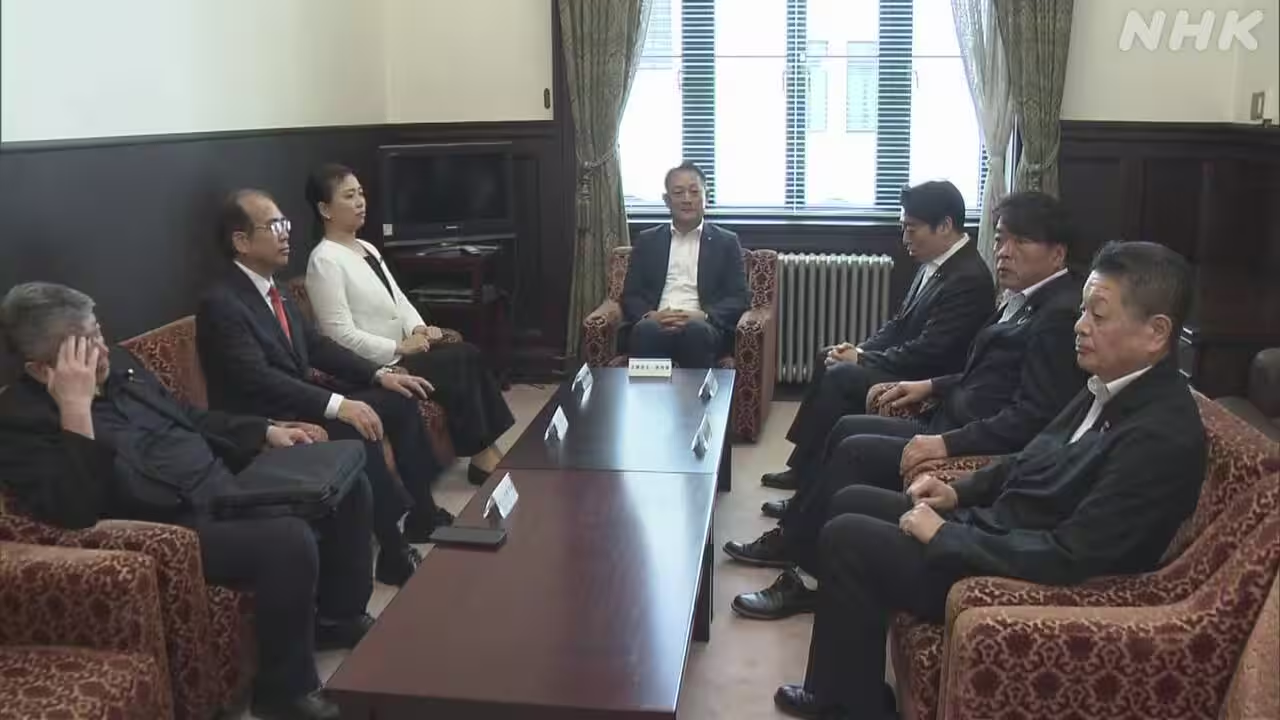
The parliamentary strategy chiefs of six opposition parties in Japan’s House of Councillors held talks on 16 July 2026 regarding legislation related to the 'sub-capital' concept. According to NHK News Japan, the parties reached a consensus that they will not enter into debate on the bill until it is clear whether the current parliamentary session, which ends on 17 July, will be extended.
The 'sub-capital' concept refers to plans to decentralise certain government functions from Tokyo to other regions in Japan. While the specific content or progress of the 'sub-capital' legislation is not detailed in the source material, the term is used in quotes, indicating it is a proposed or conceptual title rather than an officially designated bill name.
The agreement was reached during a meeting of the six opposition parties’ parliamentary strategy chiefs. The parties stipulated that discussion will not commence until it is determined whether the current parliamentary session, which concludes on 17 July, will be extended. The specific decision to withhold debate is contingent on the outcome of the session extension discussion, which is expected to be clarified by that date.
The House of Councillors is one of the two houses of Japan’s National Diet. Parliamentary sessions in Japan have fixed terms, and extensions are subject to political negotiation between the government and opposition parties. The final outcome of the session extension decision remains pending as of the report date.
The exact composition of the six opposition parties is not specified in the source material. Claims regarding the 'sub-capital' bill's status should be phrased cautiously, as the debate has not yet commenced and the legislative details are not provided. The consensus described is current as of 16 July 2026.