Japan’s Imperial Household Law Amendment Enters Upper House Deliberation
Chief Cabinet Secretary Kihara clarifies scope of proposed changes as bill enters House of Councillors
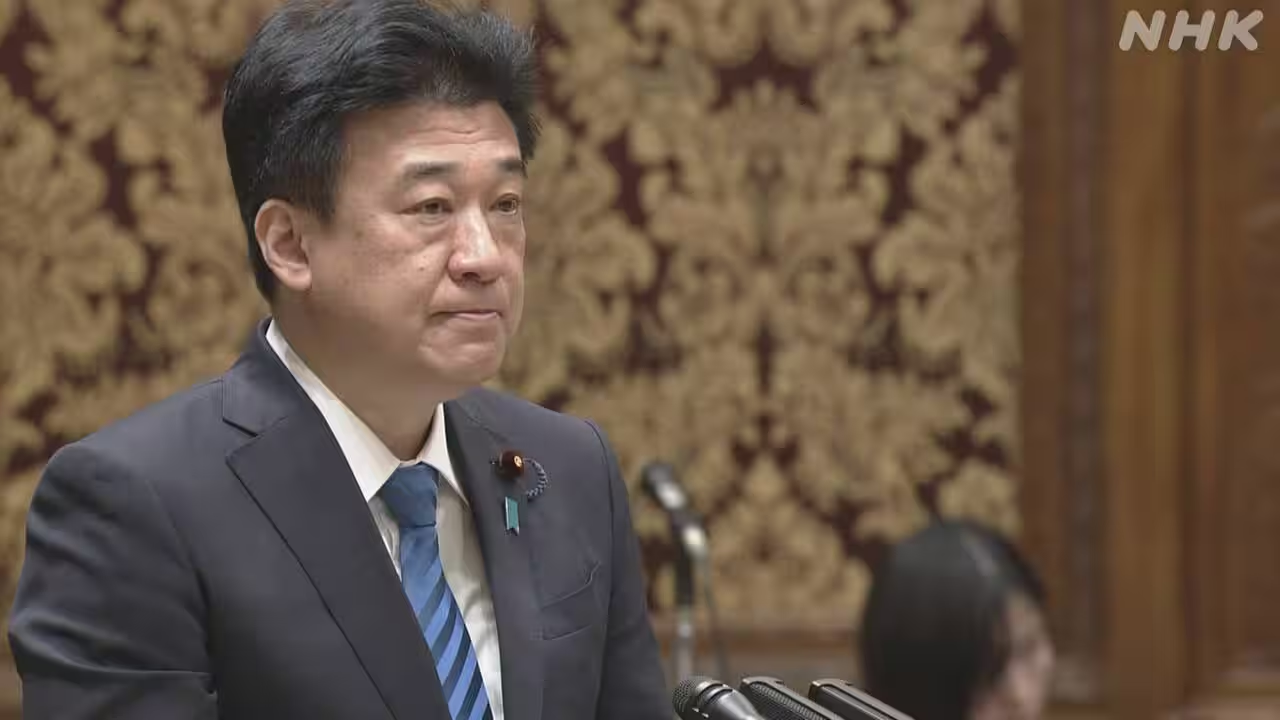
A bill to amend the Imperial Household Law entered deliberation in the House of Councillors on 15 July 2026, marking a significant step in Japan’s ongoing efforts to address the shrinking size of the imperial family. The proposed legislation seeks to ensure the stability of the imperial line by allowing for the adoption of male-line descendants of former imperial family members.
The amendment has been introduced as part of broader discussions regarding stable imperial succession in Japan. Under the current framework, the number of eligible male heirs has dwindled, prompting the government to consider legislative adjustments that would permit former members of the imperial family, who lost their status under previous regulations, to have their male-line descendants adopted back into the family.
Chief Cabinet Secretary Kihara provided official clarification regarding the scope of the proposed adoptions during the proceedings. He explained that the proposal is strictly limited to individuals with blood relations to the imperial line, explicitly stating that it does not involve adopting individuals with no blood relation to the imperial family. This distinction was emphasised to address concerns about the integrity of the imperial lineage.
The House of Councillors, as the upper house of Japan’s National Diet, is now tasked with deliberating on the bill. The legislative process involves detailed scrutiny of the provisions, particularly concerning the eligibility criteria for former imperial family members and the mechanics of their adoption.
While the bill has formally entered the deliberation phase, the specific timeline for its passage or potential amendments remains undefined. The government maintains that the measure is essential for maintaining the institutional continuity of the monarchy, though the final outcome will depend on the legislative debates within the upper house.