Japanese and Vietnamese leaders agree to strengthen critical mineral supply chains
Officials pledge enhanced collaboration on resource security amid broader regional strategic shifts
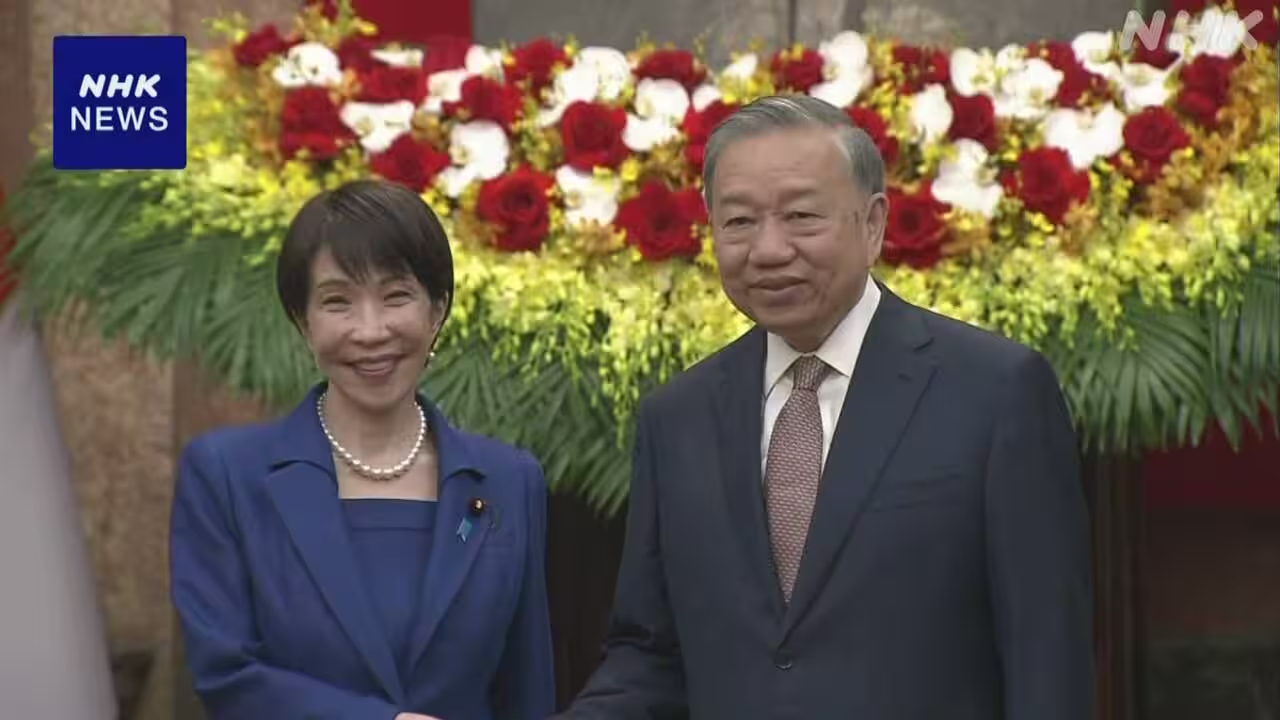
Japanese Prime Minister Koyama has reached an agreement with General Secretary To Lam of the Communist Party of Vietnam to strengthen the supply chain of critical minerals produced in Vietnam. The two leaders formalised this cooperation during a bilateral meeting that took place on 2 May 2026 while Prime Minister Koyama was visiting Hanoi.
The specific focus of the accord includes rare earths, a category of resources where Vietnam is a significant producer. By targeting these materials, the agreement underscores the strategic importance of securing access to essential industrial inputs required for modern technology and manufacturing sectors.
This diplomatic engagement occurs within the context of Prime Minister Koyama's wider visit to Vietnam, which has included discussions on other critical national interests. Reports from the visit also indicate that the two governments confirmed cooperation regarding the securing of crude oil supplies for medical purposes, highlighting a dual approach to resource security.
The meeting aligns with broader regional diplomatic efforts, reflecting a shift in policy priorities that extend beyond immediate bilateral trade. The discussion on strengthening supply chains sits alongside announcements regarding the evolution of the Free and Open Indo-Pacific policy, suggesting that resource stability is being treated as a cornerstone of regional security architecture.
While the leaders have expressed a clear intent to cooperate, the source material does not provide specific details regarding the implementation timeline or the volume of minerals involved in the new arrangement. The agreement represents a forward-looking commitment to enhance existing links rather than a description of completed infrastructure or established trade flows.
The outcome of these talks, as reported by NHK News Japan, marks a significant step in institutionalising resource cooperation between the two nations. As both countries navigate complex geopolitical landscapes, the focus on securing critical mineral supplies through formalised agreements suggests a long-term strategy to mitigate external vulnerabilities.