Japanese agriculture minister addresses ink supply concerns
Government response follows reports of packaging adjustments by major manufacturers, including Kagome, amid fears of procurement instability linked to the situation in Iran.
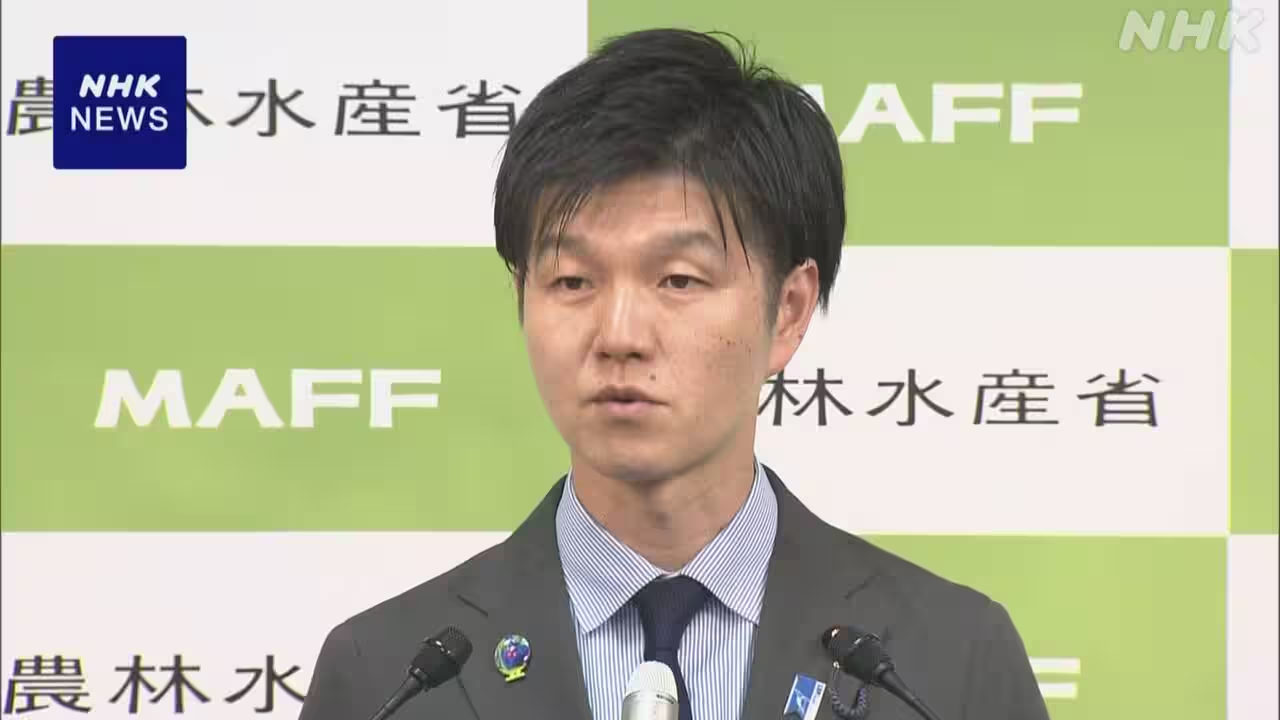
Japanese Minister for Agriculture, Forestry and Fisheries Suzuki has stated that ink solvents are currently being supplied in sufficient quantities, seeking to allay market concerns regarding potential shortages. Speaking on 15 May 2026, the minister characterised recent adjustments to product packaging by domestic companies as precautionary measures rather than indicators of an imminent crisis.
The comments come in the wake of reports that companies are altering their product designs due to unstable ink procurement. These changes have been attributed to the ongoing geopolitical situation in the Middle East, with specific attention focused on developments in Iran. The minister’s intervention aims to clarify the government’s assessment of the supply chain status amidst these external pressures.
NHK News Japan reported that the specific example cited for these packaging changes was made by food manufacturer Kagome. On 14 May 2026, the company reduced the tomato illustration on its ketchup packaging. This adjustment was reportedly a response to difficulties in securing stable ink supplies, highlighting how broader regional tensions are impacting specific manufacturing inputs in Japan.
Minister Suzuki emphasised that, at the current time, the necessary volume of ink solvents is being supplied to meet demand. By framing the corporate actions as preventive steps taken by businesses to manage uncertainty, the government is attempting to distinguish between actual supply deficits and risk mitigation strategies employed by private enterprises.
The issue sits within a wider context of economic indicators reflecting the impact of the Middle East situation on Japan. Reports from the same period indicate that the April corporate price index rose to its highest increase in three years, suggesting that resource and energy sector pressures are already influencing broader market metrics.
While the government maintains that supply chains remain functional, the link between the Iran situation and specific industrial inputs like ink solvents remains a point of focus. The minister’s statement serves as an official rebuttal to speculation that the region's instability has caused a critical breakdown in material availability for Japanese manufacturers.