US and China reach consensus on Strait of Hormuz stability amid supply concerns
White House confirms both nations agree the waterway must remain open, as oil supply drops and environmental concerns mount near Iran.
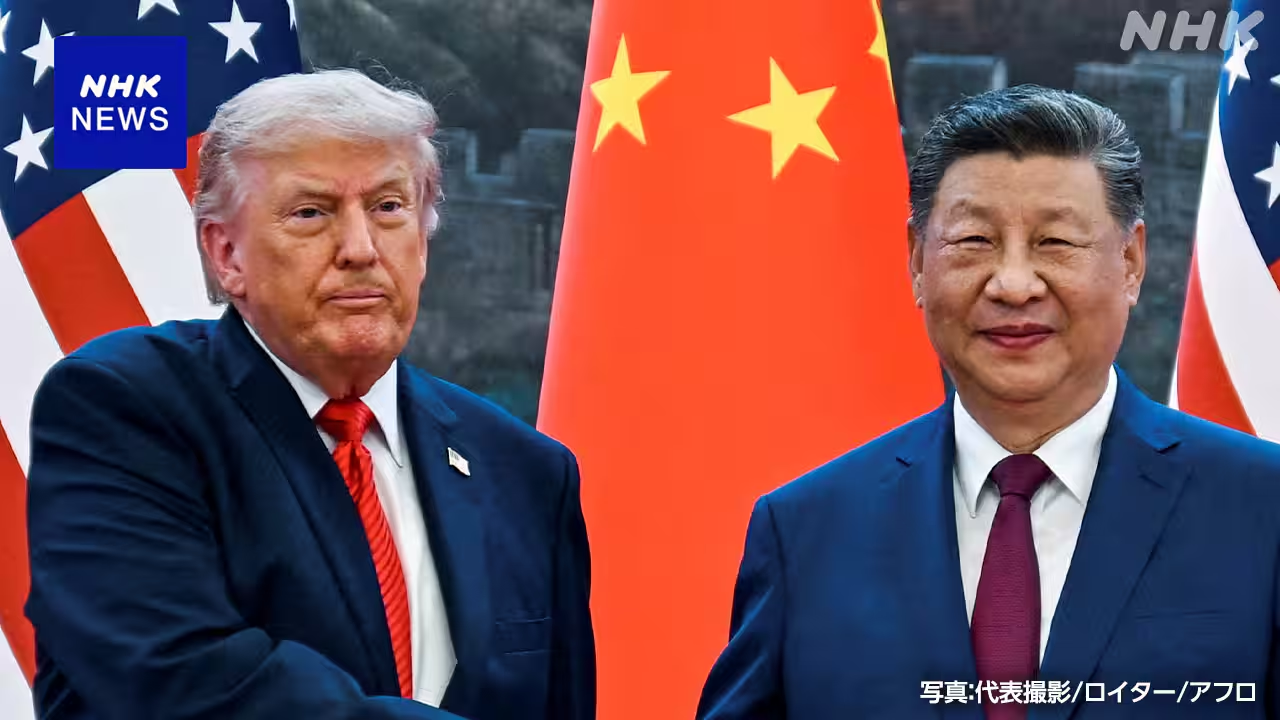
US White House officials confirmed on 14 May that the United States and China reached a consensus during their recent summit regarding the status of the Strait of Hormuz. According to statements from the White House, both nations agreed that the critical maritime chokepoint should remain open, a development aimed at stabilising global energy markets amidst ongoing regional tensions.
The diplomatic alignment comes against a backdrop of significant volatility in the Middle East. The International Energy Agency (IEA) has reported a daily reduction in global oil supply of 12.8 million barrels in response to the situation in Iran. This contraction in supply underscores the economic stakes involved in maintaining the free flow of traffic through the strait, which serves as a vital artery for international energy trade.
Compounding the instability is an environmental crisis near Iran’s Karg Island. Satellite image analysis indicates that while the scale of an oil spill in the area is shrinking, it may continue to persist. The incident has added a layer of complexity to the region’s security landscape, raising concerns about both ecological damage and the potential for further disruption to shipping lanes.
Despite the agreement on the strait’s status, high-level talks between the two superpowers touched on other sensitive geopolitical issues. During the summit, Chinese President Xi Jinping reportedly cautioned the US side regarding the issue of Taiwan, highlighting the enduring friction points in bilateral relations even as cooperation on energy security was pursued.
Maritime traffic continues to navigate the waters with caution. On 13 May, a tanker carrying four Japanese crew members passed through the Strait of Hormuz, according to data from ENEOS. The passage of commercial vessels demonstrates that while the consensus aims to ensure openness, the operational reality on the ground remains fraught with risk and uncertainty.