Japan proposes 30-year extension of Shinkansen lease fees amid inflation concerns
Expert council suggests indexation mechanism to adjust payments as initial terms expire, raising questions on long-term infrastructure financing.
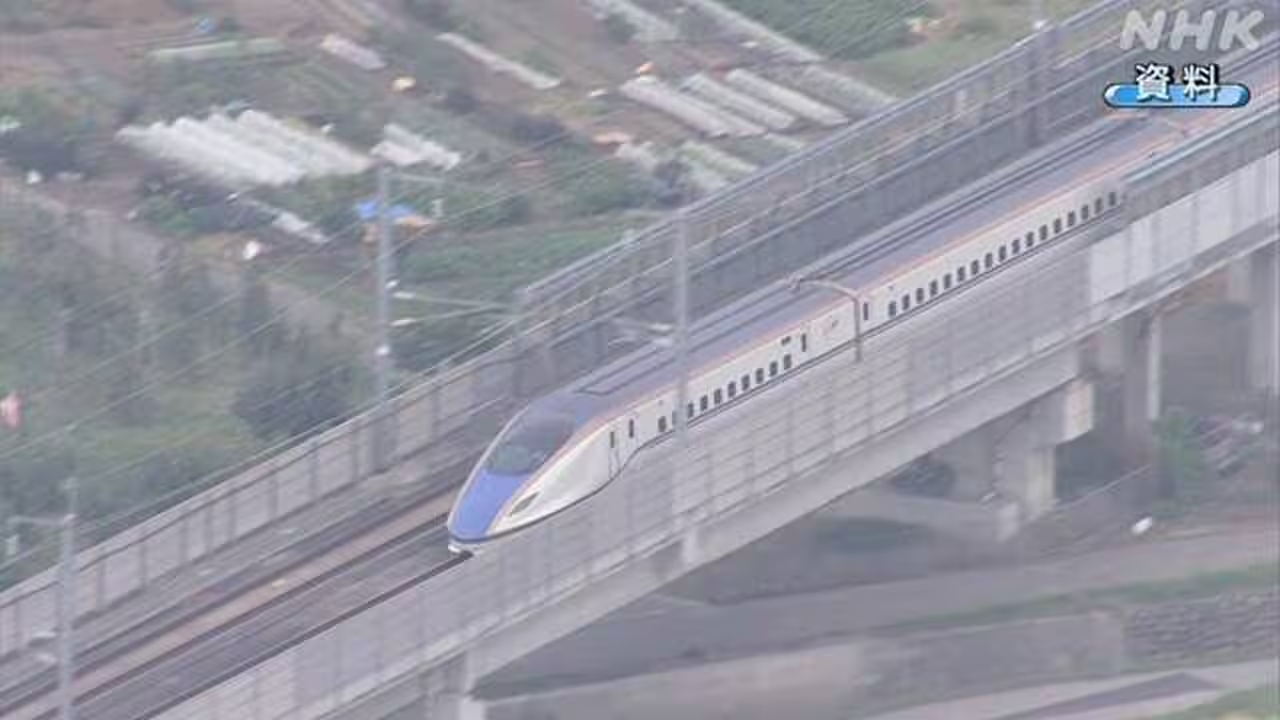
Japan’s Ministry of Land, Infrastructure, Transport and Tourism (MLIT) has unveiled a proposal that would require JR companies operating the Shinkansen high-speed rail network to continue paying lease fees for approximately 30 years after the initial 30-year payment period expires. The outline, presented by an expert council convened by the ministry, signals a significant shift in the financial structure governing the nation’s rail infrastructure as the original terms for various lines approach their conclusion.
Under the current framework, JR operators pay lease fees to the government for the Shinkansen infrastructure for 30 years from the opening of the lines. The newly proposed model seeks to address long-term financial sustainability and maintenance costs by extending this obligation. The expert council’s draft indicates that these payments would not cease upon the expiration of the initial term but would instead continue for a further three decades.
A key component of the proposal is the introduction of an indexation mechanism designed to adjust the lease fees in response to economic fluctuations. Specifically, the plan includes provisions to increase the fees if consumer prices rise, linking the cost of infrastructure usage directly to inflation metrics. This mechanism aims to preserve the real value of the payments over the extended period, ensuring that the financial contributions from operators keep pace with broader economic conditions.
The proposal was reported by NHK News Japan on 22 July 2026, following the expert council’s deliberations. It remains an outline and has not yet been finalised into binding policy. The ministry has not yet detailed the specific methodology for calculating these inflation-linked increases, nor has it confirmed how the adjustments will be implemented in practice.
While the proposal addresses the structural financing of the Shinkansen network, the specific impact on JR companies’ financial structures remains unclear. It is also uncertain whether these increased lease fees would necessitate fare adjustments for passengers. The development highlights the ongoing challenges in managing the long-term upkeep of Japan’s critical transport infrastructure as the initial subsidy and lease periods for older lines come to an end.