Japan issues heatstroke warnings as extreme temperatures and instability hit multiple regions
Public health authorities urge thorough heatstroke prevention measures as atmospheric instability brings heavy rainfall to the Kanto-Koshin region.
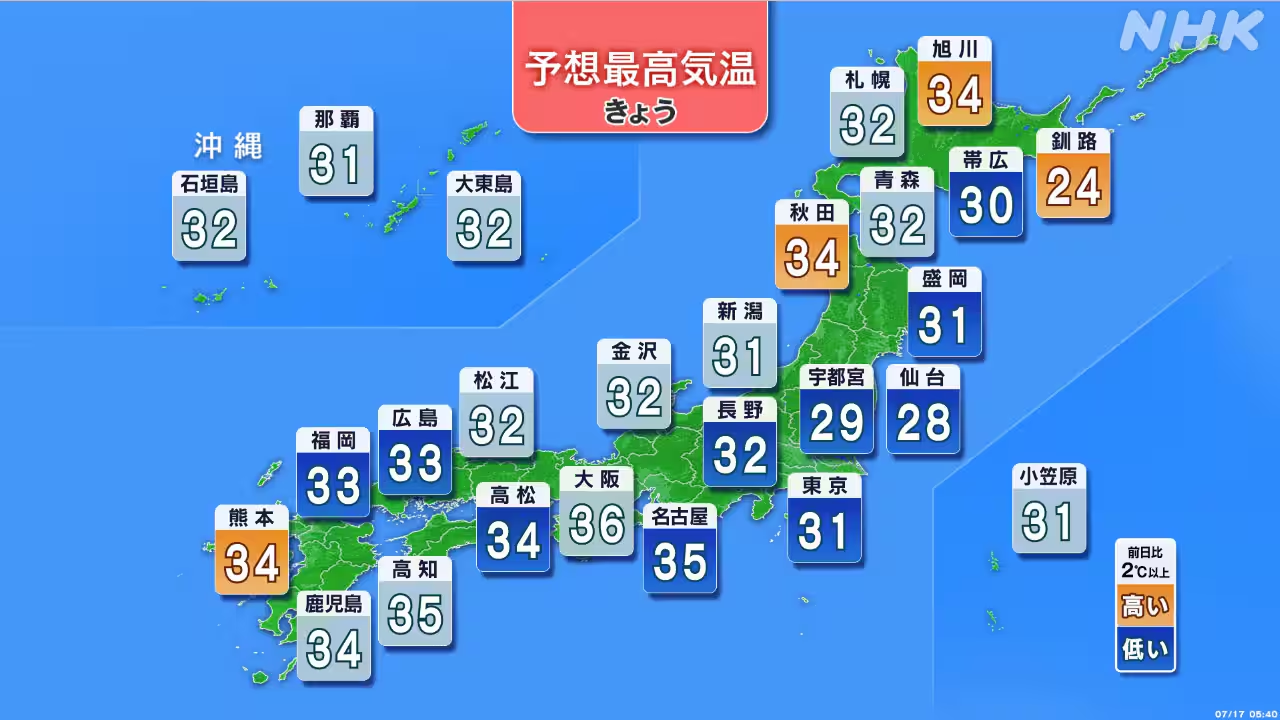
Japan’s public broadcaster, NHK, has reported that extreme heat days are forecast across various areas from northern to western Japan on July 17, 2026. The Japan Meteorological Agency is urging the public to take thorough measures against heatstroke as temperatures continue to rise in these regions.
The forecast for extreme heat, known locally as mukashobi, indicates that maximum temperatures are expected to reach 35 degrees Celsius or higher. This classification triggers specific public health advisories, requiring residents to implement comprehensive strategies to mitigate the risks associated with prolonged exposure to high temperatures.
Concurrently, the weather situation in the Kanto-Koshin region has become volatile. The inflow of moist air has caused atmospheric instability in the area, which comprises the Kanto plain and the Koshinetsu region, including Nagano and Yamanashi prefectures.
This instability has led to locally heavy rainfall in the Kanto-Koshin region. While the specific extent of the rainfall is detailed in the initial reports, the meteorological conditions suggest a significant deviation from the dry heat affecting other parts of the country.
The Japan Meteorological Agency has highlighted the dual nature of the current weather pattern, with extreme heat dominating the northern and western sectors while the central regions face the challenges of unstable air masses and precipitation. Residents are advised to monitor local updates for further developments.
Separate weather events from May 2026, including forecasts for Typhoon No. 6 and reports of severe heat exceeding 30 degrees Celsius, are temporally distinct from this July event and are not relevant to the current weather advisory.