Japan formalises strategic energy pact with Vietnam amid Indo-Pacific policy shift
Prime Minister Sanae Takashii unveils an evolved diplomatic approach during Hanoi visit, cementing six agreements to counter geopolitical volatility
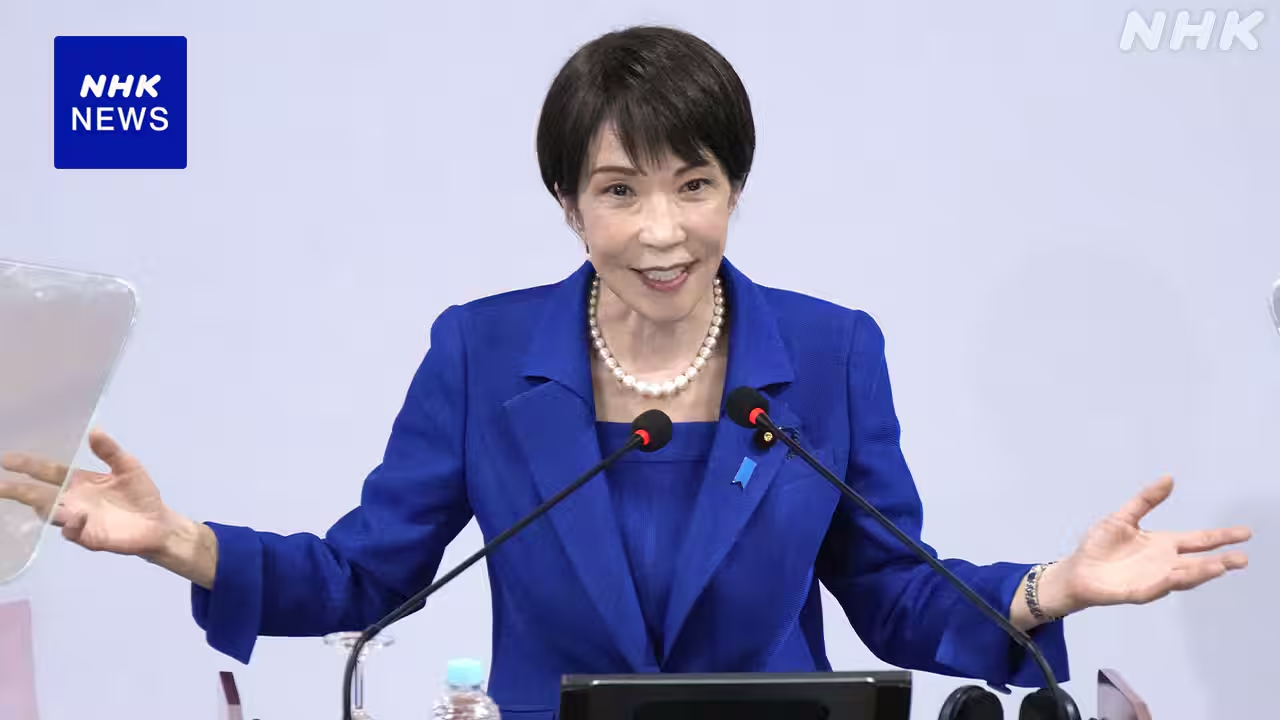
Japanese Prime Minister Sanae Takashii has announced a significant evolution of the Free and Open Indo-Pacific diplomatic framework during a visit to Vietnam. The declaration, delivered on 2 May 2026, marks a strategic pivot towards adapting to current international circumstances, with a specific emphasis on strengthening energy supply chains.
This policy shift coincided with the formalisation of six bilateral agreements between Tokyo and Hanoi. The accords cover a broad spectrum of sectors including energy, critical minerals, infrastructure, agriculture, and space cooperation. By institutionalising these pacts, the Japanese government aims to make economic security a core pillar of the relationship with its Southeast Asian neighbour.
The diplomatic engagement takes place against a backdrop of broader economic challenges, including a noted investment slump. In response to this climate, the Prime Minister's office highlighted the necessity of securing crude oil specifically for medical supplies. A dedicated agreement was confirmed to facilitate this cooperation, underscoring the move to integrate resource security directly into foreign policy objectives.
The announcement represents a qualitative evolution of a long-standing diplomatic concept. Rather than merely restating existing principles, the administration has reframed the Free and Open Indo-Pacific to address immediate geopolitical pressures. This approach suggests that future reporting on the region will increasingly focus on institutional mechanisms for resource stability rather than purely ideological alignment.
While the Prime Minister stressed the need to respond to the current international environment, the full operational details of the evolved policy remain subject to further clarification. The source material indicates that the precise mechanisms for strengthening supply chains were truncated in initial reports, leaving the specific implementation strategies open to interpretation in subsequent analysis.
The visit to Vietnam serves as a critical test case for Japan's broader strategy to diversify its economic partnerships. By formalising agreements that span from critical minerals to space cooperation, the administration is attempting to build a more resilient infrastructure for trade and security. This effort to counteract the investment slump suggests a renewed focus on tangible economic outputs as a driver of diplomatic success.