Japan braces for severe weather instability across western and eastern regions during Golden Week
Authorities advise the public to exercise extreme caution while outdoors as localised intense thunderstorms are expected to impact the country
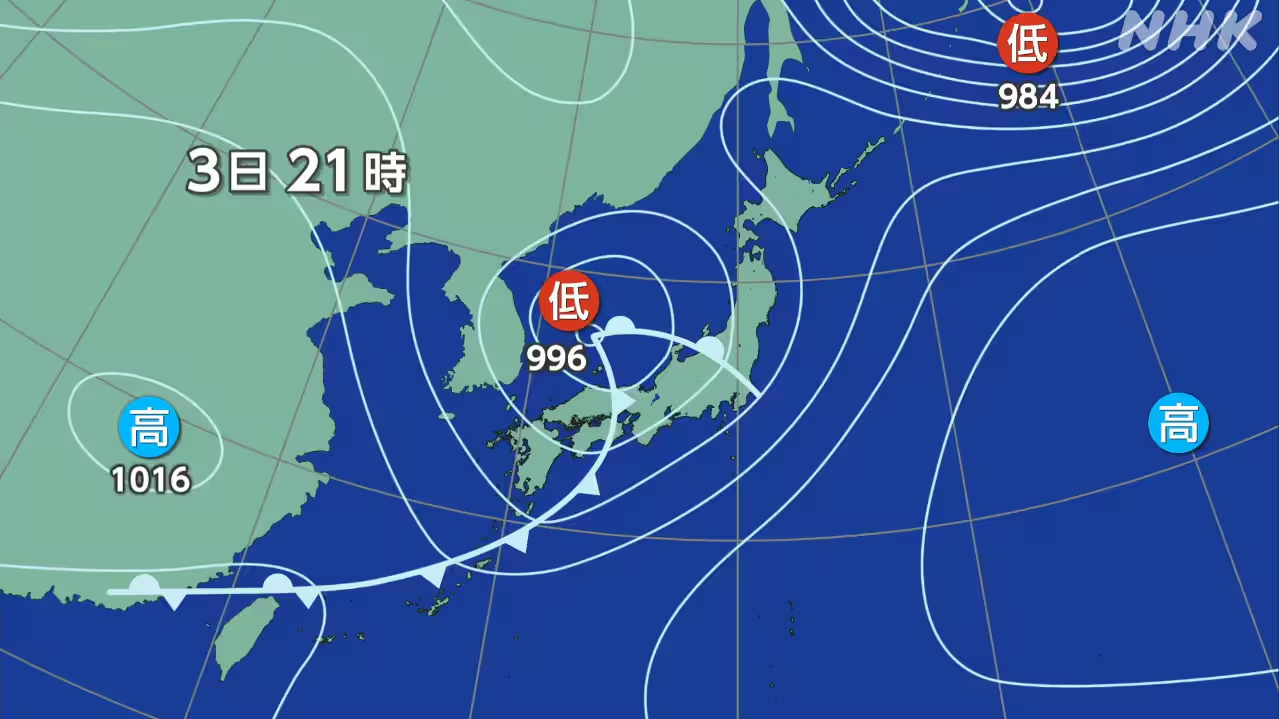
NHK News has issued a forecast warning that atmospheric conditions across western and eastern Japan are expected to become highly unstable on 4 May 2026. This meteorological shift creates a significant risk of localised severe thunderstorms, prompting authorities to urge the public to exercise caution against lightning, tornadoes, and strong winds.
The advisory specifically targets individuals planning to be outdoors during the Golden Week holiday, a period when travel and outdoor activities are prevalent. Officials emphasise that the weather systems are likely to be localised and sudden rather than widespread, requiring vigilance in specific areas rather than a blanket expectation of uniform conditions.
While the forecast indicates a high probability of instability, the exact geographic extent of the severe weather within the broad regions of western and eastern Japan remains undefined. NHK News notes that the specific intensity and duration of the storms are subject to evolving atmospheric conditions on the day, meaning the situation could change rapidly.
The warning highlights the potential for tornadoes as a precautionary measure based on the reported atmospheric instability. However, the source material does not quantify the probability of tornado occurrence, serving instead as a general safety alert for the public to remain aware of sudden wind events.
This forecast coincides with the start of the Golden Week holiday, a time when many residents are travelling or spending time outside. The timing of the warning, issued on 3 May 2026 for events occurring the following day, aims to ensure that the public is prepared for the potential hazards associated with the highly unstable air mass.
Governance and safety protocols during such events rely on clear communication of these risks to the general population. As the day approaches, residents in the affected zones are advised to monitor local updates, acknowledging that specific forecasts may vary significantly across the broad regions mentioned by NHK News.