Japan and Philippines Agree to Form Working Group on Second-hand Warship Transfer
The bilateral accord focuses on transferring existing destroyers or frigates from the Japan Maritime Self-Defence Force, marking a formal step in regional defence cooperation without yet setting a delivery date.
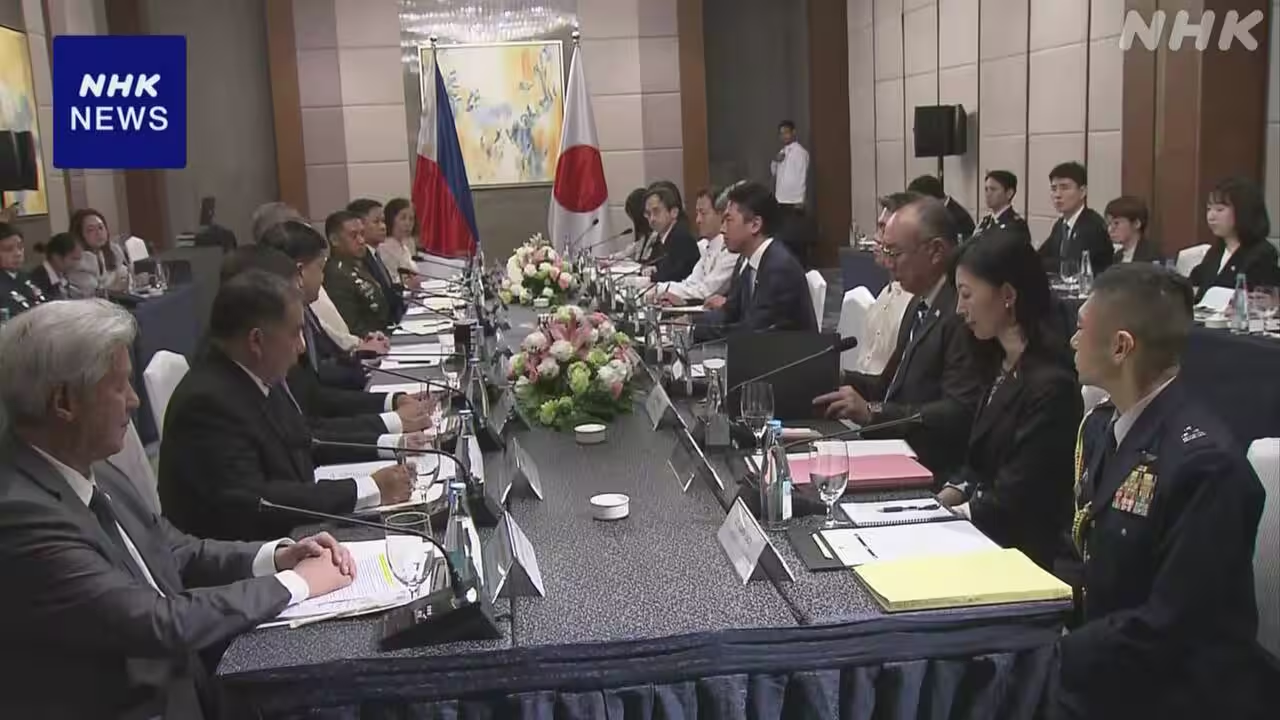
Japanese Defence Minister Koizumi and Philippine Defence Secretary Teodoro have reached an agreement to establish a dedicated working group between their respective defence authorities. The meeting, held in the Philippines, centred on the transfer of second-hand warships from the Japan Maritime Self-Defence Force (JMSDF) to Manila.
The primary function of this newly formed working group is to negotiate the specific timing and logistical methods required for the transfer. While the two ministers have aligned on the principle of the handover, the mechanism serves as the immediate next step rather than a finalised delivery schedule.
The vessels in question are described as second-hand warships, specifically referring to destroyers or frigates within the Japanese naval inventory. This move aligns with the broader strategic objective of Japan exporting defence capabilities while simultaneously addressing the Philippines' stated need to modernise its naval fleet to counter emerging regional security challenges.
Although previous discussions regarding the sale of JMSDF vessels have occurred in the past, this agreement represents a concrete shift towards implementation. By institutionalising the process through a working group, both defence ministries are ensuring that the transfer is managed with the necessary bureaucratic oversight and technical planning.
However, significant details regarding the specific class, number, and current condition of the vessels remain undefined in the current reporting. The working group is tasked with resolving these ambiguities, as it is unclear whether the agreement covers only existing stock or if it encompasses new builds based on JMSDF designs, despite the descriptor of 'second-hand'.
The decision to formalise these negotiations underscores the evolving nature of security partnerships in the Indo-Pacific. As the working group begins its work, the focus remains on the practicalities of the transfer, ensuring that the logistical and temporal aspects are addressed before any physical movement of assets takes place.