Japan and Philippines Agree to Establish Working Group for Second-hand Warship Transfers
Officials link new bilateral mechanism to broader regional security concerns in the South China Sea
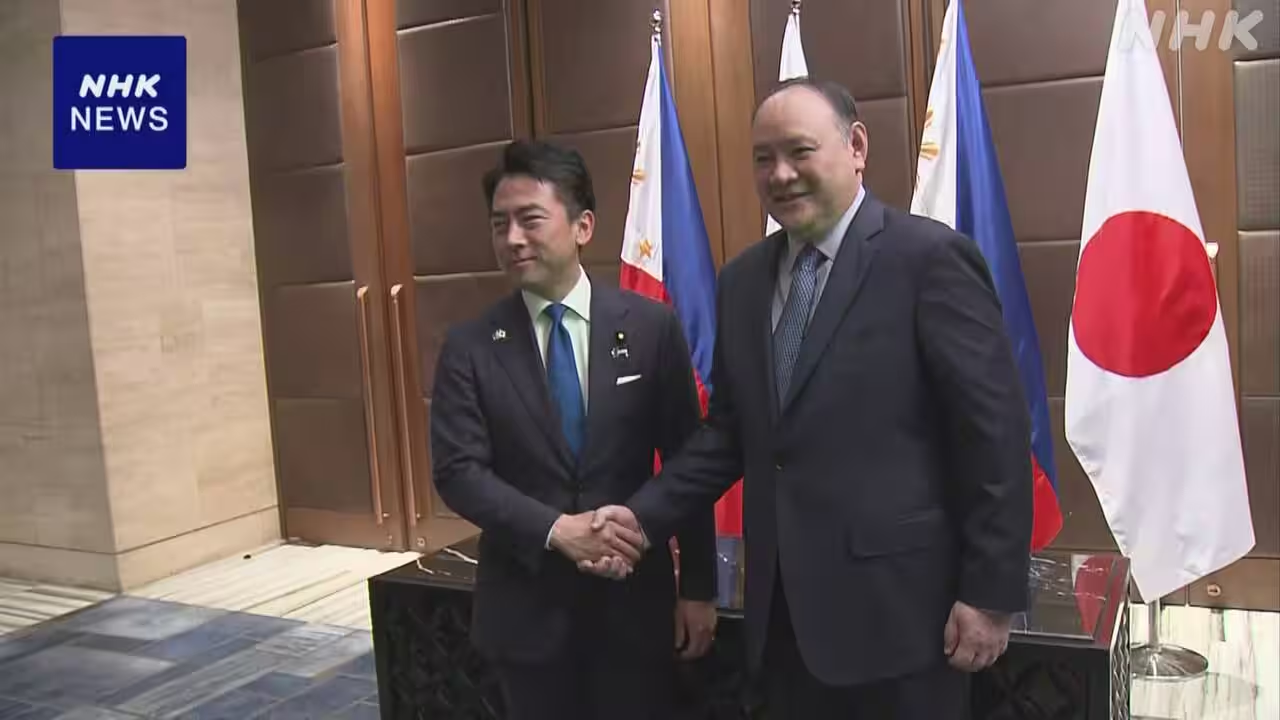
Japanese Defence Minister Koizumi has met with Philippine Defence Secretary Teodoro in the Philippines to formalise a bilateral working group dedicated to the transfer of second-hand warships and other defence equipment. The agreement, reached during Minister Koizumi's visit to Manila, marks a significant operational step following Japan's recent policy decision to permit the export of lethal weapons in principle.
This diplomatic initiative was explicitly framed as a direct response to the Japanese government's announcement on 21–22 April 2026, which lifted long-standing restrictions on the export of lethal weaponry. By categorising these exports as permissible in principle rather than strictly prohibited, Tokyo has created the necessary policy environment to facilitate the movement of military assets to Southeast Asian partners.
The establishment of the working group is intended to accelerate the process of transferring decommissioned vessels, though the specific timeline for the first handover remains undisclosed. While the term "early transfer" suggests a prioritised schedule, the actual execution of the transfers will depend on the outcomes of the working group and adherence to safety and compatibility standards.
The scope of the cooperation extends beyond the warships themselves, with the agreement covering "other equipment," although the precise nature of these additional assets has not been detailed in official statements. This flexibility allows the two defence authorities to tailor the transfer of matériel to the specific operational requirements of the Philippine Self-Defence Forces.
This move mirrors a similar strategic alignment seen earlier in the month, when a joint working team was established with Indonesia on 4 May 2026 to assist with equipment cooperation. The parallel approach with both nations underscores a coordinated Japanese strategy to strengthen security partnerships across the region.
Underpinning these diplomatic efforts is the persistent volatility in the South China Sea, where regional tensions continue to drive the demand for enhanced military capabilities among Japan's neighbours. The decision to formalise these transfers reflects a broader institutional shift towards active defence cooperation in response to evolving geopolitical pressures.