Japan amends Imperial Household Law to secure succession amid shrinking male line
The amended law, published in the Official Gazette on 24 July 2026, takes effect in three months, following government efforts to stabilise the imperial lineage.
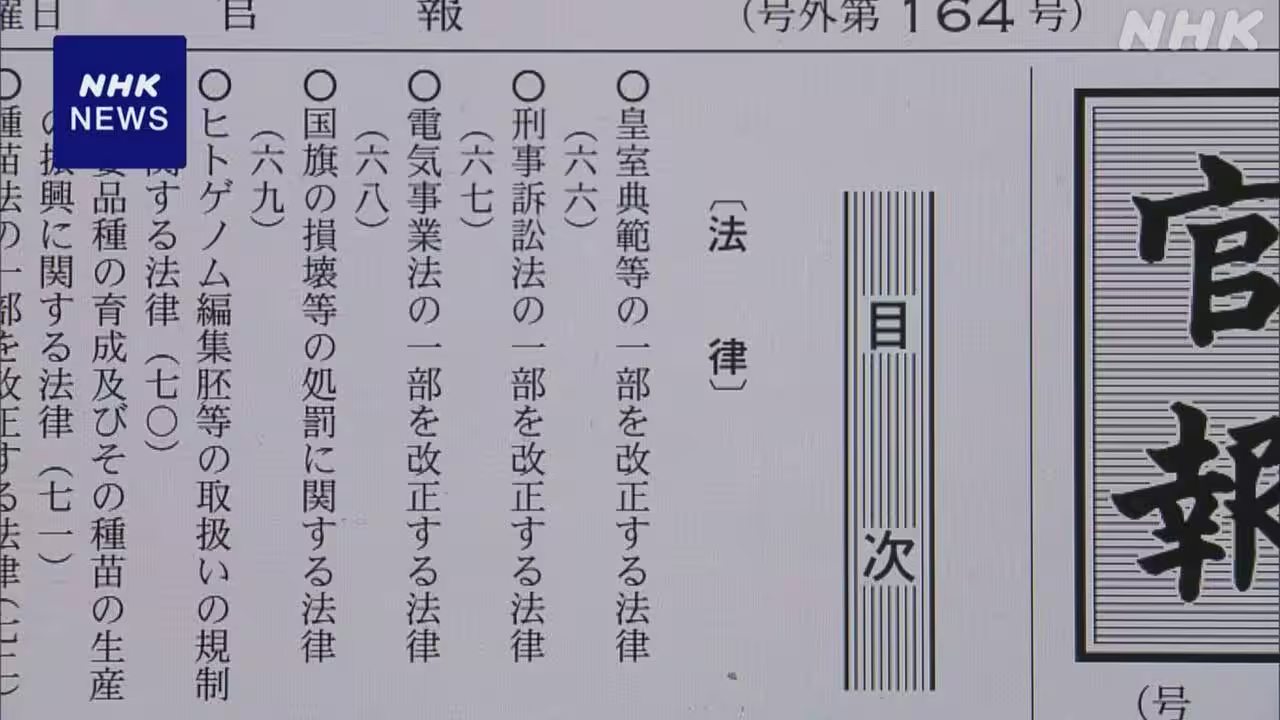
Japan’s amended Imperial Household Law was published in the Official Gazette on 24 July 2026, marking a significant shift in the governance of the imperial family. The legislation is scheduled to take effect three months after its publication, introducing provisions designed to maintain the number of imperial family members amidst concerns over the shrinking pool of male heirs.
The revisions fundamentally alter the traditional male-line succession model by allowing female royals to remain in the Imperial Family after marriage. Additionally, the law permits the adoption of male-line descendants of former imperial family members, a measure aimed at ensuring a stable succession line without breaking the patrilineal tradition entirely.
Prime Minister Takaichi addressed the implications of the legislative change shortly before its publication. On 22 July 2026, the Prime Minister met with the Director of the Imperial Household Agency to discuss appropriate government responses following the law’s passage. This meeting coincided with the establishment of an expert council, also on 22 July, tasked with overseeing the transition and ensuring the stability of imperial succession.
The Imperial Household Law governs the status, succession, and household of the Japanese imperial family. Previous debates on succession have centred on the strict adherence to male-line descent, which has raised concerns as the number of male heirs has declined. The establishment of the expert council indicates ongoing government efforts to address these structural challenges through institutional reform rather than ad hoc solutions.
While the law provides a mechanism to retain female royals and adopt former imperial descendants, the specific number of individuals affected by these changes has not been detailed. The long-term impact on the imperial family’s structure and public perception remains to be seen, but the legislative move represents a pragmatic adjustment to demographic realities within the institution.