Japan adjusts 500 billion yen contingency fund for summer energy subsidies amid Middle East tensions
Tokyo moves to stabilise electricity and gas prices for the upcoming summer, while industry bodies report sufficient supply security despite ongoing regional instability.
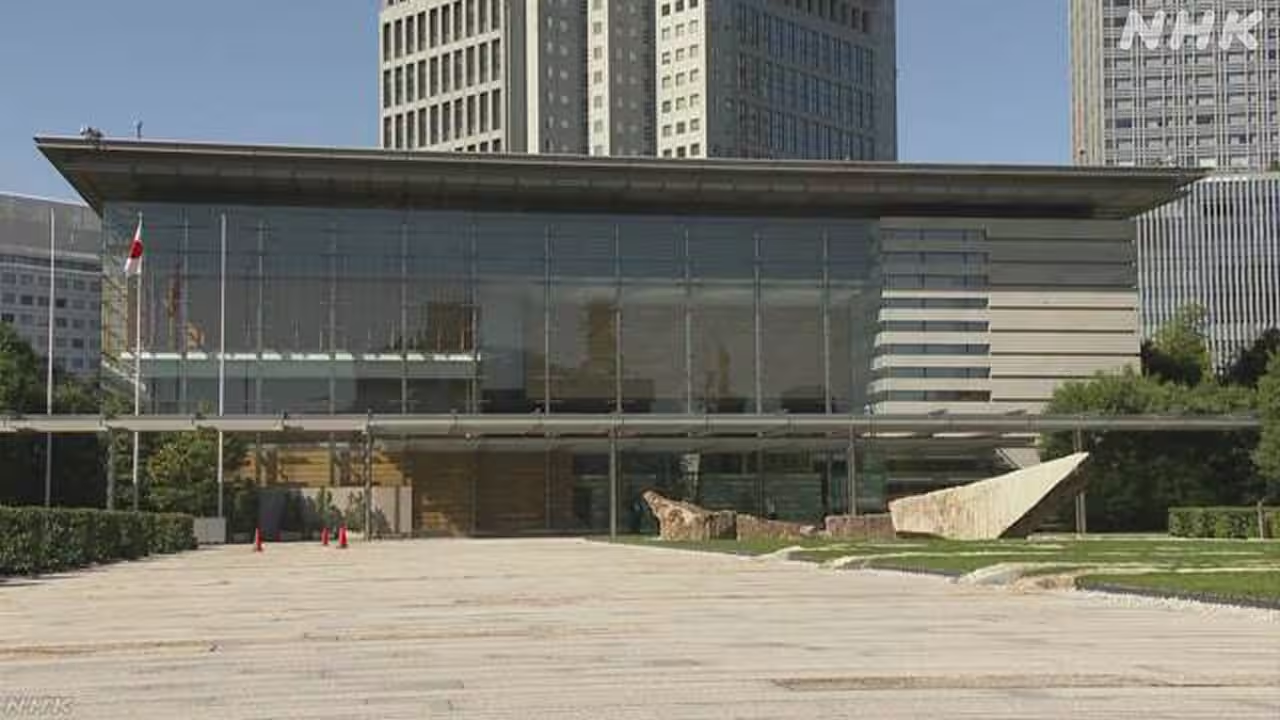
The Japanese government is adjusting to spend approximately 500 billion yen from the current fiscal year’s contingency fund to subsidise electricity and gas prices this summer. The decision follows heightened tensions in the Middle East, specifically involving the situation in Iran, which have raised concerns about energy security and market volatility. Officials are working to finalise the expenditure decision by next week.
The Ministry of Economy, Trade and Industry (METI) has indicated that there will be no call for energy conservation this summer. This assessment is based on expectations that minimum levels of stable supply can be secured, although the government acknowledges that these projections remain subject to change if the geopolitical situation deteriorates.
With the contingency fund decreasing due to this allocation, the government is intensifying discussions on a supplementary budget proposal. The exact final amount of the expenditure is still under adjustment, and specific details of the supplementary budget remain under discussion. This fiscal shift highlights the increasing pressure on Japan’s budgetary mechanisms as it navigates external geopolitical shocks.
Industry bodies have provided reassurances regarding supply chains. The Japan Tissue Paper Association stated that raw materials are sufficiently secured, while the president of the Japan Petroleum Association pledged to strive for the stable supply of petroleum-related products. These statements reflect current industry assessments rather than guaranteed long-term outcomes.
Global markets reacted to the developing situation, with the New York Dow Jones Industrial Average rising by more than 700 points. This movement was driven by expectations for an early resolution of the Iran situation, illustrating the rapid interplay between diplomatic developments and financial markets.