Japan abolishes 1967 ban on lethal weapons exports to 17 allied nations
Major defence agreements signed with Australia, Indonesia and the Philippines; joint projects launched with UK, Italy and US
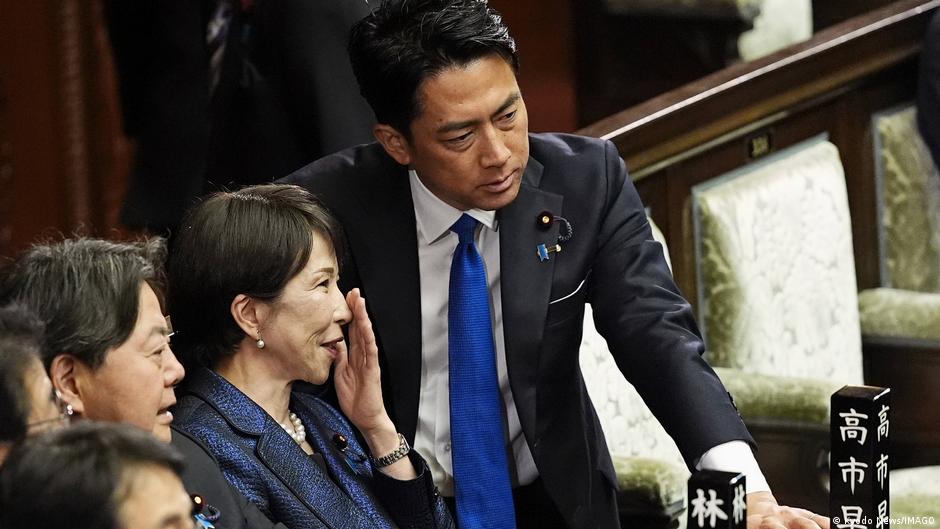
The Japanese government has formally abolished its prohibition on exporting lethal weapons, a policy that has governed the nation's defence industry since 1967. Under the new framework confirmed by Prime Minister Sanae Takaichi, Japanese companies are now permitted to sell advanced military equipment to 17 countries with which Tokyo holds defence agreements. The administration frames this institutional shift as an essential measure to secure national interests in the face of intensifying security challenges posed by China and North Korea.
This policy reversal marks a significant departure from the previous regime, which restricted sales to non-lethal items such as surveillance, transport, and rescue gear. While former Prime Minister Shinzo Abe had eased restrictions in 2014 to allow non-lethal exports, the current move under Takaichi represents a full liberalisation of the trade in offensive hardware. Analysts suggest the timing is driven by a combination of external pressure from the United States to increase defence spending and an internal political agenda to revise the Constitution regarding Article 9.
Concrete outcomes of this deregulation include a $6.5 billion agreement with Australia for the provision of 11 enhanced Mogami-class frigates. The first three vessels are scheduled to be constructed in Japan with delivery expected by 2030, while the remainder will be built in Australian shipyards. Simultaneously, Indonesia is reportedly seeking Oyashio-class submarines and the Philippines is eyeing Abukuma-class destroyer escort vessels to counter maritime activities in the South China Sea.
Beyond bilateral sales, Japan is deepening its integration into multinational defence architectures. The nation is collaborating with the United Kingdom and Italy on the Global Combat Air Programme to develop a sixth-generation stealth fighter jet. Furthermore, joint development efforts with the United States are underway for a Glide Phase Interceptor designed to counter hypersonic missile threats. These initiatives signal a broader strategy to reduce reliance on American weaponry and utilise defence exports as industrial policy.
The reaction to this shift has been sharply divided. While allies such as the United States, France, and the United Kingdom have welcomed the move as a historic step that enhances regional stability, China has condemned the decision. A Chinese Foreign Ministry official described the action as a dangerous departure from Japan's self-proclaimed dedication to peace and its exclusively defence-oriented policy.
Despite the diplomatic friction, the government maintains that providing advanced capabilities to partner states is the most effective way to guarantee the balance of power in the western Pacific. As regional tensions escalate due to the expansion of Chinese naval operations and North Korea's testing of intercontinental ballistic missiles, Tokyo's decision underscores a new era of proactive defence cooperation among middle powers.