Displaced Sudanese youth build livelihoods in an economy hollowed by war
Informal work, small businesses and art are helping some young people support their families, while limited funding and administrative hurdles constrain their options.
War has forced some young Sudanese to seek income through informal work and small businesses as formal jobs and household livelihoods contract. Their efforts offer individual ways to cope with displacement, but remain constrained by limited access to finance, training and institutional support.
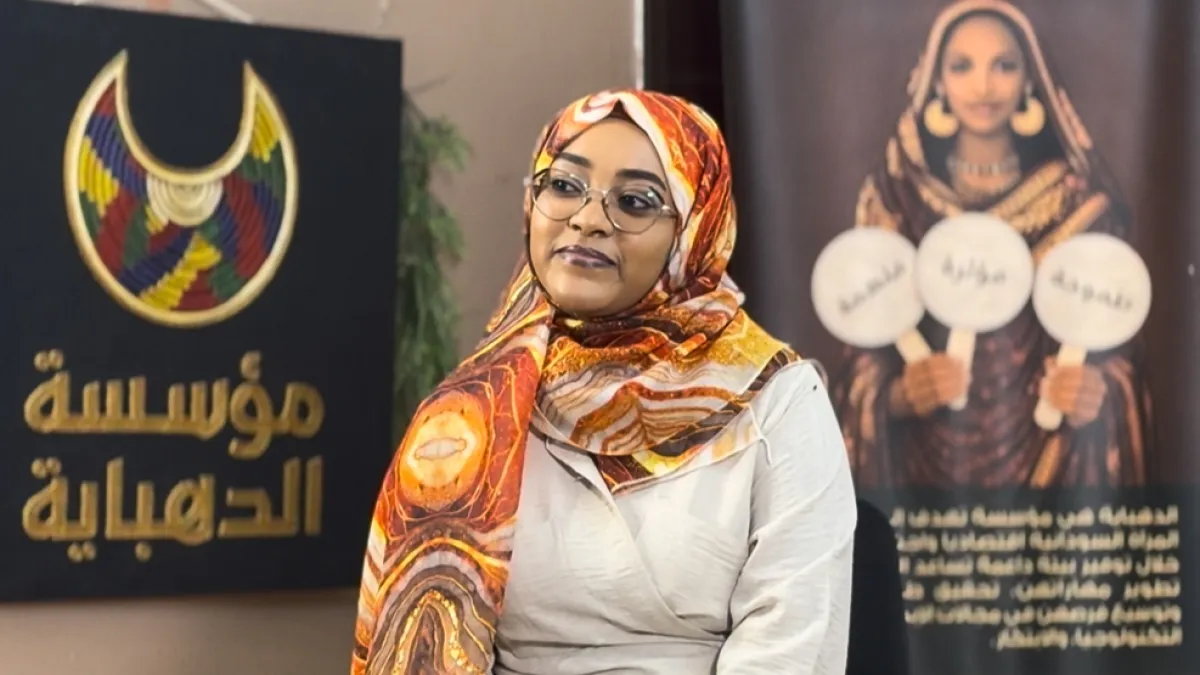
Yousra Hussein began her Golden Women initiative in Nyala in 2022, offering psychosocial support and business training to more than 70 women. After fleeing first to Sennar and then Kassala, she restarted the programme. In Sennar, she had earned money through nail services from home to help support her family.
Hussein says entrepreneurs face scarce skills training and institutional support, as well as bank guarantee requirements, complex registration procedures and taxes. These hurdles make it harder to establish and sustain businesses.
A 2024 joint survey by the United Nations Development Fund and the International Food Policy Research Institute found 31 per cent of 3,000 urban households surveyed had been displaced. The share reporting no employment or income rose from 1.6 per cent before the war to about 18 per cent by the survey; full-time employment fell by half. The World Bank estimates extreme poverty rose from 33 per cent in 2022 to 59 per cent in 2025.
The International Labour Organization says its i-UPSHIFT programme reached 500 young people in Kassala with entrepreneurship training, mentoring and business incubation. Thirty-eight youth-led teams went on to pitch ideas. Sudan’s Youth and Sports Ministry also cites vocational training and youth projects, including a proposed industrial city in River Nile State; the longer-term reach of these efforts is not established.
In Port Sudan, artist Mahira, who gave only her first name, earns income painting decorative pieces and murals after displacement from Khartoum. She hopes to stage an exhibition promoting peaceful coexistence, but estimates it would cost at least 8 million Sudanese pounds, while her monthly income is about 1 million. Her experience illustrates both the resourcefulness of some displaced people and the difficulty of turning such work into a stable livelihood.