Jaguar unveils interior design for all-electric Type 01 ahead of October launch
The British manufacturer has released imagery of the Type 01’s cabin, highlighting a smartphone-style central display and a spine dividing the four seats, with a camouflaged prototype set for Monterey Car Week.
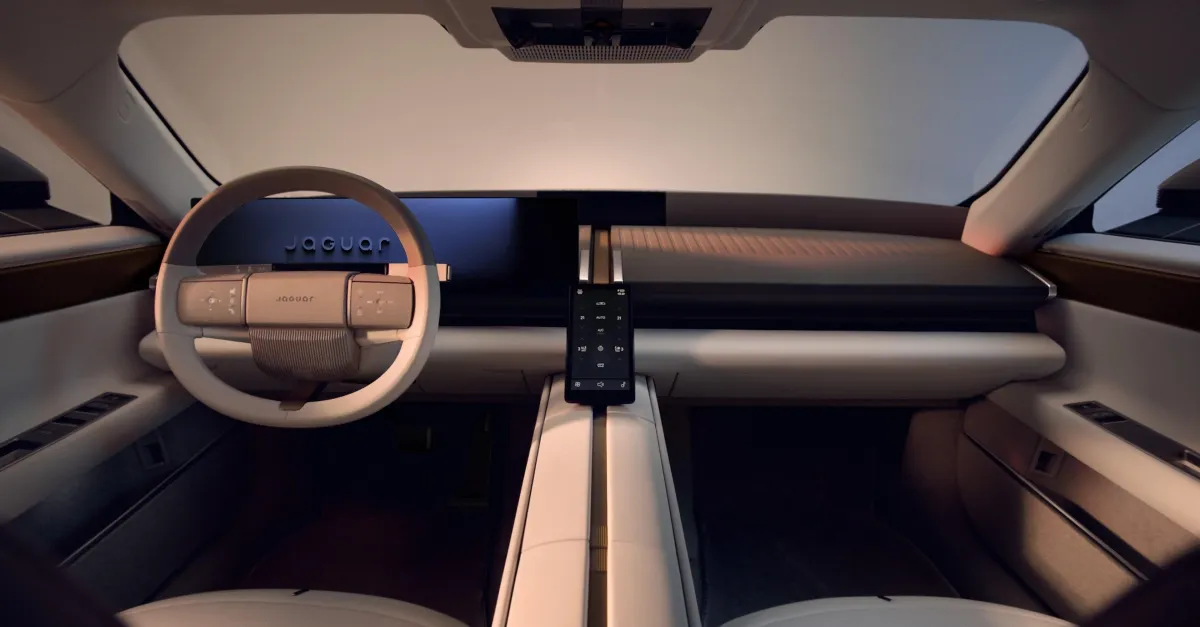
Jaguar has released the first detailed images of the interior for its upcoming all-electric Type 01, confirming a minimalist design approach that departs from traditional automotive layouts. The cabin is characterised by a light-coloured, beige-toned aesthetic and a central “spine” structure that divides the four seats along the length of the vehicle.
The dashboard is notably slim, featuring a low-slung driver’s seat and a central display described by the manufacturer as smartphone-style. In place of a conventional rear-view mirror, the vehicle utilises a “ClearSight Rear View Display” positioned at the base of the windscreen. Jaguar states this screen is placed at the same height as the door mirrors to assist driver focus, although independent verification of the system’s functionality and user experience remains pending.
The Type 01 marks a significant technological milestone as the first production vehicle built on Jaguar’s new Electric Architecture platform. It serves as the production follow-up to the polarising Type 00 concept, which was initially revealed in 2024. The manufacturer has also claimed the presence of “concealed compartments” and “hidden-until-needed technologies” within the cabin, though these features are not visible in the imagery provided to the press.
A prototype wrapped in camouflage will be displayed at Monterey Car Week, offering the first physical glimpse of the vehicle before its official public reveal. The formal launch is scheduled for 6 October, at which point further details regarding the vehicle’s specifications and market positioning are expected to be disclosed.
The release of these interior details comes as the automotive sector continues to shift towards electric platforms and digital interfaces. Jaguar’s move to replace physical mirrors with digital displays and integrate smartphone-centric controls reflects broader industry trends towards software-defined vehicle experiences.