Iwate authorities plan to lift wildfire evacuation orders for Odate Town
Most areas in Odate Town are expected to be cleared of evacuation directives by the afternoon of 29 April, though specific zones remain under restriction.
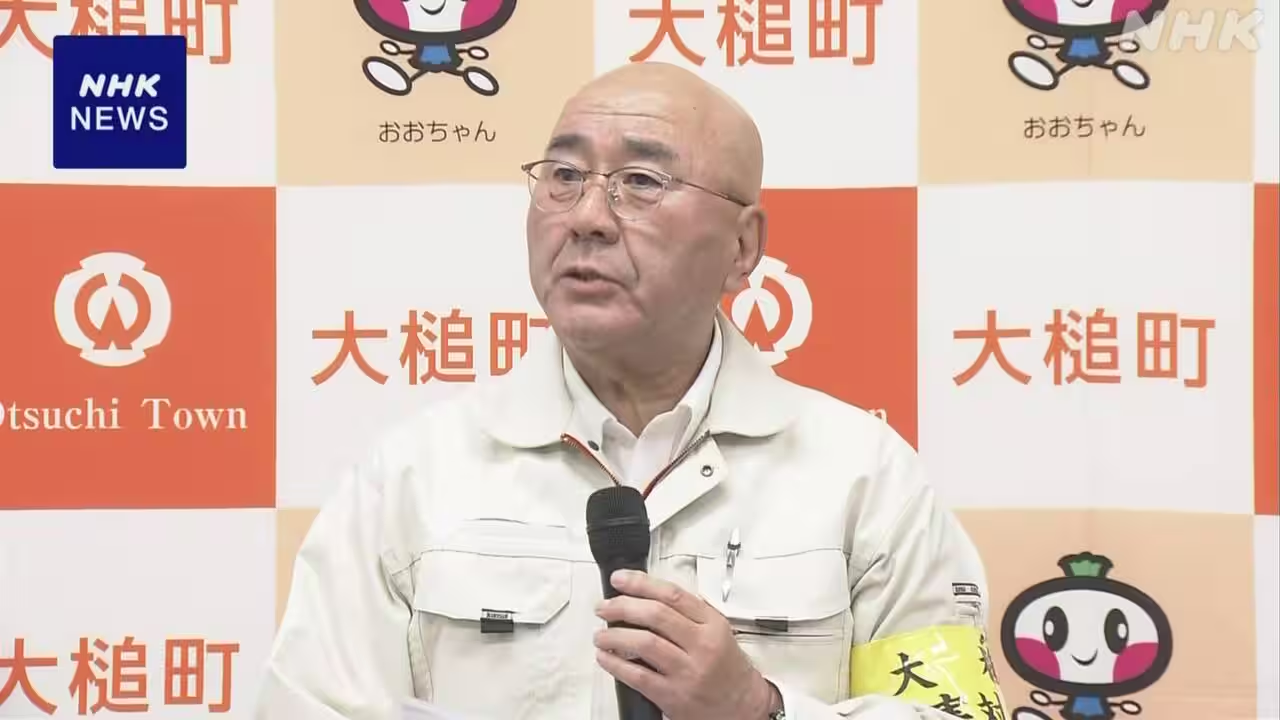
Local officials in Iwate Prefecture have confirmed that evacuation orders for the wildfire in Odate Town will be lifted for most areas by the afternoon of 29 April. This decision follows a week of continuous fire activity, during which active suppression operations and recent rainfall have significantly lowered the risk of the blaze spreading to residential zones.
The Japanese broadcaster NHK reported that authorities have assessed current safety conditions and determined that the threat to homes has diminished sufficiently to allow for the partial lifting of restrictions. While the directive will be rescinded across the majority of the town, the announcement explicitly excludes certain specific areas where the risk remains elevated.
The fire, which began in the forested region of Odate Town, has burned for seven consecutive days as of the morning of 29 April. Firefighting crews have worked to weaken the intensity of the flames, a strategy that has been compounded by natural weather patterns that have aided in containment efforts.
Despite the reduction in immediate danger to populated areas, the situation remains fluid. The specific list of locations where evacuation orders will remain in place has not been detailed in the initial assessment, and officials have noted that conditions could change rapidly if weather patterns shift.
This development marks a critical shift in the governance response to the disaster, moving from emergency containment to a phased return to normalcy for affected residents. The focus now shifts to monitoring the remaining hotspots and ensuring that the safety of the excluded zones is maintained until further notice.