Israeli strikes breach ceasefire truce, killing Hamas negotiator's son and wounding senior officials
Hamza al-Sharbasi was killed in the Daraj neighbourhood while Azzam al-Hayya, son of Hamas top negotiator Khalil al-Hayya, was seriously wounded in the same attack.
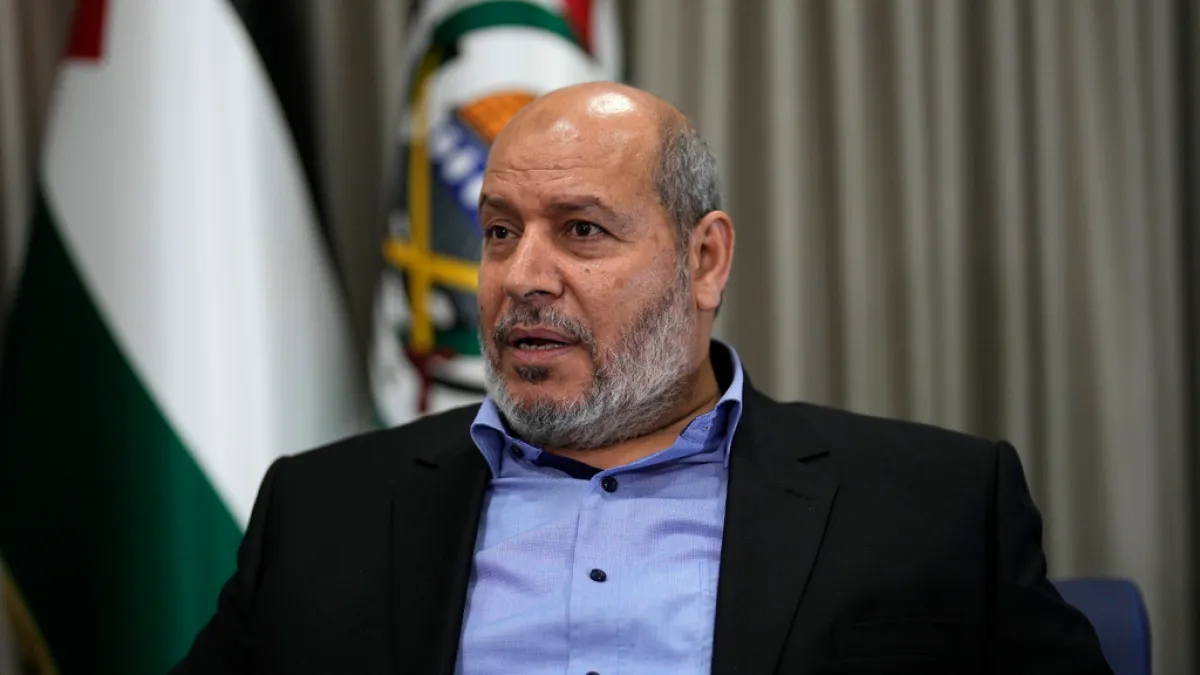
Israeli air strikes conducted on Wednesday across multiple neighbourhoods in Gaza have resulted in the deaths of at least five Palestinians and serious injuries to senior figures within the Hamas leadership. The most significant incident occurred in the Daraj neighbourhood of Gaza City, where an attack killed Hamza al-Sharbasi and left Azzam al-Hayya, the son of Khalil al-Hayya, in a critical condition.
Khalil al-Hayya, who serves as the head of Hamas's political bureau and leads indirect negotiations with Israel, confirmed that his son was seriously wounded. The attack on the Daraj neighbourhood also injured at least nine other Palestinians. While no immediate comment was released by the Israeli military regarding the specific targeting or justification for the strike, Hamas officials have described the event as a peak of moral degradation and a blatant violation of the ceasefire agreement signed last October.
The violence in Gaza City was not isolated to the Daraj neighbourhood. Two additional raids were launched on the same day, one in the Zeitoun area and another in the al-Mawasi region. The raid on Zeitoun resulted in the deaths of three Palestinians from a single family, while the strike on the al-Mawasi area killed Naseem al-Kalazani, the head of the anti-narcotics force in Khan Younis. These incidents brought the total number of fatalities from the day's operations to at least five, excluding the victim in Daraj.
Khalil al-Hayya addressed the loss of his son and the wounding of his family in a statement to Al Jazeera, emphasising that the deaths of their children would not intimidate the Palestinian cause. He noted that he had previously lost three sons in earlier conflicts and attempts on his life, including two during the 2008 and 2014 fighting and one in Doha last year. Despite these personal tragedies, he maintained that the negotiation process must continue to secure the rights of the people.
Hamas has formally condemned the series of attacks as a continuation of what they describe as a war of extermination against the population in the Strip. The group insists that the violence represents a breach of the October ceasefire terms, which remain in place despite ongoing disputes over full disarmament and the establishment of a Palestinian state. The organisation argues that the attacks are intended to derail the political process rather than achieve military objectives.
According to the Gaza Ministry of Health, the cumulative toll of the conflict remains severe, with at least 837 Palestinians killed since the ceasefire began last year. Since the start of the war in 2023, the ministry reports that over 72,600 people have been killed and more than 172,000 wounded, with the majority of victims being children and women. Humanitarian conditions in the territory are described by the United Nations as dire and life-threatening, with significant constraints on aid delivery continuing to hamper recovery efforts.