Iran holds Strait of Hormuz hostage to US compensation demands
Tehran insists on war damage reparations before allowing maritime traffic to resume, escalating geopolitical tensions in a critical oil chokepoint.
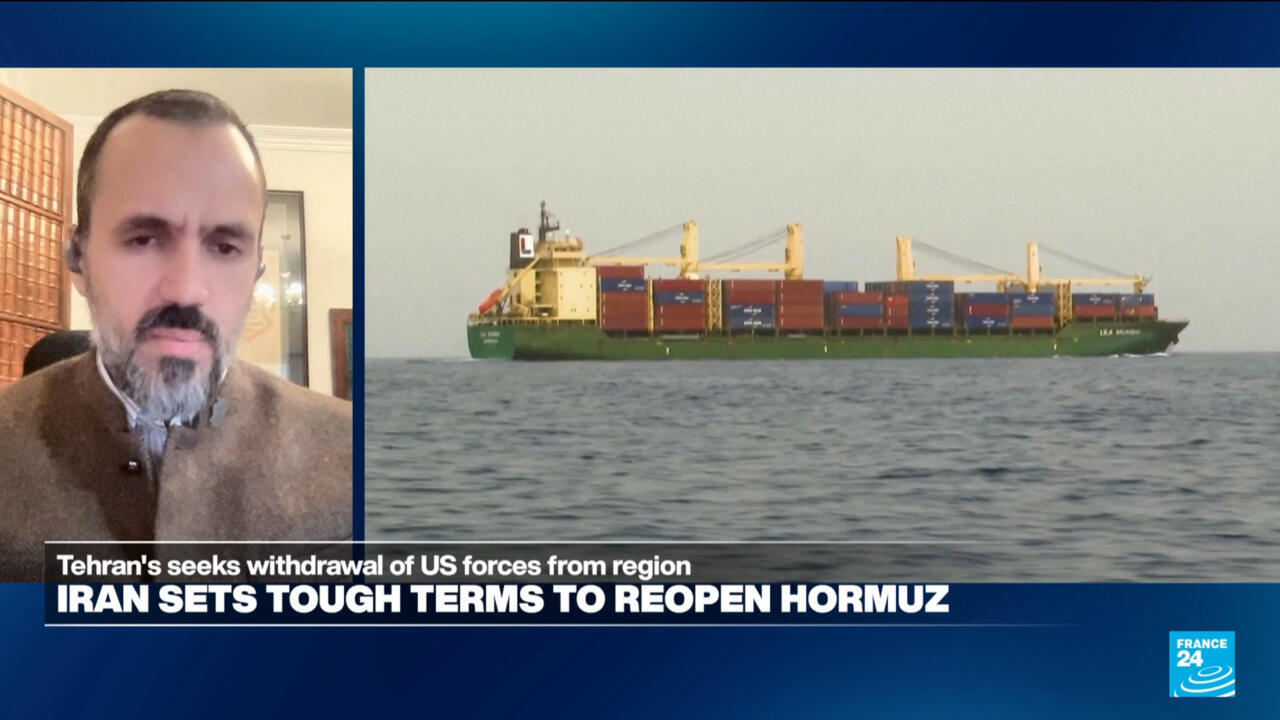
Iran’s Islamic Revolutionary Guard Corps (IRGC) has declared that the Strait of Hormuz will remain closed until the United States accedes to a specific set of conditions, chief among them the payment of compensation for war damages. The announcement, made on Sunday, signals a significant escalation in diplomatic and military posturing between Tehran and Washington, with the IRGC framing the US requirements as a "capitulation document" or "surrender document."
The IRGC’s stance places the critical global chokepoint for oil shipments under immediate threat. By linking the reopening of the waterway to financial reparations, the Revolutionary Guards have introduced a complex liability question into the ongoing geopolitical standoff. The specific items comprising the broader list of demands beyond war compensation were not detailed in the initial statement, leaving the full scope of Tehran’s expectations unclear.
Dr H.A. Hellyer, a Senior Fellow in Geopolitics, International Security, and Middle East Studies at the Royal United Services Institute (RUSI), has been cited as an expert commentator on the nature of these demands. His analysis, featured in coverage by France 24 International, seeks to contextualise the IRGC’s rhetoric and the strategic implications of treating the strait’s operation as leverage for political concessions.
The characterisation of the US requirements as a surrender document represents a rhetorical framing employed by both the IRGC and the reporting outlet. This language underscores the high stakes involved, suggesting that Tehran views the situation not merely as a dispute over maritime access but as a test of American resolve and diplomatic flexibility. The term "war damages" remains broad, with the specific conflicts and liabilities being referenced not explicitly defined in the available source material.
As the situation develops, the operational status of the Strait of Hormuz remains a point of contention. While the IRGC has indicated the strait is not to be reopened, the precise nature of the obstruction—whether total closure or partial interference—is implied rather than explicitly confirmed. The demand for compensation adds a new layer of complexity to international maritime law and energy security, with potential ramifications for global oil markets and regional stability.
The discussion surrounding these demands highlights the delicate balance of power in the Middle East. With the IRGC holding the strait’s reopening conditional on US compliance, the coming days will be critical in determining whether diplomatic channels can de-escalate the tension or if the situation will deteriorate further. The role of experts like Dr Hellyer will be pivotal in interpreting the true intent behind the IRGC’s ultimatum and its potential impact on global security architecture.