Iran and US trade threats as Trump warns of renewed strikes
US President Donald Trump has issued a two-to-three-day ultimatum for a peace deal, following a warning of renewed military action. Iranian officials, reporting via FRANCE 24, maintain that while diplomacy is preferred, Tehran is prepared for war.
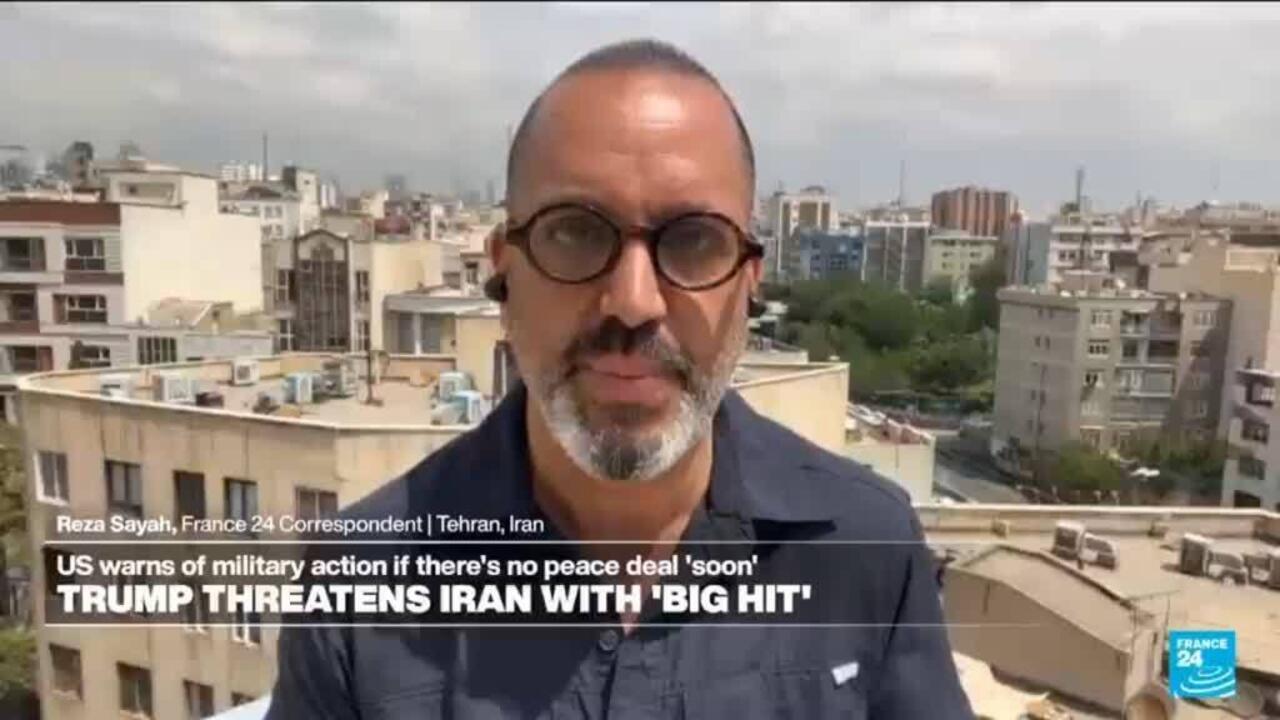
Tensions between the United States and Iran have escalated sharply, with US President Donald Trump warning of renewed strikes against Tehran. This development follows a statement from the previous day in which Trump indicated he had held off a major assault in hopes of securing a peace deal. The President has now issued a strict deadline of two to three days for Iranian officials to reach a diplomatic agreement to end the ongoing conflict.
In response, Iranian officials have reaffirmed their stance on the diplomatic front. Reporting from Tehran, FRANCE 24 correspondent Reza Sayah stated that Iranian authorities maintain they prefer a diplomatic resolution and do not view a military solution as viable for the current conflict. However, the same report noted that Tehran is ready for war if it occurs, signalling a dual-track approach that combines diplomatic preference with military preparedness.
Tehran has issued specific warnings regarding the consequences of a return to active hostilities. Iranian officials cautioned that any resumption of conflict would bring "many more surprises" and potentially open "new fronts." This rhetoric suggests that Iranian military planners are considering expanded operational theatres in the event of renewed US aggression, adding complexity to the diplomatic landscape.
Concurrently, US Vice President JD Vance has commented on the state of negotiations, stating that both sides have made "a lot of progress." This assertion from the White House contrasts with the hardening of positions observed in Tehran and the imminent deadline set by President Trump. The divergence between the reported progress in talks and the public posturing of both governments highlights the fragile nature of the current diplomatic efforts.
The situation is further complicated by broader regional dynamics. In the Caribbean, Cuban President Miguel Diaz-Canel has warned of a "bloodbath" in the event of a US attack, asserting Havana's right to self-defence. Reports indicate that Cuba has acquired over 300 military drones from Russia and Iran, prompting the US Treasury to impose new sanctions on Cuba’s main intelligence agency and senior officials. These developments underscore the interconnected nature of global security challenges facing the current administration.
Meanwhile, in Beijing, Chinese President Xi Jinping and Russian President Vladimir Putin held high-level talks, marking their second face-to-face summit in less than a year. The meeting, held at the Great Hall of the People, occurred days after President Trump’s initial deadline, suggesting that major powers are actively engaging in diplomatic channels even as military threats are exchanged between the US and Iran.
The specific nature of the "renewed strikes" or the exact scope of the "major assault" previously held off remains undefined in official statements. Similarly, the status of the "peace deal" is described as ongoing, with no confirmed outcome. The extent to which Iran has prepared for "new fronts" or specific military surprises is also not quantified, leaving the international community to monitor the situation with heightened caution.
As the two-to-three-day deadline approaches, the world watches to see whether diplomatic channels can prevail over military posturing. The exchange of threats between Washington and Tehran, coupled with parallel diplomatic engagements in Beijing and Havana, illustrates the complex web of international relations that characterises the current geopolitical environment.