Takagi Government Weighs Supplementary Budget as Middle East Tensions Weigh on Economy
The Japanese government is considering a supplementary budget for the current fiscal year to mitigate long-term economic impacts from Middle East tensions, as opposition parties press for emergency measures and markets react to rising interest rates.
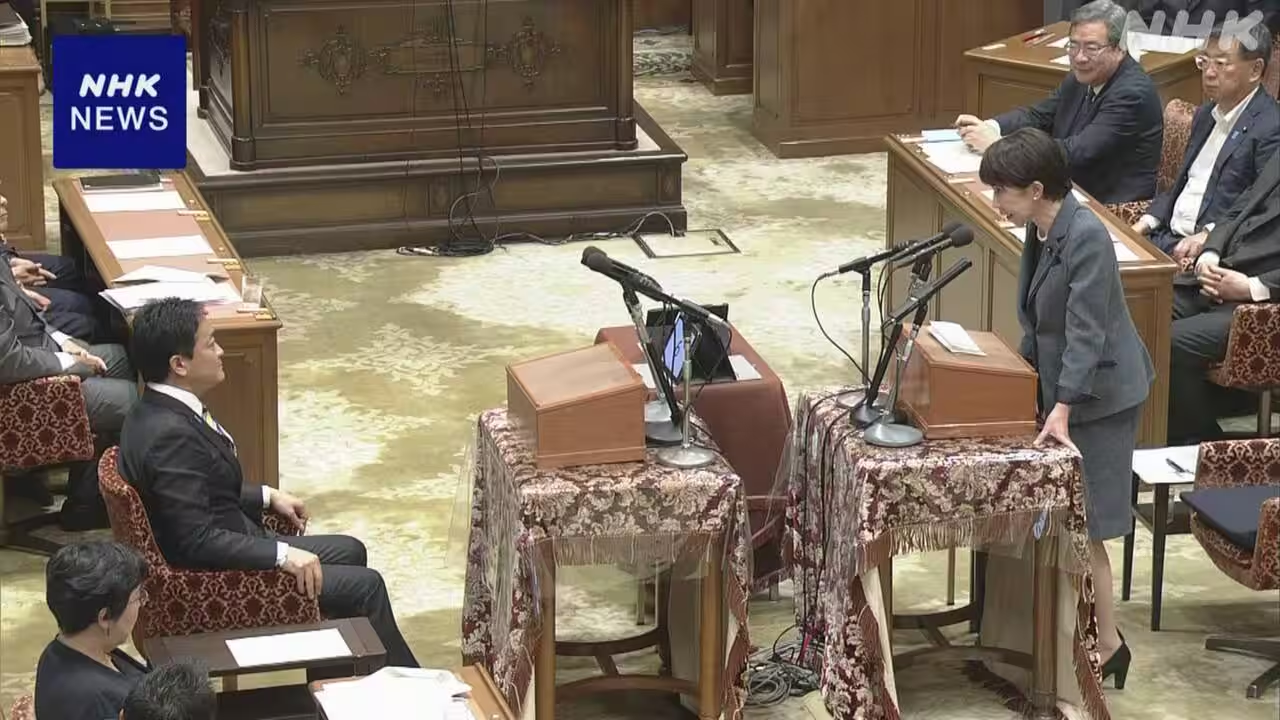
Japanese Prime Minister Takagi indicated during the first party leaders' debate of the current Diet session that the government is considering drafting a supplementary budget for the current fiscal year. The measure, announced on 20 May 2026, aims to mitigate potential long-term impacts on households and the economy resulting from the ongoing situation in the Middle East, specifically citing tensions involving Iran.
The proposal comes amid intensifying pressure from opposition parties, including the Constitutional Democratic Party of Japan and Komeito, who are demanding emergency economic measures. During the debate, these parties called for immediate interventions, including direct cash payments, to address the growing cost of living and economic uncertainty.
Economic indicators have already reflected the strain of the geopolitical climate. The Nikkei Stock Average fell below 60,000 yen for the first time in approximately three weeks, a decline attributed to rising long-term interest rates. Meanwhile, the Ministry of Economy, Trade and Industry confirmed that summer electricity conservation requests would not be issued, stating that minimum supply stability is expected despite the external pressures.
The Middle East situation has begun to affect domestic supply chains, with rising prices for plastic containers impacting the cost of prepared foods. Major retailers, such as Ito-Yokado, have adjusted sales strategies in response to these cost increases, while convenience store chains are accelerating efforts to reduce plastic usage. The Japan Trade Association has also stated that energy-saving measures need to be considered as the government evaluates its response.
The political debate occurred against a backdrop of broader regional developments, including a summit between Chinese President Xi Jinping and Russian President Vladimir Putin to demonstrate unity and strengthen cooperation. As the government weighs the supplementary budget, it faces the dual challenge of stabilising the domestic economy while navigating complex international dynamics.