Inflation data and labour market weakness complicate Federal Reserve policy path
The Federal Reserve holds rates steady at 3.50–3.75 per cent amid conflicting signals from a shrinking jobs market and persistent fuel prices.
US consumer inflation slowed in July, rising 0.1 per cent month-on-month and 3.4 per cent year-on-year, according to data released on Wednesday by the Bureau of Labor Statistics (BLS). The figures present a complex landscape for policymakers, as a temporary retreat in energy costs clashes with the broader structural pressures exerted by ongoing geopolitical conflict in the Middle East.
Energy prices declined 1.5 per cent in July, a drop attributed to fleeting market hopes that shipping blockages in the Strait of Hormuz would ease. However, these prices remain 14.7 per cent higher than a year ago. The disruption stems from Iran’s establishment of a maritime “toll booth” in the strait following the US and Israel’s launch of war against the country in late February. Brent crude oil futures rose 0.3 per cent to $89.19 per barrel on Wednesday, reversing a 7 per cent drop the previous week as those hopes of reopening faded.
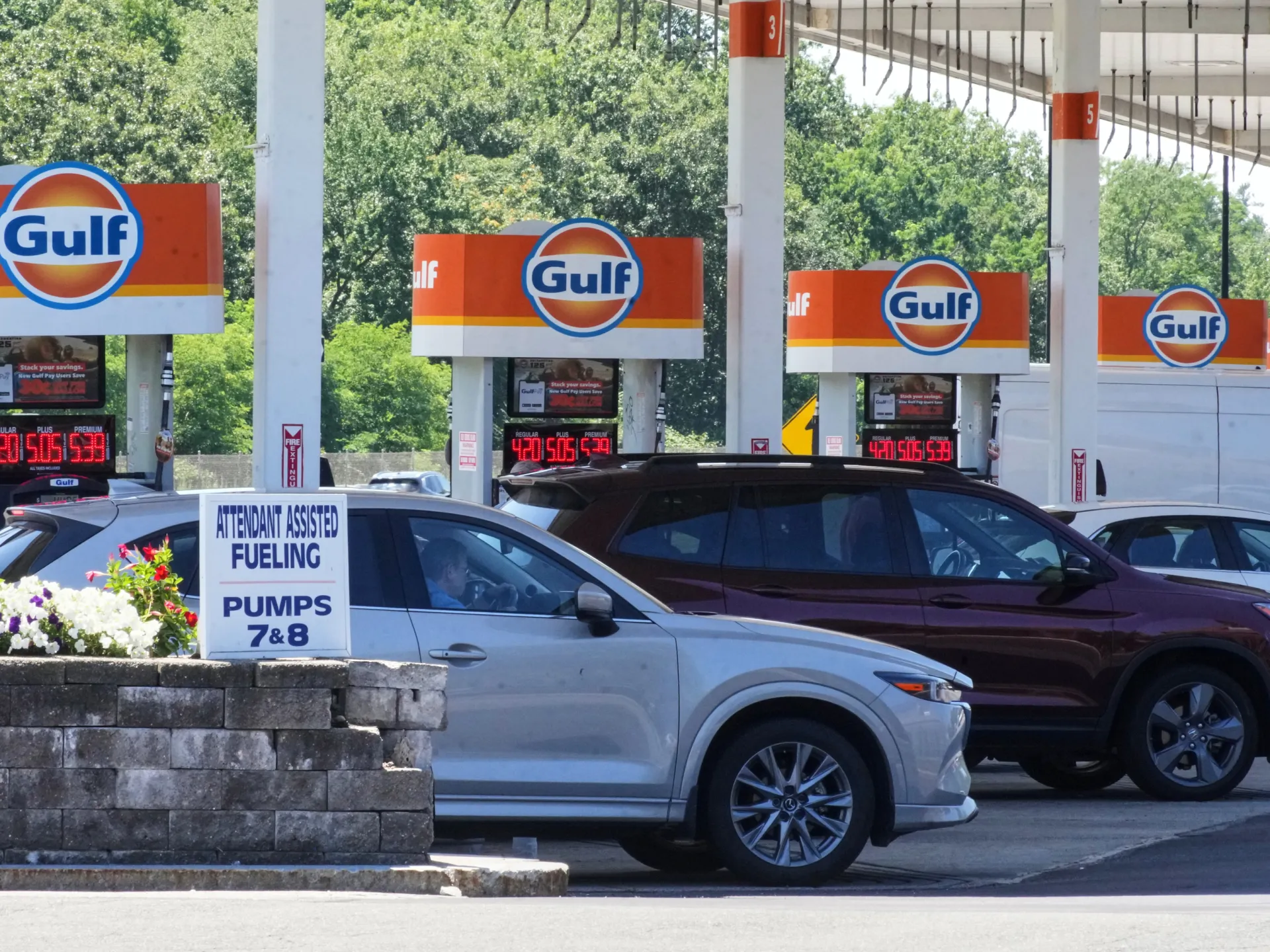
At the pump, the impact on consumers remains severe. While petrol prices dropped 2.9 per cent from the previous month, they have surged 39.1 per cent year-on-year. The American Automobile Association (AAA) reports the average price for a gallon of petrol is now $4.03, a significant increase from the $2.98 recorded on February 28, prior to the onset of hostilities.
The inflation data coincides with a lacklustre labour market. A recent jobs report indicated a loss of 23,000 jobs, with declines concentrated in retail trade, local government, and hospitality, while healthcare saw gains. Concurrently, the Jobs and Labor Turnover Report (JOLTS) showed little change in job turnover, reinforcing a low-fire, low-hire environment that complicates the Federal Reserve’s dual mandate.
Amid these conflicting signals, the Federal Reserve maintained interest rates at 3.50–3.75 per cent. Economists remain divided on the central bank’s next move ahead of the September 16 policy meeting, which marks the third under new chairman Kevin Warsh, who succeeded Jerome Powell in May. CME FedWatch data forecasts a 61.6 per cent probability of rates remaining unchanged, with 38.4 per cent expecting an increase to 3.75–4.00 per cent.
Market participants have reacted to the news with modest gains. The Nasdaq rose 0.7 per cent, the S&P 500 increased by 0.3 per cent, and the Dow Jones Industrial Average edged up 0.05 per cent. Gold prices, often viewed as a safe haven during economic uncertainty, rose 1.4 per cent to $4,428 an ounce.
The economic data arrives as the US approaches midterm elections, with inflation becoming a key political liability. A Reuters/Ipsos poll released last week indicated that 37 per cent of Americans believe Democrats are better suited to handle the economy, compared to 36 per cent for Republicans. With only two more inflation reports before the election, the Federal Reserve faces intense scrutiny as it navigates the path toward its 2 per cent inflation target.