Indonesia’s neutrality under scrutiny after naval exercise with China near Taiwan
The participation of an Indonesian frigate in a passing drill with the People’s Liberation Army Navy has prompted Taiwan to request explanations, testing Jakarta’s long-standing non-aligned stance.
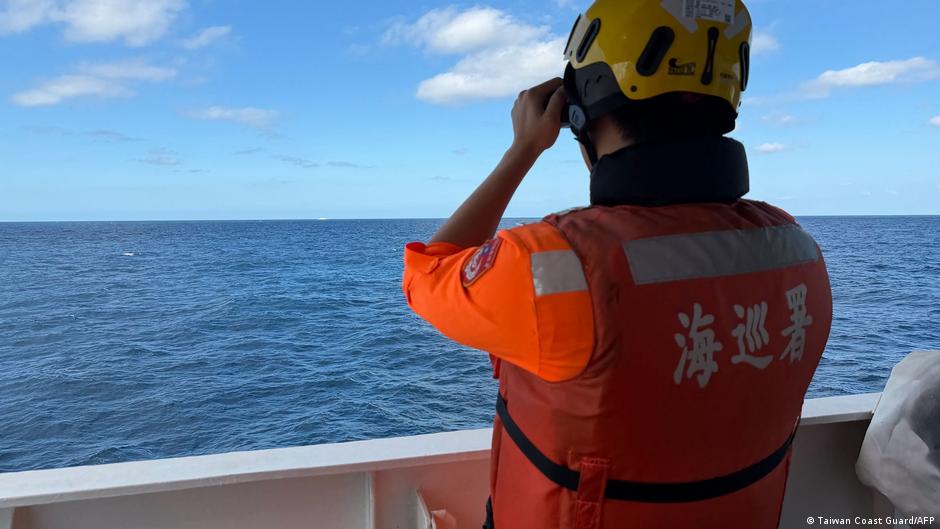
Indonesia’s commitment to a non-aligned foreign policy has come under renewed scrutiny following the participation of an Indonesian frigate in a naval exercise with China’s People’s Liberation Army Navy near Taiwan. On 12 August, the Indonesian Navy vessel KRI I Gusti Ngurah Rai conducted a low-level passing exercise with the Chinese guided-missile frigate Honghe in waters off Taiwan’s east coast.
The manoeuvre occurred during Taiwan’s annual Han Kuang military drill, drawing immediate condemnation from Taipei. Taiwan’s Mainland Affairs Council labelled the event a provocation by Beijing and formally requested further details from the Indonesian government regarding the presence of its naval assets in the sensitive zone.
An Indonesian Ministry of Foreign Affairs spokesperson acknowledged the sensitivity of the location but maintained that the vessel’s presence was merely part of its transit route back to Indonesia. The frigate was returning from Vladivostok, Russia, where it had previously participated in a separate exercise with the Russian navy. The Indonesian Navy clarified that the activities with the Chinese Navy were not warfighting operations and were not intended as combat training.
Despite Jakarta’s assurances, experts warn that the incident risks entangling the archipelago in regional geopolitical tensions. Ratih Kabinawa, a visiting research fellow at the Japan Institute of International Affairs, noted that while passing exercises are among the lowest-level naval activities, they serve China’s geopolitical aims. She cautioned that Indonesia should not be naive in assuming such regular exercises would not provoke concern in Taipei, stating that the nation has been drawn into a geopolitical gambit.
The incident highlights the complex balancing act Jakarta must perform between major powers. Indonesian President Prabowo Subianto met with US Under Secretary of War for Policy Elbridge Colby in Jakarta on the same day as the naval exercise. Prabowo is also scheduled to visit Chinese President Xi Jinping in Beijing, underscoring the administration’s effort to maintain ties with both Washington and Beijing.
Indonesia has adhered to its “free and active” foreign policy for over half a century, distinguishing itself from neighbours that align more closely with either China or the US. However, both superpowers seek to integrate the world’s largest island nation into their respective Asia-Pacific strategies. The country has previously granted the US requests for blanket overflights, allowing American military aircraft access to Indonesian airspace.
Chong Ja Ian, an associate professor at the National University of Singapore, suggested that Indonesia’s neutral stance is partly a product of pressure from superpowers. While the principle of the free and active policy is unlikely to change significantly, the practical application of this doctrine remains under observation as geopolitical tensions intensify across the Taiwan Strait.
Researchers note that the current Indonesian administration lacks clear guidelines for interpreting its foreign policy in this volatile environment. However, Kabinawa argued that it is unlikely Indonesia would become a combatant in any hypothetical conflict scenario. She pointed out that approximately 350,000 Indonesian citizens currently reside in Taiwan, making them the largest group of foreign residents in the country.
In the event of a crisis, Kabinawa suggested Indonesia’s primary role would likely be focused on the protection and evacuation of its citizens rather than military engagement. Such a scenario would pose significant risks to Indonesia’s own political and economic stability, reinforcing the need for careful diplomatic navigation in the region.