India’s informal workforce trains AI robots amid policy warnings on displacement
Thousands of Indian workers, including housewives and manual labourers, are earning wages by recording first-person footage to train humanoid robots, even as official reports warn that automation policies continue to overlook the informal economy.
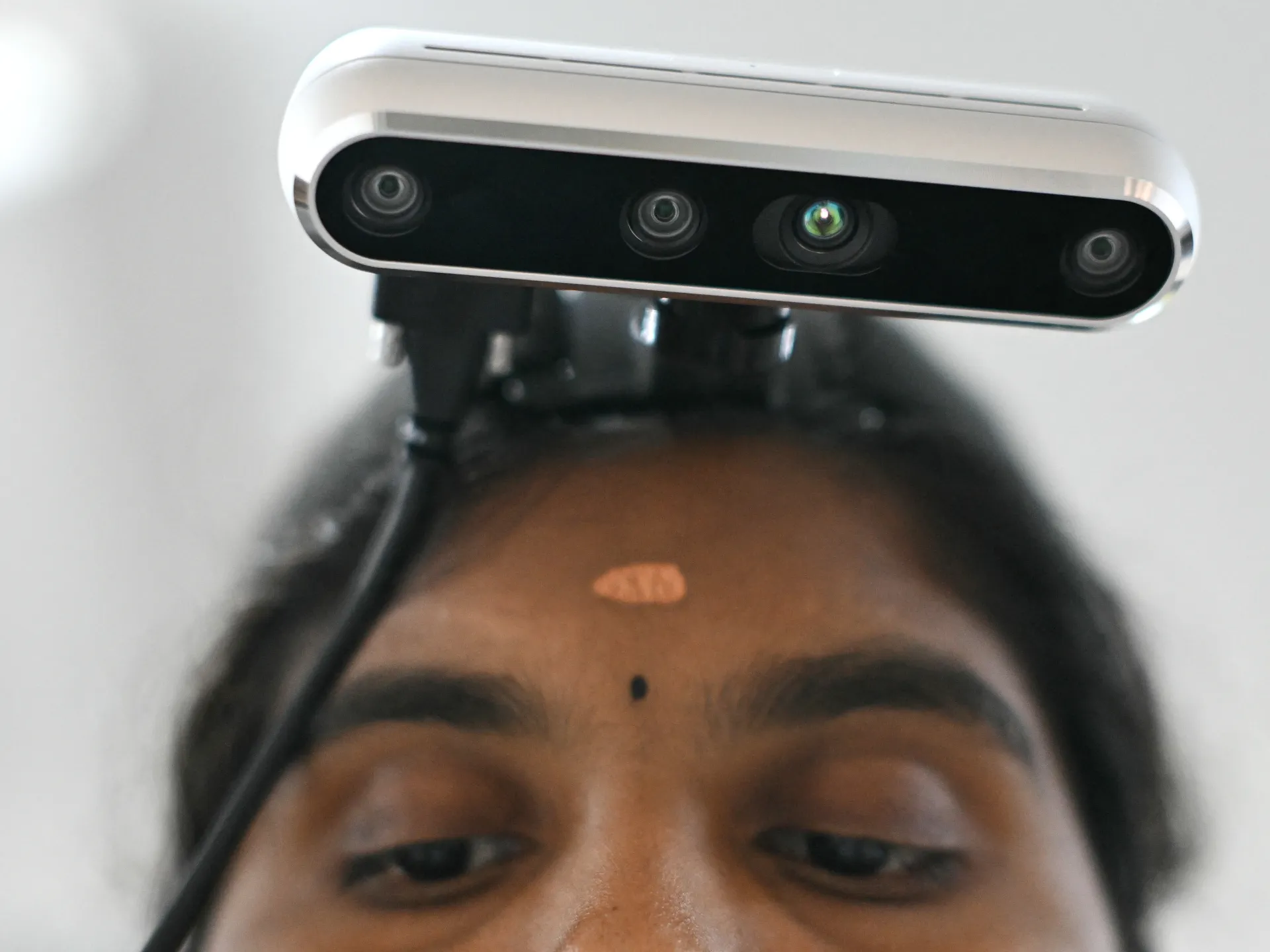
Thousands of workers across India, ranging from housewives to informal labourers, are earning wages by recording first-person footage to train artificial intelligence models for humanoid robots. This data, known as egocentric data, is critical for teaching AI systems to navigate and replicate human behaviour in real-world environments. While the humanoid robot market is projected to exceed one billion units by 2050, the NITI Aayog, India’s premier government think tank, has issued warnings regarding the displacement of the country’s 490 million informal workers. These workers often lack representation in policy discussions surrounding automation, despite their current role in facilitating AI development.
Nagireddy Sriramyachandra, a 25-year-old housewife in Chennai, Tamil Nadu, is one such worker. She films herself performing mundane tasks, such as slicing mangoes, to provide training data for future household robots. Earning 250 rupees for one hour of video, Sriramyachandra sends her recordings via a special application to an AI data company with offices in India and the United States. The company lists Fortune 500 multinationals among its clients, illustrating India’s position as a global middleman for the creation, processing, and annotation of AI data.
The technical requirements for training robots to navigate real-life environments differ significantly from those for digital chatbots. Developers utilise first-person footage, often captured using video glasses, head-mounted cameras, and motion sensors, to help machines copy human behaviour. Sriramyachandra noted that the recording process is rigorous, with systems alerting her when hands are not detected properly. This data collection is part of a broader trend where AI trainers operate in various settings, including homes, factories, and specialised studios.
Aditi Surie, a digital labour expert from the Indian Institute for Human Settlements in Bengaluru, indicated that these data collection services are likely to increase. Bengaluru, known as India’s Silicon Valley, is a hub for such activities. Ponni, a 55-year-old flower garland maker in Bengaluru, has also been paid to record footage. She expressed concern for the future of workers in her sector, noting that the next generation may face significant challenges as automation advances.
The expansion of AI training work contrasts with warnings from the NITI Aayog. In a report released in the run-up to a global AI summit held in India earlier this year, the think tank highlighted that most discussions around AI and labour focus on white-collar professionals. The report stated that little attention is paid to how AI can serve India’s 490 million informal workers, who form the backbone of the economy. The government’s analysis suggests that without urgent action, automation poses significant risks to this segment of the workforce, whose needs are frequently overlooked in job displacement discussions.