India evaluates strategic risks of Mecca Joint Defense Agreement
Analysts urge enhanced security presence in the Gulf as Islamabad deepens ties with Riyadh and Ankara
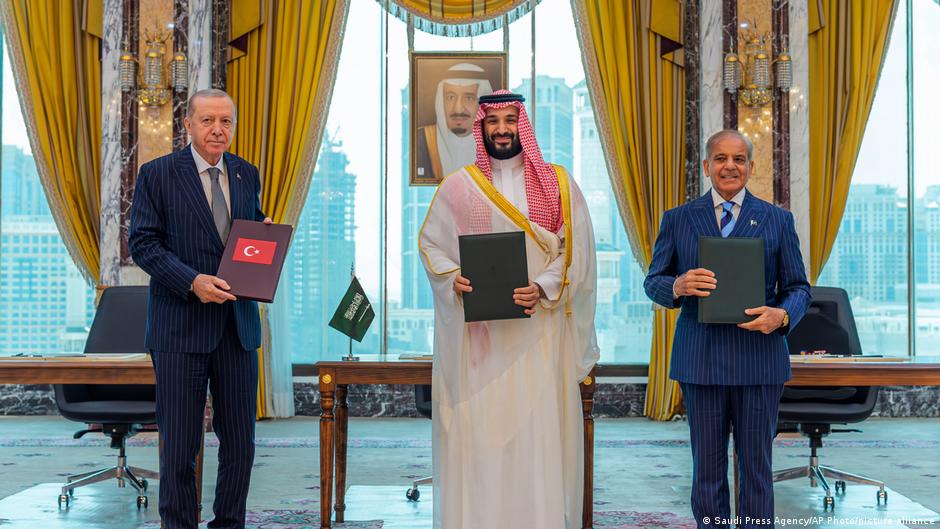
India is formally assessing the strategic implications of the Mecca Joint Defense Agreement, signed on 7 August by Saudi Arabia, Turkey, and Pakistan. The Ministry of External Affairs confirmed that New Delhi is examining the pact from the perspective of national security and regional stability, with spokesperson Randhir Jaiswal stating that India remains committed to safeguarding its interests and will take necessary measures in response.
The agreement establishes collective defence obligations, stipulating that an armed attack on any one member state will be regarded as an attack on all three. It formalises existing military relationships, including Pakistan’s long-standing assistance to Saudi forces and its expanding defence cooperation with Turkey. The pact was signed amid the ongoing Iran war and shifting security arrangements in the Middle East, with Saudi Arabia seeking to diversify security partnerships due to uncertainty over the reliability of the US security umbrella.
While the pact provides an institutional framework for closer defence cooperation, Indian analysts remain divided on its immediate operational value. Former Indian High Commissioner to Pakistan Ajay Bisaria described the agreement as having little effect on the basic dynamics of an India-Pakistan confrontation, suggesting that Saudi Arabia would likely act as a mediator rather than a defender in any future crisis. He noted that the arrangement proved to have only signaling value previously and is unlikely to fundamentally alter Riyadh’s position in the event of an India-Pakistan conflict.
Tara Kartha, a former member of the National Security Council Secretariat, echoed this view, stating that the fundamental military balance on the ground has not changed significantly. She acknowledged that Pakistan’s defence budget may increase due to access to Turkey’s formidable defence industry, including joint developments such as the Kaan aircraft, but argued that India should not overstate the significance of the agreement given that Saudi Arabia and Turkey do not view India as a strategic competitor.
Conversely, other experts warn of a widening mismatch between India’s growing economic interests in the Gulf and its limited military-security presence. Strategic expert C. Raja Mohan urged New Delhi to enhance its regional security ties, deepen defence and intelligence cooperation with Saudi Arabia, and strengthen maritime security in the Arabian Sea and Red Sea. Geopolitical analyst Harsh Pant advised New Delhi to use its relationship with Riyadh to deepen security and intelligence cooperation, ensuring that Pakistan’s new role does not translate into disproportionate influence in the Gulf.
The agreement raises concerns about Pakistan’s potential access to Turkish defence technology, such as drones and missiles, and Saudi resources. While Pakistan seeks to turn its longstanding military relationship with Riyadh into wider strategic influence, India’s Gulf and Red Sea trade routes remain vital to its energy security. The trilateral pact highlights the complexities of regional security architecture as Arab states attempt to hedge against uncertainty over American security guarantees.
India’s response will likely involve a cautious but active engagement strategy, focusing on deepening bilateral ties with individual Middle Eastern countries. The Ministry of External Affairs’ statement indicates that New Delhi will monitor the military dimension closely, particularly regarding the availability of advanced defence technologies to Pakistan. The situation underscores the need for India to transition from being primarily a diplomatic and economic player in the region to one with a more robust security footprint.
As the Iran war continues to reshape regional dynamics, the Mecca Joint Defense Agreement serves as a reminder of the fluid nature of alliances in the Middle East. For India, the challenge lies in balancing its substantial economic dependence on the region with the need to counterbalance Pakistan’s deepening security role. The outcome of this strategic assessment will determine how New Delhi navigates the evolving security landscape in the coming months.