India commits $2 billion to domestic drone procurement in strategic pivot
The largest-ever unmanned systems purchase involves major firms and startups, aiming to complement US acquisitions with indigenous tactical capabilities.
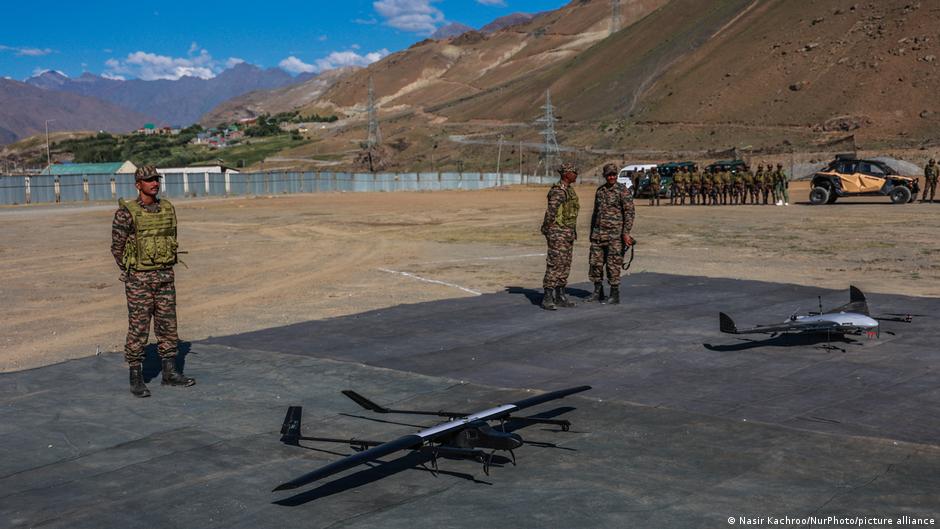
India is preparing to execute its largest-ever military drone procurement, a contract valued at more than $2 billion with domestic manufacturers. The order includes contributions from major industrial groups such as Adani Group, Tata Advanced Systems, and Larsen & Toubro, alongside emerging firms like ideaForge and Asteria Aerospace. This initiative marks a significant acceleration in the nation’s unmanned warfare capabilities, reflecting a broader strategic shift towards self-reliance in defence production.
The procurement is designed to enhance surveillance and combat operations along some of India’s most sensitive frontiers. Systems will be deployed across the Line of Actual Control with China, the borders with Pakistan and Bangladesh, and the Indian Ocean. The move addresses long-standing challenges in maintaining constant monitoring across difficult high-altitude terrain, a vulnerability exposed during the 2020 military standoff in eastern Ladakh.
This push for indigenous capability has been influenced by recent regional tensions and global conflicts. Following the May 2025 Pahalgam attack in India-administered Kashmir and the subsequent US-backed ceasefire, India launched Cold Start, its largest-ever drone warfare exercise involving the army, navy, and air force. Military planners have also drawn lessons from the war in Ukraine, where drones have proven central to modern warfare by destroying expensive armour and guiding artillery.
The proposed order reportedly encompasses a diverse range of systems, including reconnaissance platforms, logistics drones, loitering munitions, and strike systems. These domestic assets are intended to complement India’s separate acquisition of 31 MQ-9B Predator drones from the United States. While the American platforms provide long-range strategic capabilities, Indian-made systems are expected to operate in larger numbers closer to the tactical battlefield, creating a layered surveillance and combat network.
Experts note that the success of this industrial policy depends on more than just procurement volumes. Wing Commander Rajiv Kumar Narang, author of "India's Quest for UAVs and Challenges," stated that conflicts in Ukraine and Iran, as well as Operation Sindoor triggered by the Pahalgam attack, have reinforced the importance of self-reliance in drone technology. He argued that countries owning their technology and able to innovate quickly will hold an edge in future conflicts.
However, integration remains a critical hurdle. Konark Rai, managing director of defence startup Rudram Dynamics, warned that buying drones is distinct from integrating thousands of unmanned systems into military operations. He emphasised that faster procurement, testing, and certification must be matched by robust doctrine, training, and electronic warfare protection to translate technological capability into a tangible battlefield advantage.