Imax 70mm vs Digital Imax: Format Differences Explained
While Imax 70mm offers superior resolution and immersion, its scarcity limits access. Digital Imax serves as the primary alternative, with quality varying significantly across projection systems.
An Engadget article published on 24 July 2026 details the technical and experiential differences between Imax 70mm film and digital Imax formats. The piece identifies Imax 70mm as the superior format, offering higher resolution (up to 18K equivalent) and immersion, but notes it is available in only approximately 39 locations globally (24 in the US, 9 in Canada, 6 elsewhere).
Christopher Nolan’s The Odyssey is cited as the first feature film entirely shot in Imax 70mm, with a production cost of $250 million. The article highlights that the film’s production required a special new camera system to reduce noise and allow dialog to be filmed. Each Imax 70mm projection print reportedly costs around $80,000, underscoring the financial barriers to widespread adoption of the format.
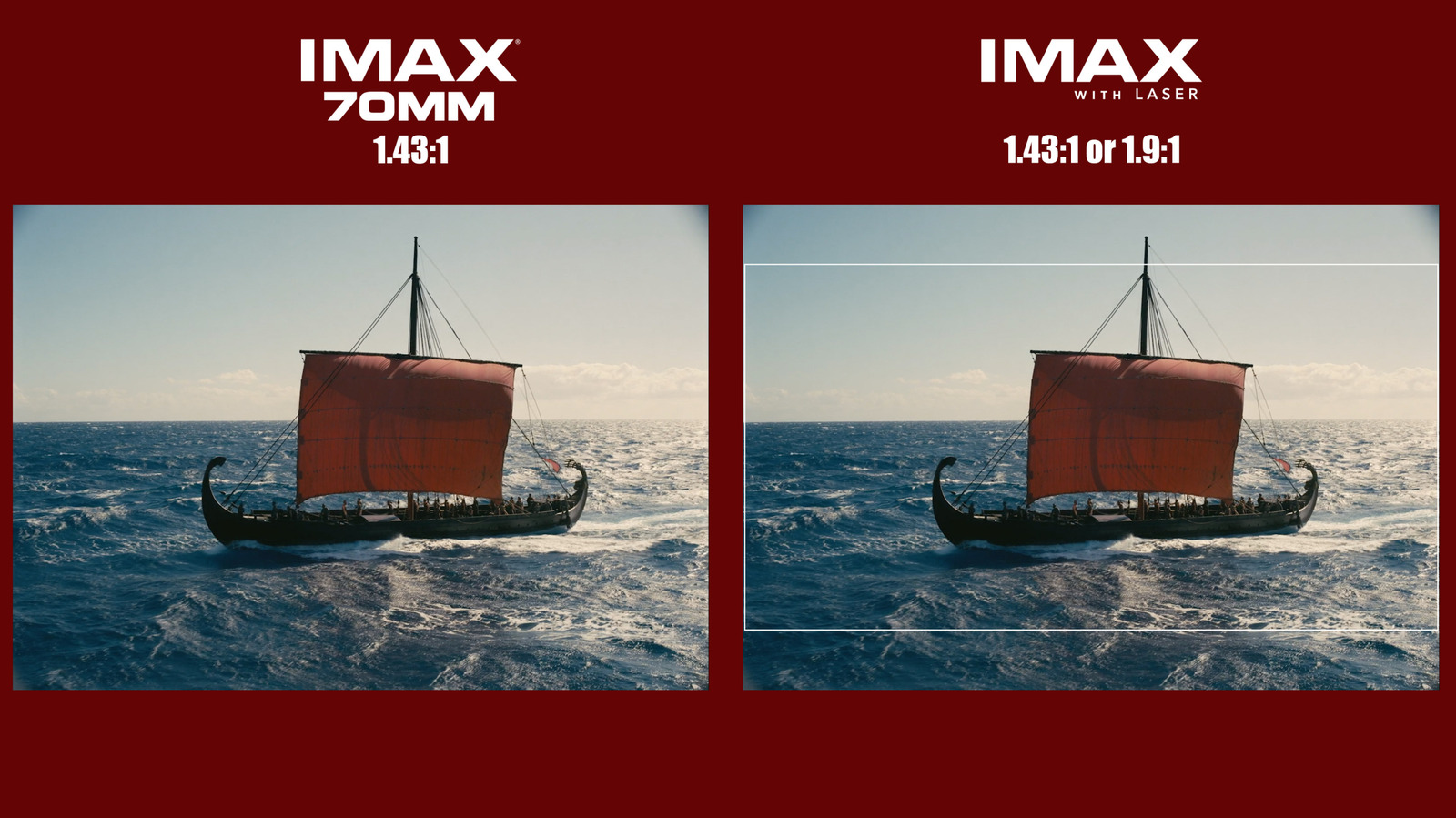
Digital Imax, particularly systems using laser projection (such as GT, CoLa, and XT), serves as the primary alternative. The quality varies based on the specific hardware and aspect ratio (1.43:1 or 1.90:1). The best format, Imax with Laser at a 1.43:1 aspect ratio, uses the GT Laser dual projector system that offers incredible clarity.
Brightness and contrast are actually superior to Imax 70mm film, thanks to the laser system's light-emitting power and ability to completely turn off pixels. Once again, the problem with the 1.43:1 GT laser system is scarcity, with just 12 or so such theaters in North America.
The next best option is Imax 4K Laser at the wider 1.90:1 aspect ratio. That uses several laser projector systems, with the brightest and sharpest being GT Laser with dual projectors, offering the same excellent brightness and contrast as the 1.43:1 system.
The other Imax 1.9:1 options are the single-projector CoLa and XT systems with reduced brightness and sharpness, though still a superior viewing experience to regular 35mm or 2K digital projections. There are many more of those, with around 100 in the US.
As with Imax 70mm, the best way to see digital Imax is on films shot on Imax 70mm or regular 70mm film for maximum sharpness and immersion. Films shot on 35mm film or digital formats will look a bit less sharp, though other qualities like brightness and contrast will be unchanged.