IFAB clarifies VAR protocol after Embolo red card ruled incorrect
The International Football Association Board has stated that the mistaken identity clause was not applicable to simulation incidents at the current tournament, though it will be permitted for the 2026 World Cup.
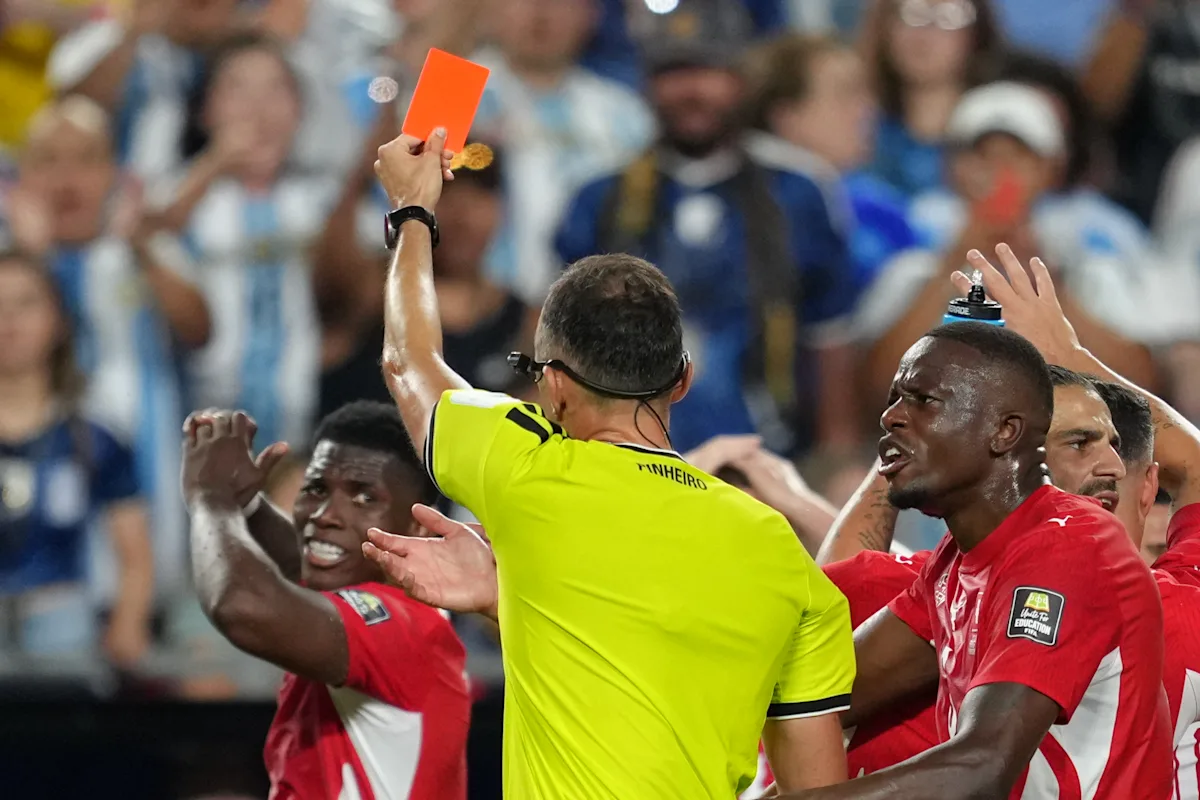
The International Football Association Board (IFAB) has issued a clarification confirming that Switzerland forward Breel Embolo should not have been sent off during the World Cup quarter-final against Argentina. The Zurich-based panel, which comprises FIFA-appointed officials and the four British soccer federations, stated that the referee’s decision to review the nature of the offence rather than solely the player’s identity was incorrect under the rules in place at the time.
Embolo received a second yellow card in the 72nd minute after a video review for simulating a foul by Argentina midfielder Leandro Paredes. The incident occurred shortly after Switzerland had tied the score at 1-1, shifting the momentum of the match as Argentina went on to win 3-1 in extra time. The red card decision has since fueled complaints, with previous opponent Egypt alleging that referees were favouring Lionel Messi’s team with their rulings.
In a statement published on Monday, IFAB clarified that the "mistaken identity" protocol, which allows for the correction of cards shown to the wrong player, was not eligible for this type of incident involving simulation at the current World Cup. The panel noted that the protocol is designed to correct the referee when a card is issued to a player who did not commit the original foul, rather than to re-evaluate the offence itself.
Switzerland coach Murat Yakin criticised the ruling immediately after the match in Kansas City. “The referee made the wrong decision,” Yakin said. “I know they will protect their referee but this rule destroyed our game today, and it’s very painful, and to be eliminated in that way hurts a lot.”
IFAB acknowledged that incidents like Embolo’s are part of an ongoing review of VAR protocols that began in March. The panel noted that the use of the mistaken identity clause to deal with simulation was well received and will be permitted for the FIFA World Cup 2026. However, the body cautioned that the updated guidance may not be implemented until the current review is concluded.