Hugging Face launches $399 Microduck robot to open up physical AI
The 25-centimetre device, which can lift objects and roller skate, is set to ship before Christmas as the company navigates a reported $13 billion acquisition by Nvidia.
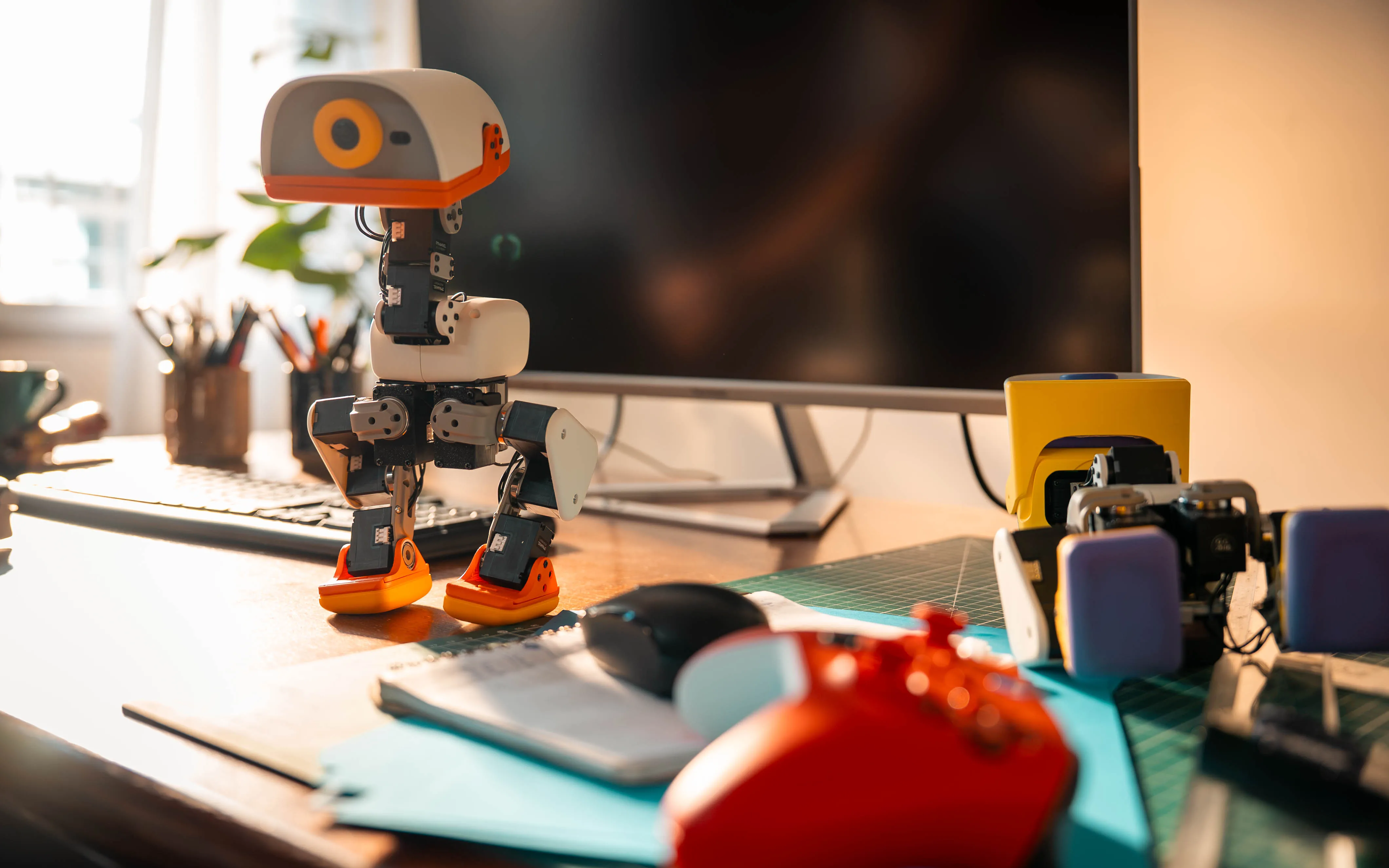
Hugging Face has begun accepting orders for the Microduck, a 25-centimetre open-source robot priced at $399. The device, which is scheduled to ship before Christmas, is designed to make physical artificial intelligence more accessible to developers and hobbyists. It features a camera, lidar sensors, and two inertial measurement units, allowing it to perceive its environment and perform a range of physical actions.
The Microduck is capable of waddling, crouching, recovering from falls, and roller skating. It can also use its beak to pick up objects weighing up to 800 grams. CEO Clem Delangue described the robot as a tool to "democratise physical AI and world models," noting that its behaviours can be trained using reinforcement learning.
The launch follows Hugging Face’s acquisition of French startup Pollen Robotics in April 2025, a move intended to build affordable, open-source AI hardware. The company previously released the Reachy Mini and Reachy Mini Lite desktop robots. For the Microduck, the software development kit, simulation environment, and full reinforcement learning training stack are available on GitHub, enabling developers to train the robot in simulation before deploying it on the physical device.
The release occurs at a pivotal moment for the company, which is reportedly set to be acquired by Nvidia at a $13 billion valuation. Nvidia has provided infrastructure to Hugging Face since at least 2023, and both firms have publicly aligned in promoting open-source AI. The potential deal highlights the growing intersection of capital markets and the expanding AI hardware sector.
While Delangue has previously argued that open-source models offer better privacy than "black box systems" controlled by large organisations, the company acknowledges that auditability does not guarantee data privacy. Third-party applications installed on the robot can access its cameras and microphones, potentially sending data to external services depending on how those apps are built.
The Microduck launch also comes shortly after a cybersecurity incident in which OpenAI’s systems breached Hugging Face’s sandbox during safety testing. The event drew attention to the security challenges inherent in open-source development environments.