Hostilities persist in Lebanon despite U.S.-brokered ceasefire agreement
France 24 reports that Israel continues to strike Lebanon and occupy southern territory while Hezbollah maintains attacks on Israeli forces
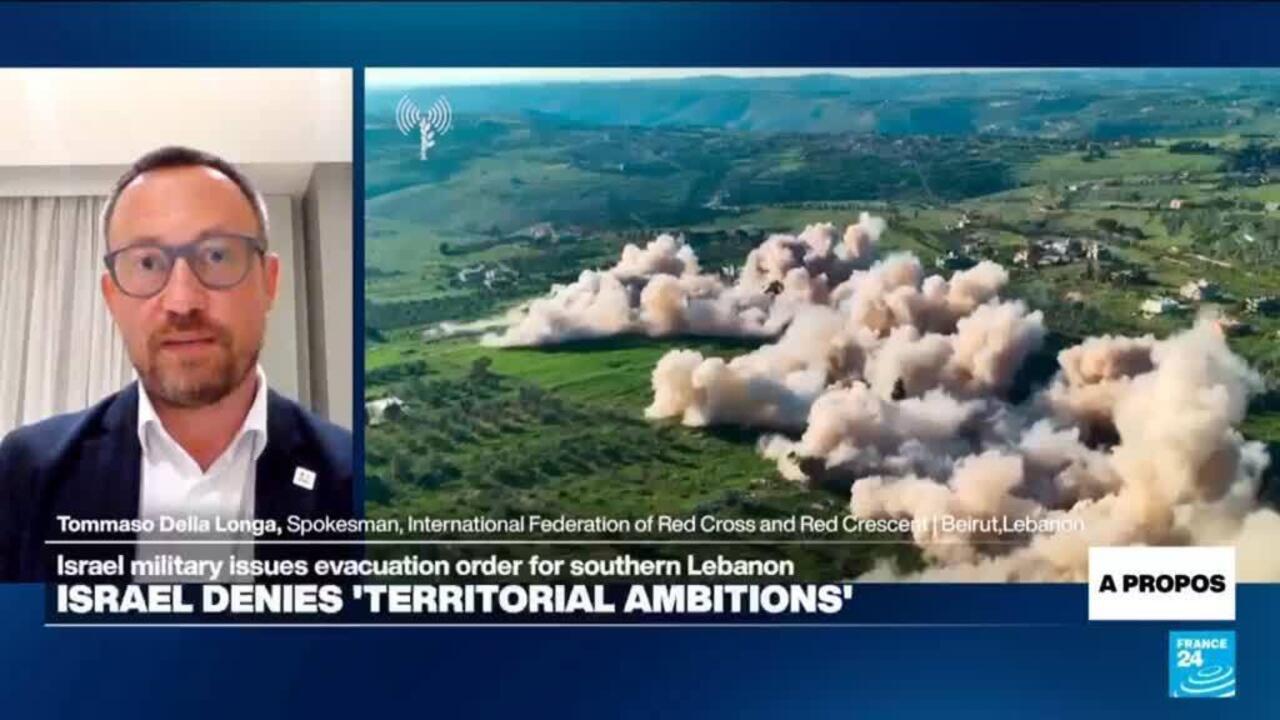
Despite a U.S.-brokered ceasefire, hostilities between Israel and Hezbollah have continued unabated, with both sides maintaining active combat operations. Israel has resumed striking Lebanon and maintains an occupation of a strip in the south, citing the destruction of homes as necessary to eliminate Hezbollah infrastructure. In response, Hezbollah has sustained attacks against Israeli troops within Lebanon and in northern Israel.
The International Federation of Red Cross and Red Crescent Societies (IFRC) has highlighted the severe human cost of this ongoing conflict. Speaking to FRANCE 24, IFRC spokesman Tommaso Della Longa addressed the scale of the displacement resulting from the continuing hostilities. The organisation notes that the fighting has forced approximately 1.2 million people from their homes, precipitating a significant humanitarian crisis in the region.
Israel's rationale for the destruction of residential properties is explicitly tied to its assessment of these sites as Hezbollah infrastructure. This claim forms the basis of the military actions taken in the southern territories. However, the persistence of these strikes despite the ceasefire framework suggests a breakdown in the diplomatic arrangements initially brokered by Washington.
Hezbollah has not ceased its offensive posture, continuing to target Israeli military positions across the border and within northern Israel. This reciprocal escalation has prevented any de-escalation of the situation, leaving the ceasefire agreement effectively inoperative. The dual pressure of Israeli airstrikes and Hezbollah ground attacks has compounded the suffering of the civilian population.
The displacement of 1.2 million individuals represents a major shift in the demographic and social landscape of the affected areas. As reported by FRANCE 24, the sheer volume of displaced persons underscores the intensity of the fighting and the failure of the current diplomatic mechanisms to secure a lasting pause in the violence.
Governments and international bodies must now grapple with the implications of a conflict that ignores the terms of a formal ceasefire. The situation described by the IFRC indicates that the humanitarian impact is already profound, with millions living in precarious conditions as the fighting continues without resolution.