Hong Kong authorities escalate transnational repression against foreign correspondents
Officials reject the in absentia awarding of a free speech prize to Jimmy Lai and dismiss international press freedom rankings as biased, while simultaneously detaining and deporting a foreign correspondent flagged as a national security risk.
Hong Kong authorities have issued a defiant statement accusing foreign media organisations and press freedom groups of slander following the in absentia awarding of a Freedom of Speech Prize to jailed media tycoon Jimmy Lai by Germany's Deutsche Welle. In the same communication, officials dismissed the latest Reporters Without Borders Press Freedom Index as biased, noting the city's ranking has dropped to 140th globally from 18th in 2002.
The tension escalated significantly when a French journalist, Antoine Védeilhé, was denied entry, detained, and deported from Hong Kong. Sources indicate he was flagged as a "foreign agent" and subjected to interrogation and searches at the airport before being escorted directly to a flight back to Paris. This incident marks the first publicly documented case of a foreign correspondent being detained and deported in this manner.
Following the deportation, Védeilhé's employer received an anonymous email warning against broadcasting his documentary, "Hong Kong ne répond plus," suggesting the National Security Law could apply extraterritorially. His cameraman, who was allowed entry, was followed by plainclothes officers from arrival at his hotel, leading the team to cancel all planned interviews due to safety fears.
Aleksandra Bielakowska, advocacy manager for Asia-Pacific at Reporters Without Borders, described this incident as an intensification of pressure tactics, marking the first time such a scale of transnational repression has reached foreign journalists in Europe. She noted that the evidence suggests the operation was coordinated by national security police who had a file on the journalist identifying him as an agent.
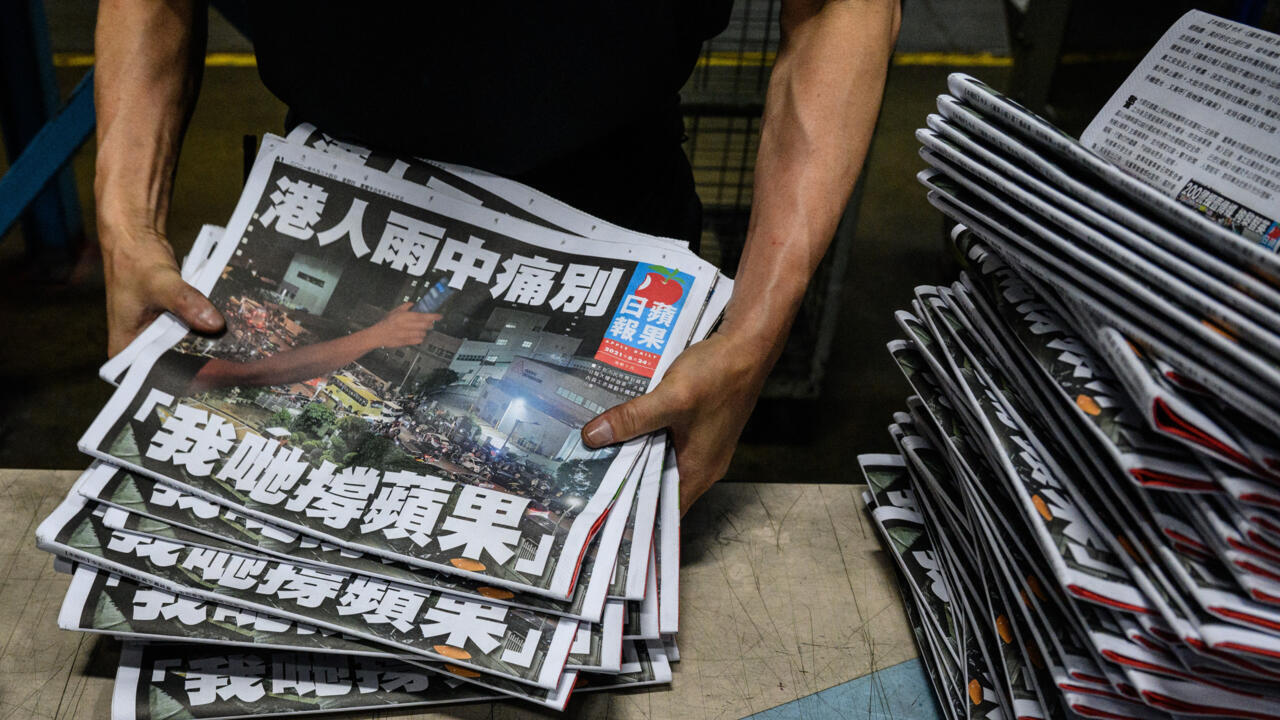
The deterioration of the media environment has seen independent outlets such as Apple Daily, Stand News and Citizen News close since the implementation of the 2020 National Security Law. While some space for independent journalism remains, Tom Grundy of Hong Kong Free Press reports it is increasingly narrow, with features and opinion pieces becoming very difficult to publish.
Mak Yin-ting, a correspondent for RFI, noted that government data and historical archives are being systematically removed from public databases after short periods, making investigative reporting significantly more difficult. Authorities rarely need to ban stories outright; instead, ambiguity regarding what constitutes sedition under Article 23 becomes the primary tool for silencing dissent.
Despite the pressure, journalists continue reporting, fully aware of the risks. To protect junior reporters, some editors choose to sign all articles under their own names, effectively making the editor-in-chief the face of the media in the event of arrests.