Hamas leader pledges reconstruction and unified state in inaugural address
The new political chief calls on the international community to enforce a US-backed ceasefire while reaffirming the group’s objective of a state encompassing Gaza, the West Bank and East Jerusalem.
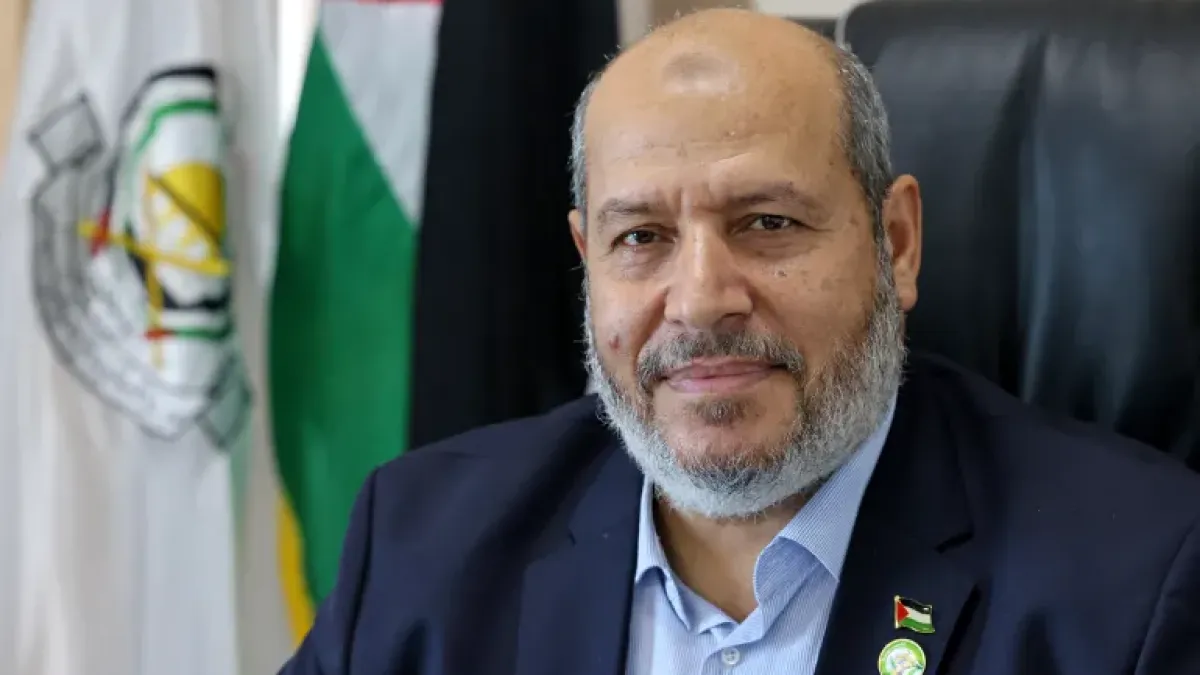
Khalil al-Hayya has delivered his first televised address as the head of the Hamas political bureau, outlining the group’s policy priorities and pledging to rebuild Gaza following the death of his predecessor, Yahya Sinwar. The speech, broadcast on Hamas-run Al-Aqsa TV on Wednesday, marks the new leader’s initial public stance on the ongoing conflict and the political future of the Palestinian territories.
Al-Hayya was selected by the General Shura Council on Monday, defeating former political chief Khaled Meshaal in a run-off vote. He assumes leadership of the organisation following a period where a five-man ruling council, of which he was a member, managed affairs after Sinwar was killed by the Israeli army in 2024.
In his address, al-Hayya reaffirmed Hamas’s official objective, established in a 2017 policy document, of establishing a unified Palestinian state that encompasses Gaza, the West Bank and East Jerusalem as its capital. He described the West Bank as a "responsibility and a trust" against attempts to alter its demographic character, while addressing Palestinians in Jerusalem as the "compass and the heart of our struggle."
The new leader emphasised that reconstruction in Gaza is an inherent right rather than a political concession. He vowed to alleviate civilian suffering and secure the release of political prisoners held in Israel, asserting that Palestinians would never be displaced from their land. Al-Hayya characterised the ongoing Israeli military operations as a "genocidal war" and called for an immediate cessation of aggression.
While expressing gratitude to mediators in Egypt, Qatar and Turkiye for their efforts to end the conflict, al-Hayya notably omitted any mention of the United States. He called on the international community and the sponsoring states of the negotiation track to pressure Israel to implement a US-backed ceasefire agreement agreed upon in October 2025, which he claimed Israel has largely ignored.
Al-Hayya concluded by linking regional stability to the treatment of the Palestinian people, stating that the Middle East cannot be free from conflict without fair treatment for Palestinians. He urged widespread sympathy for the inhabitants of Gaza to translate into tangible support for the group’s goals, describing the Palestinian people as a "steadfast resistance" that will not relinquish its rights.