Guterres urges cooperation as UN confronts widening global divisions
In his final address to the annual UN General Assembly, António Guterres warned that climate change, war, inequality and artificial intelligence were testing the case for multilateral action.
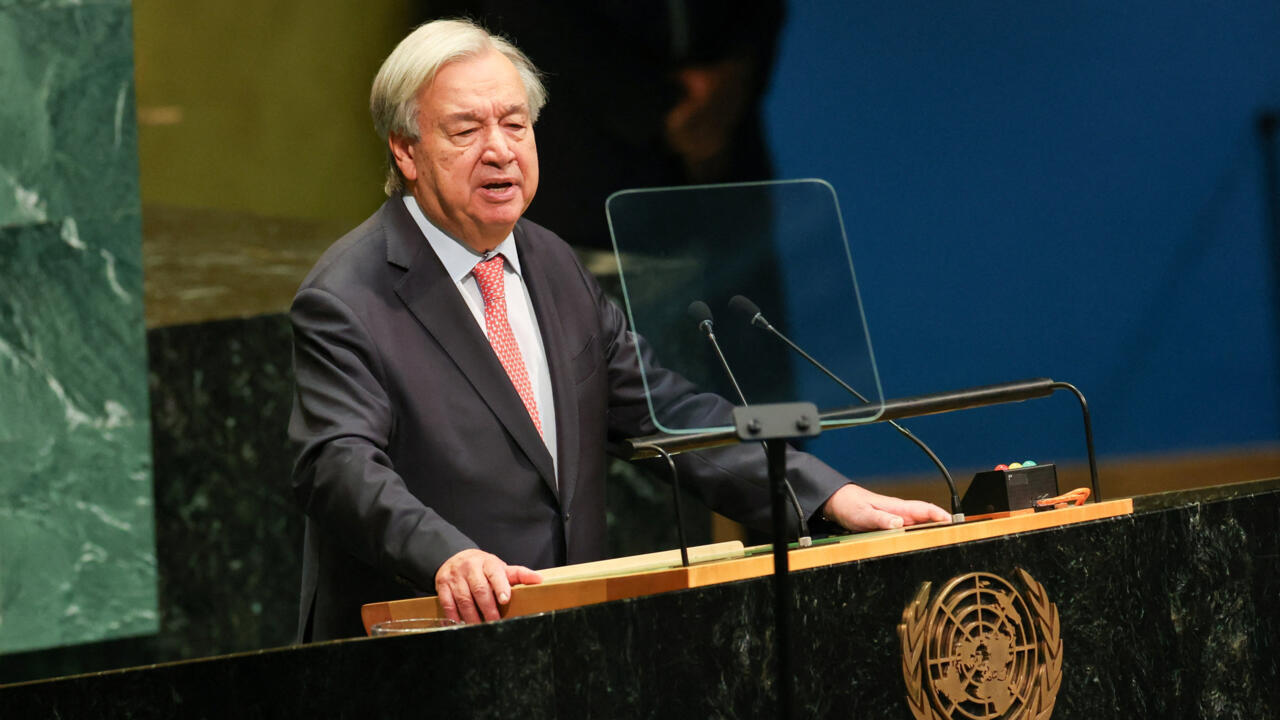
UN Secretary-General António Guterres has urged world leaders to choose cooperation and interdependence over fragmentation, warning that military power alone cannot secure peace.
In his final address to the annual United Nations General Assembly before his term ends on 31 December 2026, Guterres said the world’s fault lines were widening amid wars, rising temperatures and rapid advances in artificial intelligence.
He called for “a world built on interdependence”, sustained by economic, political, social and technological connections. He also criticised “might-makes-right” thinking and urged major powers to recognise the limits of their strength.
The high-level gathering is addressing conflicts in Iran, Gaza, Ukraine, Sudan, the Democratic Republic of Congo and Myanmar, alongside concerns about global inequality, climate change and economic disruption caused by blocked shipping routes and strained supply chains.
UN reform is also on the agenda, including possible changes to the Security Council, where the United States, Russia, China, Britain and France retain veto power. The organisation is under financial pressure, including billions of dollars in reported unpaid US arrears, while speculation continues over Guterres’s successor.
Artificial intelligence has emerged as a further governance challenge. The Security Council is due to hold a high-level meeting on the issue, amid warnings about the technology’s rapid development and the absence of global safeguards.
Guterres closed by saying he would continue to champion the possibility of peace wherever he went. His departure comes as the UN faces questions about its effectiveness in managing major conflicts and maintaining support for multilateral decision-making.